Table of Contents
Within Corfu’s Old Town, narrow streets create a labyrinth where centuries compress into vertical stone. The Jewish Quarter, known as Evraiki, occupies space both physical and temporal, its architecture and atmosphere distinct from surrounding Venetian influenced neighborhoods. Walking these lanes means traversing not just geography but history, encountering stories of coexistence, creativity, persecution, and survival that shaped this community across eight centuries.
The Jewish Quarter of Corfu: History and Heritage
Jewish presence in Corfu extends back at least to the 12th century, documented in Byzantine records. These early settlers belonged to the Romaniote tradition, Greek speaking Jews whose roots in the eastern Mediterranean predated the Roman Empire. Their distinct liturgy, customs, and language differentiated them from later arriving Sephardic communities.
Romaniote Jews likely chose Corfu for its strategic commercial position. The island’s ports connected trade routes linking Italy, Greece, and the Levant. Jewish merchants contributed to this commerce, their networks spanning the Mediterranean and beyond. Skills in trade, finance, and crafts made Jewish communities valuable to ruling powers.
Under Byzantine administration, Jews occupied defined legal status with both protections and restrictions. They could practice their religion and maintain community institutions while facing limitations on certain professions and public roles. This pattern of conditional tolerance characterized Jewish life throughout medieval Mediterranean.
Venetian conquest in 1386 introduced new dynamics. The Republic, though Catholic and often restrictive toward Jews elsewhere, recognized economic advantages of Jewish commercial expertise. Corfu’s Jewish community gained permissions for certain trades while facing periodic pressures and occasional expulsions later rescinded for pragmatic reasons.
The late 15th century brought Sephardic Jews fleeing expulsion from Spain and Sicily. These refugees, speaking Ladino and carrying different traditions, initially clashed with established Romaniote community. Eventually accommodation emerged, both groups maintaining separate synagogues and some distinct practices while coexisting in the same quarter.
Geography and Architecture of Evraiki
The Jewish Quarter developed in the Old Town’s southeastern section, between the main town and the Old Fortress. This location reflected both integration into urban fabric and subtle segregation, Jews living among Christian neighbors yet concentrated in identifiable district with distinctive character.
Streets in Evraiki follow different pattern than surrounding areas. Narrower lanes, taller buildings, and denser construction created unique microclimate and atmosphere. Buildings rose to five or six stories, unusual height for the period, maximizing limited ground area while creating shadowed passages protecting residents from summer heat.
Architectural details reveal Jewish occupancy. Doorway decorations, window arrangements, and building proportions followed traditions brought from various origin points. The synagogues, though modified repeatedly, incorporated design elements reflecting Jewish liturgical requirements and aesthetic sensibilities. The quarter included not just residential buildings but workshops, small shops, and community facilities. Jewish craftsmen worked as tailors, shoemakers, jewelers, and metal workers. Small businesses lined ground floors while families lived above, pattern typical of medieval and early modern urban districts.
Public spaces within Evraiki served community gathering functions. Small squares where streets intersected became social centers. Wells and fountains provided necessary water. These communal areas fostered the intensive social interaction characteristic of densely populated urban Jewish quarters throughout Mediterranean. Venetian authorities periodically imposed ghetto restrictions, though enforcement varied considerably. During certain periods, gates closed Evraiki at night, physically separating Jews from Christians. These restrictions, while discriminatory, also provided security against mob violence during periods of religious tension or economic stress.
Religious and Cultural Life
Synagogues formed community’s spiritual heart. At various times, Corfu supported four synagogues serving different congregational traditions. The Apulian synagogue served Italian Jews, the Corfu Synagogue the Romaniote tradition, and others accommodated various Sephardic customs. This diversity within small community reflected Judaism’s accommodation of regional variations within unified religious framework. Liturgical differences distinguished these congregations. Romaniotes used Greek in certain prayers and followed Byzantine musical traditions. Sephardim maintained Spanish influenced customs. Italian Jews brought their particular minhag. Despite differences, fundamental unity of Jewish belief and practice connected these groups across cultural variations.
Educational institutions operated within the quarter. Talmud Torah schools taught boys Hebrew, religious texts, and rabbinic learning. These institutions maintained high standards, producing scholars whose reputations extended beyond Corfu. Education represented paramount value, families sacrificing considerably to ensure sons received proper instruction.
Women’s religious education, though more limited than men’s, included basic literacy and knowledge of prayers, holidays, and domestic religious observances. Women’s galleries in synagogues allowed segregated participation in services. Female religious life centered more on home based observances including Shabbat preparations, holiday celebrations, and lifecycle events.
Rabbis provided spiritual leadership while adjudicating disputes, answering religious questions, and maintaining community standards. Notable rabbis served Corfu across centuries, their responsa contributing to broader Jewish legal discussions. The position combined religious authority with practical leadership requiring political skill navigating between community and external authorities. Jewish cultural life extended beyond strictly religious observances. Literature, music, and artistic traditions flourished within the quarter’s confines. Ladino ballads, Greek Jewish songs, and Hebrew poetry preserved traditions while creating new expressions. This cultural productivity demonstrated community vitality despite restrictions and periodic persecution.
Economic Roles and Restrictions
Jewish economic activity faced complex web of permissions and prohibitions varying across periods. Certain trades remained effectively closed through guild restrictions or social prejudice. Others became Jewish specializations partly through choice and partly through lack of alternatives. Moneylending, though often resented, filled necessary economic function in societies where Christian religious law prohibited usury. Jewish lenders provided capital for merchants, farmers, and nobles, their services enabling economic activity while making them simultaneously valuable and vulnerable to periodic debt cancellations or violence. Textile trades attracted Jewish workers. Tailoring, weaving, and dyeing employed many families. Skilled Jewish artisans produced fine fabrics and garments sought by wealthy customers. These crafts allowed specialization and skill development across generations, creating family traditions and economic security.
Trade, both local and international, engaged Jewish merchants. Networks connecting Corfu’s community to Venice, Constantinople, Alexandria, and beyond facilitated commerce in goods ranging from everyday commodities to luxury items. Jewish multilingualism and far flung family connections provided commercial advantages.
Medicine represented another field where Jews achieved prominence. Jewish physicians studied at Italian universities, returning to practice in Corfu. Their services extended beyond Jewish community, Christian nobles and officials consulting Jewish doctors despite occasional religious opposition. Economic restrictions periodically tightened during periods of tension or when authorities sought additional revenue. Special taxes, limitations on property ownership, and prohibitions on certain activities targeted Jewish community. These measures created economic vulnerability while demonstrating rulers’ capacity to extract resources from dependent minority.
Periods of Crisis and Resilience
Venetian rule brought both stability and periodic crisis. When Venice faced military or financial pressures, Corfu’s Jews often suffered increased taxation or temporary expulsions. These threats created ongoing insecurity despite relatively favorable conditions compared to many European Jewish communities. The Ottoman siege of 1537 tested the community severely. Jewish residents participated in city’s defense, their contributions recognized afterward. This shared experience of peril temporarily strengthened bonds between Jewish and Christian Corfiots, demonstrating common investment in city’s survival.
French and British periods brought different challenges and opportunities. Revolutionary French ideals included Jewish emancipation, granting civil equality previously denied. British administration later maintained these rights while adding protections. This liberation allowed Jews to live outside the quarter and enter previously closed professions.
The 19th century brought modernization and gradual integration. Jews participated increasingly in civic life, professional occupations, and cultural institutions. Economic success allowed some families to achieve prominence in commerce and public affairs. This integration proceeded unevenly, traditional prejudices persisting alongside modernizing trends.
Italian occupation during World War II initially seemed relatively benign compared to Nazi controlled areas. However, German takeover in September 1943 brought immediate danger. Jewish community faced mounting restrictions and violence before the catastrophic deportation of June 1944.
The Holocaust and Destruction
On June 9, 1944, German forces rounded up Corfu’s Jewish population. Nearly 2,000 people, including elderly, women, and children, were crammed into trucks and taken to the port. From there, ships transported them to the mainland, beginning the journey to Auschwitz-Birkenau. The deportation proceeded with brutal efficiency despite occurring late in the war when Allied victory seemed inevitable. Nazi ideology’s genocidal logic operated independently of military rationality. Corfu’s ancient Jewish community became another statistic in the Holocaust’s systematic murder. Transport conditions were horrific. Overcrowded cattle cars, lacking sanitation and adequate ventilation, caused deaths even before reaching Poland. Upon arrival at Auschwitz, selection sent most immediately to gas chambers. Those initially spared faced slave labor under conditions designed to kill.
Fewer than 200 Corfu Jews survived the camps. These survivors returned to find their community destroyed, property stolen or destroyed, and familiar world vanished. Rebuilding proved nearly impossible given losses of people, resources, and communal infrastructure that made Jewish life viable.
Allied bombing in 1943 had already destroyed three of Corfu’s four synagogues. These air raids, targeting Italian and German military installations, caused extensive collateral damage throughout Old Town including Jewish Quarter. The synagogue destructions, though accidental, symbolically prefigured the community’s coming annihilation.
Postwar Community and Memorial
The surviving remnant of Corfu’s Jewish community struggled to reestablish itself after liberation. Many survivors emigrated to Israel, America, or other destinations rather than remaining in place of such trauma. Those staying rebuilt on drastically reduced scale, maintaining religious life and community identity despite tiny numbers.
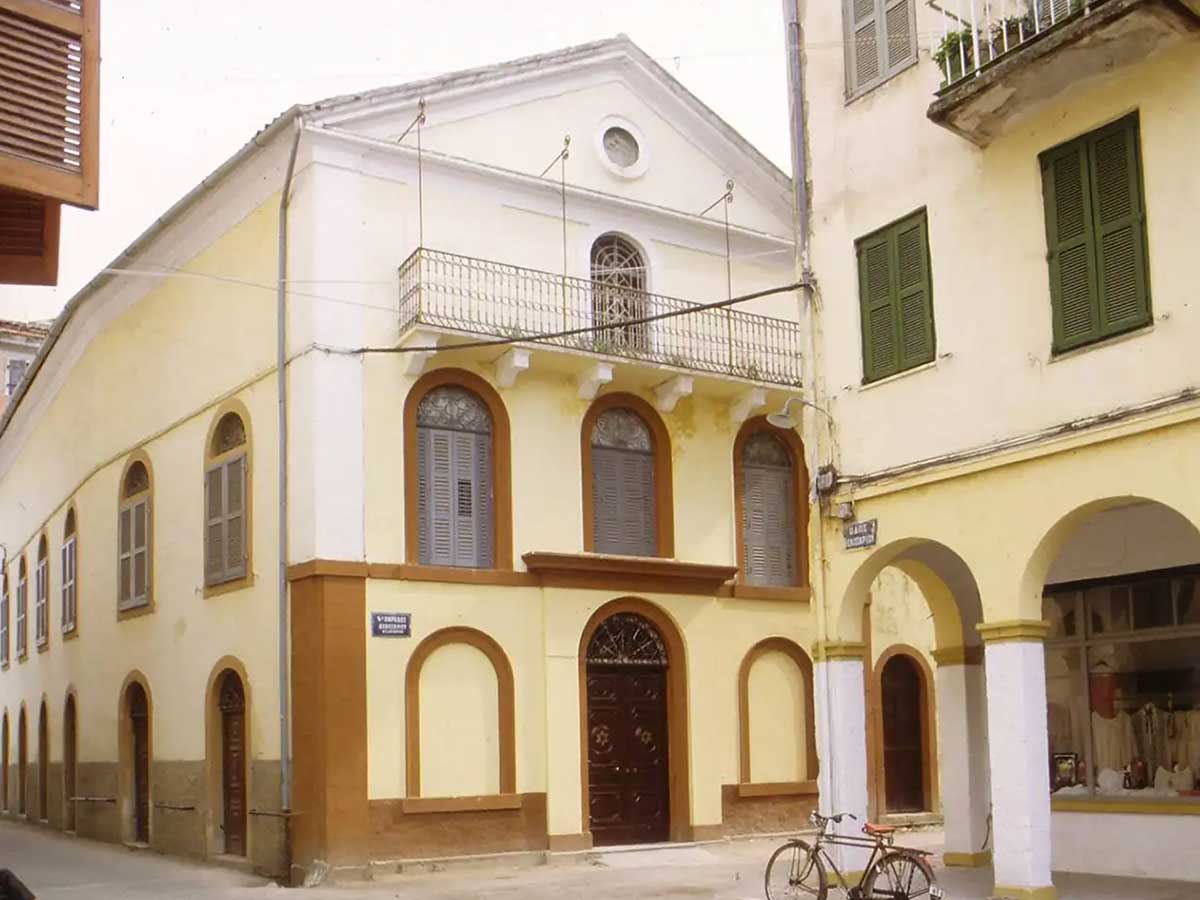
The Scuola Greca synagogue, sole survivor of wartime destruction, underwent restoration and continues serving the community. This building represents physical continuity with centuries of Jewish presence. Services occur regularly, attended by remaining Jewish residents and occasionally visitors from former Corfiot families now scattered globally.
A Holocaust memorial near the Old Fortress commemorates the murdered. Inaugurated in 2001, the monument lists victims’ names, ensuring individual memory rather than anonymous mass death. Annual ceremonies mark the deportation’s anniversary, bringing survivors, descendants, and sympathetic locals together in remembrance.
Educational efforts attempt ensuring the Holocaust’s lessons and Corfu Jewish history reach new generations. Schools include this history in curricula. Guided tours through the Jewish Quarter explain its significance. Publications document community history and individual stories, preserving memory as living witnesses age and pass.
International connections help sustain the community. Organizations supporting Jewish heritage provide funding for synagogue maintenance and cultural programs. Former Corfu Jews and descendants visit from Israel, maintaining emotional and sometimes material ties to ancestral home.
Architectural Heritage and Preservation
The Jewish Quarter’s distinctive architecture faces preservation challenges. Many buildings deteriorated through decades of neglect. Ownership disputes, unclear property rights, and limited resources complicate restoration efforts. Some structures have collapsed while others require urgent intervention preventing further damage.
Preservation advocates emphasize the quarter’s historical and architectural significance justifying conservation investment. The unique urban fabric, rare surviving examples of Mediterranean Jewish architectural traditions, and Holocaust memorial importance all argue for systematic preservation efforts.
Some restoration has occurred, particularly of synagogue and certain prominent buildings. These projects demonstrate feasibility while highlighting resource needs for comprehensive preservation. The challenge involves balancing authentic restoration with necessary modern adaptations making buildings usable for contemporary purposes.
Tourism could provide economic justification for preservation investment. Visitors increasingly seek authentic cultural and historical experiences. The Jewish Quarter offers distinctive heritage attracting tourists interested in Jewish history, Holocaust remembrance, and architectural preservation. Developing this potential requires sensitive planning avoiding commodification while enabling sustainable tourism.
Local residents, both Jewish and Christian, increasingly recognize the quarter’s value beyond tourism. This heritage represents important chapter in Corfu’s history, contributing to island’s multicultural identity. Preserving Evraiki maintains connection to more diverse past while enriching contemporary cultural landscape.
Living Memory and Contemporary Presence
Today’s Jewish community in Corfu numbers only dozens. This tiny population maintains remarkable commitment to preserving heritage and religious life. Regular services, holiday observances, and life cycle events continue, demonstrating continuity despite catastrophic losses.
Elderly survivors, though few remain, carry irreplaceable memories. Their testimonies, recorded extensively, provide firsthand accounts of prewar life, wartime horrors, and postwar reconstruction. These narratives personalize history, transforming statistics into individual human stories of suffering, loss, and resilience. Descendants of Corfu Jews, now living globally, maintain connections through visits, communications, and organizational involvement. These ties sustain community identity across dispersion. Annual gatherings bring scattered members together, reinforcing bonds and transmitting traditions to younger generations.
The Jewish Quarter itself, though diminished, retains distinctive atmosphere. Walking these narrow streets, particularly early morning or evening when tourist crowds thin, evokes past presence. Architectural details, occasional Hebrew inscriptions, and the surviving synagogue provide tangible connections to vanished community. Interfaith dialogue efforts involve Corfu’s Jewish community in building understanding with Christian and broader civic society. These initiatives address historical prejudices while fostering mutual respect. Such work honors Holocaust victims by combating hatred and promoting coexistence.
Lessons and Legacy
Corfu’s Jewish history offers multiple lessons extending beyond local significance. The story demonstrates how communities can coexist across religious differences while acknowledging real tensions and periodic violence punctuating generally peaceful relations. Neither romanticizing the past nor reducing it to persecution provides accurate understanding.
The Holocaust’s impact on Corfu illustrates genocide’s destructive totality. An ancient community, deeply rooted and culturally vibrant, could be nearly eliminated within days through systematic violence. This reality demands vigilance against resurgent antisemitism and all forms of ethnic or religious hatred. Cultural diversity represents strength and richness rather than problem requiring elimination. Corfu was enriched by Jewish presence, their contributions to commerce, culture, and intellectual life benefiting entire society. Recognizing this enrichment counters prejudice while accurately assessing history.
Preservation of minority heritage serves everyone’s interests. The Jewish Quarter belongs to all Corfiots and beyond, representing shared human heritage transcending particular religious or ethnic identities. Its protection preserves memory, beauty, and historical testimony valuable to present and future.
The handful of Jews maintaining community life in Corfu today demonstrate remarkable resilience. Their determination preserving religious practice and cultural identity despite tiny numbers and traumatic history inspires admiration. This persistence honors ancestors while asserting continued Jewish presence where once thousands lived.
Walking through Evraiki means walking through layers of time. Ottoman, Venetian, ancient, and recent past compress into narrow streets and weathered stones. The Jewish Quarter stands as testament to human capacity for both coexistence and destruction, creativity and cruelty, remembrance and renewal. Its stones speak to those willing to listen, telling stories that must not be forgotten.