The presence of the Maltese in Corfu began during the period of British rule, when the Ionian Islands were governed by Great Britain (1815–1864). As part of a broader political plan aimed at revitalizing the islands, Britain supported organized migration from Malta, as well as from Sicily and Southern Italy. The goal of this initiative was to stimulate the local economy and to incorporate skilled laborers, particularly stone masons, into the reconstruction of new British infrastructure.
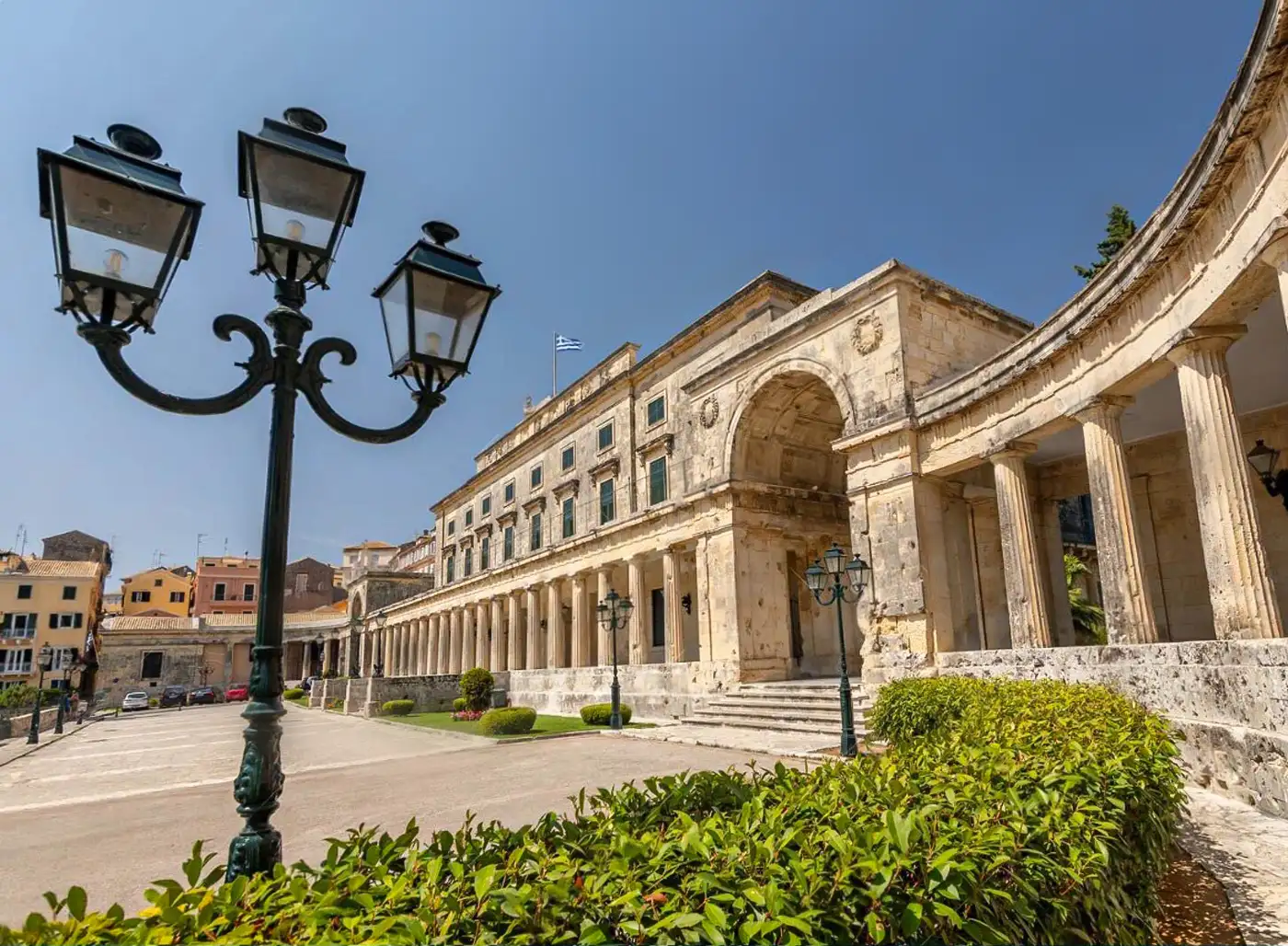
Between 1815 and 1860, approximately 40 Maltese families migrated to Corfu, amounting to around 80 individuals. They collaborated with the British authorities in the construction of major public works, such as the Palace of St. Michael and St. George (built between 1819 and 1824), along with the island’s fortifications and other public buildings. At the same time, a number of Maltese farmers from the island of Gozo also migrated, though they initially encountered difficulties integrating into society in Kefalonia and were eventually relocated to Corfu.
The technical expertise of the Maltese contributed a new level of architectural quality to the city, particularly through the use of Maltese limestone, which was imported from Malta and used to construct durable and imposing buildings. These skilled and hardworking individuals were responsible for landmark projects such as the Maitland Rotunda in Spianada Square (built in 1821), constructed entirely from marble quarried in Malta.
Despite their extensive contributions, the Maltese initially suffered from social exclusion and lived in relatively poor conditions. They were settled in districts such as Maletzika and Kotsela, the latter name originating from Gozo, both located outside the main urban center of Corfu. The Maltese worked in various roles, including as clerks, stonemasons, and farmers. In agriculture, they introduced crops such as sweet potatoes and pears, and also engaged in rabbit breeding, practices that were innovative for the region at the time.
Although they advanced within the local economy and gained cultural visibility, full social integration occurred only gradually. Over time, the Maltese became involved in public celebrations, established cultural associations, and joined the Corfiots in local festivals, most notably those honoring Saint Spyridon, whose veneration was also part of Maltese religious tradition. According to the official census of 1891, there were 1,673 Maltese recorded throughout Greece, of whom 928 were permanent residents of Corfu. After 1864, some Maltese departed from the island, but many remained, forming new generations and gradually becoming part of the broader Corfiot identity.
The enduring contribution of the Maltese is best exemplified by the major construction projects of the British period. Both the Maitland Monument and the Palace of St. Michael and St. George remain as prominent symbols of their legacy. The palace, a majestic neoclassical building designed by British architect George Whitmore, was constructed using both marble and limestone imported from Malta between 1819 and 1824. Whitmore worked alongside a team of skilled Maltese stone masons, who played a crucial role in realizing the structure’s elegant architectural design.
Since 1927, the palace has served a new purpose: it houses the Museum of Asian Art, which features collections from China, Japan, India, Korea, Southeast Asia, Nepal, Tibet, and other regions. These collections were primarily formed through generous donations, such as those from Greek diplomat Gregorios Manos. Today, hundreds of rare and fascinating objects, ceramics, bronze statues, theatrical masks, Tibetan wall paintings, are displayed within the marble-clad rooms of this historic building.
The use of Maltese limestone in the palace’s construction represents more than just a choice of material. It is a symbolic medium that carries the human stories and cultural connections between Malta, Britain, and Corfu. This material played a critical role in imparting a sense of timelessness and resilience to the palace, qualities that have allowed it to endure and flourish as a significant cultural monument to this day.
The historical relationship between Malta and Corfu offers a compelling example of cultural fusion and lasting contribution. The Maltese came, built, left a legacy, and became part of the local society. The very foundation of the Museum of Asian Art, enshrined within walls built of Maltese stone, illustrates the depth of this relationship, one that continues to be honored and preserved.