
Blog
The sea shapes islands in ways transcending geography. Water defines economy, culture, defense, and identity. For Corfu, maritime heritage runs deeper than the Mediterranean itself, stretching back through millennia when these shores witnessed empires rise and fall, trade routes flourish and fade, and naval powers contest control of strategic waters.
Corfu's Maritime Heritage: From Ancient Ports to Modern Marinas
Corfu’s maritime story begins in myth before emerging into history. Homer’s Odyssey places Odysseus on Scheria, widely identified with Corfu, where Phaeacian seafarers rescued the shipwrecked hero. These legendary navigators, blessed with ships that sailed themselves, reflected genuine Corcyraean naval prowess that would dominate the Ionian for centuries.
Historical Corcyra, founded around 734 BCE by Corinthian colonists, immediately established itself as formidable maritime power. The island’s position along routes connecting Greece with Italy and the Adriatic made naval strength essential for survival and prosperity. Within generations, Corcyra possessed one of ancient Greece’s largest fleets.
The conflict between Corcyra and Corinth over Epidamnus in 433 BCE triggered events leading to the Peloponnesian War. Thucydides recorded that Corcyra fielded 120 triremes, among the largest fleets in the Greek world, comparable to Athens itself. This naval capacity reflected sophisticated shipbuilding infrastructure, trained crews, and maritime economy supporting such military investment.
Ancient harbor installations still whisper their stories around Garitsa Bay, where Corcyra’s main port once thrived. Submerged foundations, breakwaters, and quay remains reveal engineering sophistication. The Romans later expanded these facilities, recognizing Corfu’s strategic value for controlling Adriatic approaches and maintaining communication with eastern empire provinces.
Archaeological evidence illuminates daily maritime life beyond grand naval battles. Amphorae recovered from shipwrecks document trade networks spanning the Mediterranean. Corfu exported wine, olive oil, and timber while importing luxury goods, grain, and manufactured items. The sea functioned as highway rather than barrier, connecting the island to broader economic and cultural networks.
Venetian Naval Mastery
Venice’s 400 year rule transformed Corfu into the Republic’s most important eastern Mediterranean stronghold. Serenissima understood that maritime power required more than ships; it demanded fortified bases, repair facilities, supply depots, and strategic positioning. Corfu provided all these elements magnificently.
The Old Fortress, commenced by Byzantines but dramatically expanded by Venetians, dominated the harbor entrance. Its walls plunged directly into the sea, preventing amphibious assault while artillery commanded approaches. The fortress housed arsenals, warehouses, barracks, and administrative centers supporting Venetian naval operations throughout the region.
Construction of the New Fortress in the late 16th century further strengthened defenses. These massive fortifications represented cutting edge military architecture, designed specifically to withstand Ottoman naval attacks and siege warfare. The engineering required moving earth equivalent to building small mountains, testimony to the strategic value Venice placed on maintaining Corfu.
Between the fortresses, the Old Port bustled with maritime commerce. Venetian galleys, merchant ships from across the Mediterranean, and local fishing vessels crowded the waterfront. Warehouses stored goods awaiting transshipment. Shipyards maintained vessels, their hammering and sawing creating constant soundtrack to harbor life.
The Venetian period established maritime infrastructure and traditions persisting long after the Republic’s fall. Shipbuilding techniques, nautical terminology, even certain fishing methods trace origins to Venetian influence. The sea remained not just economic resource but cultural foundation shaping Corfiot identity.
Venetian charts and portolans from this era document detailed knowledge of Ionian waters. Captains navigating these routes needed intimate understanding of currents, seasonal winds, hidden rocks, and safe anchorages. This accumulated wisdom, preserved through oral tradition and written records, represents invaluable maritime heritage.
British Naval Influence
Britain’s protection of Corfu following Napoleon’s defeat brought different maritime perspective. The Royal Navy viewed the island through imperial strategic lens, recognizing its value for projecting power into both Adriatic and eastern Mediterranean.
British administration modernized port facilities to accommodate steam powered vessels. Coaling stations, expanded quays, and improved harbor works reflected new technological realities. The cricket grounds British famously established required importing vast quantities of materials by sea, themselves maritime undertakings.
HMS Resistance and other Royal Navy vessels regularly called at Corfu, maintaining British presence and supporting operations against piracy plaguing post Napoleonic Mediterranean. These ships represented floating symbols of British sea power, their visits reinforcing imperial authority while providing economic boost to local suppliers and services.
British period charts and navigational guides improved safety for all mariners transiting Ionian waters. Lighthouse construction and expansion marked hazards previously known only through local knowledge. These aids to navigation benefited Greek, Italian, and international shipping long after British withdrawal.
The blend of British efficiency, Venetian foundations, and Greek seamanship created unique maritime culture. Corfiot sailors became renowned throughout the Mediterranean, sought after for their navigational skills and ship handling abilities. This reputation continues today among Greek merchant marine officers, many of Corfiot origin.
Traditional Boat Building
Before fiberglass and steel dominated boat construction, Corfu supported thriving wooden boat building industry. Master craftsmen learned through apprenticeship systems stretching back generations, their knowledge encompassing timber selection, hull design, joinery techniques, and finishing methods.
Traditional fishing boats called trechantiri evolved specifically for Ionian conditions. Their distinctive lines balanced seaworthiness, cargo capacity, and ease of beaching. Each builder added personal touches while maintaining essential characteristics proved through centuries of use. These vessels represent genuine maritime architecture, designed through empirical testing rather than formal calculation.
Boat building occurred primarily in fishing villages where families depended on vessels for livelihood. Construction sites doubled as social centers where men gathered to assist, critique, and share maritime knowledge. Launching ceremonies blessed new boats with religious ritual, acknowledging sea’s power over human fate.
The craft’s decline parallels broader shifts in fishing industry. Modern materials proved cheaper and easier to maintain. Young people increasingly chose other careers over physically demanding maritime work. Today only handful of traditional builders remain, their workshops rare preserves of dying knowledge.
Efforts to document these techniques before they disappear completely have mixed success. Video recordings and written descriptions capture procedures but miss tacit knowledge gained only through hands on experience. The feel of properly faired plank, the sound indicating tight caulking, the judgment determining sufficient fastening; these skills resist easy transfer.
Some builders occasionally welcome observers, particularly those demonstrating genuine interest rather than casual curiosity. Watching these masters work reveals craftsmanship rooted in intimate understanding of wood, water, and the relationship between them. Each boat represents individual expression within traditional form, art as much as engineering.
Fishing Traditions and Modern Realities
Fishing sustained Corfu’s coastal communities for millennia. Traditional methods evolved to match target species, seasons, and local conditions. Lampuki fishing in autumn, when dolphinfish migrate past Corfu, employed techniques perfecting timing and lure presentation. Winter brought different species requiring different approaches.
Older fishermen remember richer seas and larger catches.
Overfishing throughout the Mediterranean has depleted stocks dramatically. European Union regulations attempt to restore balance through quotas, restrictions, and seasonal closures. These measures create tension between conservation necessity and fishing families’ economic survival.
Modern fishing boats incorporate electronics their grandfathers could barely imagine. GPS navigation, fish finders, and electronic chart plotters replace traditional knowledge and hand bearing compasses. These tools increase efficiency but perhaps diminish intimate connection between fisherman and environment that characterized earlier generations.
Despite challenges, fishing villages maintain distinctive character. Early mornings still bring boats returning with night’s catch. Nets require constant mending, an occupation filling hours between trips. Waterfront tavernas serve fish caught that morning, prepared according to recipes passed through families.
The rituals surrounding fishing persist more in cultural memory than daily practice. Blessing the fleet on religious feast days continues, priests sprinkling holy water on vessels and crew. These ceremonies acknowledge dangers inherent in maritime work and seek divine protection for those whose livelihood depends on uncertain seas.
Fishing tourism offers economic alternative for some boat owners. Visitors pay to experience traditional fishing methods, learning to set nets or long lines. While commercial in nature, these excursions preserve knowledge and techniques that might otherwise vanish. They also foster appreciation among outsiders for fishing’s skill requirements and historical importance.
Modern Marinas and Yacht Culture
Contemporary Corfu embraces recreational boating on scale unimaginable to previous generations. Multiple marinas cater to sailing yachts and motor vessels cruising the Mediterranean. These facilities provide services ranging from basic berthing to complete refits, supporting maritime economy distinct from traditional fishing or commercial shipping.
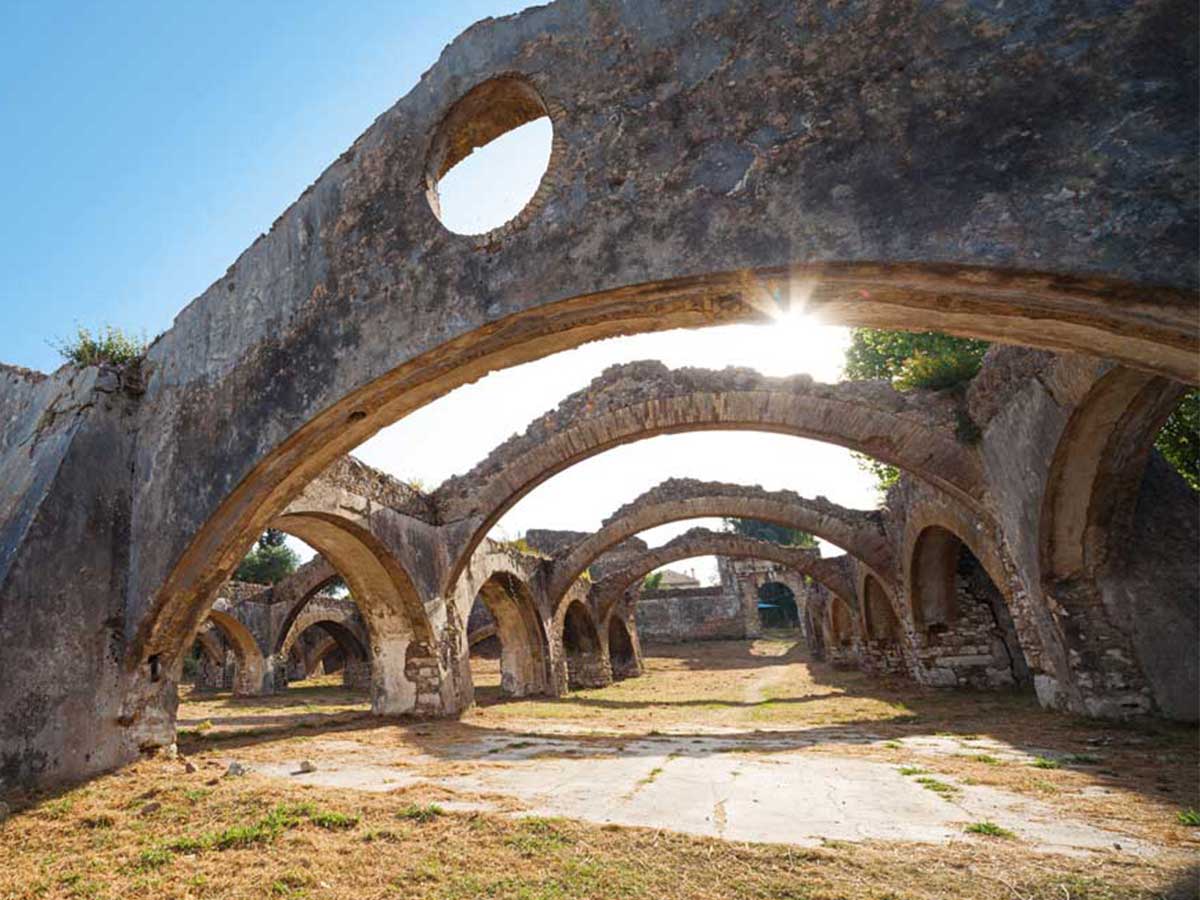
Gouvia Marina, largest on the island, occupies site with long maritime history. Venetian arsenal ruins remain visible, their massive arches testament to earlier era’s shipbuilding ambitions. Modern pontoons and service buildings now surround these monuments, creating temporal juxtaposition between old and new maritime use.
Charter companies base fleets in Corfu, offering bareboat rentals to experienced sailors and crewed vessels for those seeking guided experiences.
These operations introduce thousands of visitors annually to sailing the Ionian, arguably the Mediterranean’s most forgiving waters. Gentle summer winds and numerous anchorages make the region ideal for novice cruisers.
Superyachts increasingly include Corfu in eastern Mediterranean itineraries. These floating palaces, some exceeding 50 meters, require specialized facilities and services. Their presence brings significant economic benefit while creating visual spectacle for locals and tourists alike.
The sight of such vessels anchored off Corfu’s coast evokes comparisons to Venetian galleys that once filled these same waters.
Sailing schools teach new generations navigation, seamanship, and appreciation for wind powered travel. Students learn skills that, while recreational for most, connect them to maritime traditions stretching back to prehistory. The satisfaction of successful passage under sail alone transcends modern convenience, offering direct experience of fundamental human relationship with sea. Regattas and sailing competitions attract participants internationally. These events showcase Corfu’s maritime infrastructure while celebrating sailing culture.
Traditional boat races occasionally feature alongside modern racing yachts, deliberately linking past and present, honoring heritage while embracing contemporary expression.
Archaeological Underwater Heritage
Corfu’s waters conceal archaeological treasures documenting millennia of maritime activity. Shipwrecks from ancient, medieval, and modern periods rest on the seabed, time capsules awaiting investigation. Amphora fields mark ancient trading vessel sites. Ballast stone piles indicate medieval wrecks. More recent losses include vessels from World Wars and earlier conflicts.
Underwater archaeology faces unique challenges. Marine environment degrades organic materials while encrusting and concealing inorganic ones. Excavation underwater requires specialized training and expensive equipment. Yet these sites offer perspectives on maritime history unavailable through terrestrial archaeology or written records.
Several accessible wreck sites attract sport divers, though regulations protect artifacts from removal. Observing amphora or anchor still in situ where ancient mariners lost their vessel creates powerful connection across centuries.
These encounters make history tangible in ways museum displays rarely achieve.
Systematic surveys continue revealing new sites. Each discovery adds detail to understanding of ancient trade routes, ship construction, cargo types, and navigation patterns. The Mediterranean seabed represents vast archive of human maritime history, with Corfu’s waters contributing significant chapters.
Conservation presents ongoing challenges. Natural deterioration continues slowly but inevitably. Looters damage sites seeking artifacts for black market sale. Development projects, harbor expansions, and cable laying threaten undiscovered sites. Balancing preservation with practical realities requires difficult compromises.
Public awareness of underwater cultural heritage grows gradually. Educational programs emphasize that shipwrecks and submerged sites deserve protection equal to terrestrial monuments. Responsible diving practices and reporting of discoveries help preserve these irreplaceable resources for future research and appreciation.
Living Maritime Culture
Beyond physical infrastructure and historical sites, Corfu maintains living maritime culture expressed through language, cuisine, festivals, and daily life. The sea permeates consciousness even for residents never venturing far from shore. Its presence shapes everything from architecture to social organization.
Maritime terminology infiltrates everyday speech. Directions reference sea positions. Weather discussions emphasize wind direction using ancient names. Food preparation terms derive from shipboard cooking. This linguistic legacy reflects centuries of society organized around maritime activities.
Cuisine showcases sea’s bounty through preparations developed over generations. Savoro, fish marinated with rosemary, vinegar, and raisins, originated as preservation method for provisioning vessels. Bourdeto, spicy fish stew, demonstrates eastern Mediterranean influences arriving via maritime trade. These dishes represent edible history, recipes evolved through practical necessity and cultural exchange.
Religious festivals maintain strong maritime components. Processions carrying icons parade along waterfronts. Priests bless fishing fleets and recreational craft alike. These ceremonies acknowledge divine power over uncontrollable elements while seeking protection for those venturing onto dangerous waters. The blend of Orthodox Christianity and pre Christian marine superstitions creates distinctive spiritual relationship with the sea.
Even modern Corfu’s tourist economy fundamentally depends on maritime access. Ferries deliver most visitors. Cruise ships deposit thousands for brief port calls. Beaches and water sports attract sun seekers. The sea that sustained ancient Corcyraeans through fishing and trade now supports descendants through tourism, different manifestation of same maritime dependence.
Preserving and Presenting Heritage
Corfu recognizes maritime heritage’s value for cultural identity and tourism appeal. Yet systematic presentation and preservation lag behind potential. No dedicated maritime museum exists, forcing distribution of nautical artifacts and information across multiple institutions.
The Old Fortress hosts occasional maritime history exhibits. The Archaeological Museum displays ship related artifacts alongside broader collections. Private initiatives, including floating museums on traditional vessels, appear sporadically.
Comprehensive maritime heritage center could consolidate these efforts, providing focus for preservation and education.
Educational programs introducing young Corfiots to island’s maritime past remain limited. School curricula emphasize national Greek history with insufficient attention to specifically Corfiot maritime dimensions.
Oral history projects collecting older residents’ memories of traditional maritime life proceed haphazardly, racing against time as living links to the past disappear.
Tourism marketing increasingly emphasizes maritime heritage as unique selling point. Historical harbor tours, traditional fishing experiences, and sailing trips to ancient sites package history as experiential product. While commercial, these offerings serve educational function and economic incentive for heritage preservation.
International cooperation on Ionian maritime heritage brings Corfu together with Italian, Albanian, and mainland Greek partners. Shared history of Venetian rule, common maritime traditions, and interconnected archaeological sites create natural basis for collaborative projects. These initiatives promise enhanced research, conservation, and presentation benefiting all participants.
The Eternal Relationship
Corfu’s relationship with surrounding waters defies simple summary. The sea provides and threatens, connects and isolates, shapes identity and determines fate. Millennia of maritime history layer upon each other, ancient harbor stones supporting modern pontoons, Venetian arsenals framing contemporary yacht services, traditional fishing boats moored beside fiberglass pleasure craft.
Understanding Corfu requires understanding its maritime dimension. The island makes sense only when viewed as what it fundamentally is: a place defined by water, a society evolved through relationship with the sea, a culture bearing accumulated wisdom of countless generations who lived, worked, and died within sight and sound of waves.
This heritage belongs not to past alone but continues shaping present and future. Every ferry arrival, fishing boat departure, and yacht anchoring writes new verse in ongoing maritime epic. Corfu’s story remains fundamentally nautical, as it has been since Phaeacian ships first sailed these waters in myth and history’s dawn.