Table of Contents
Traditional Coffee Houses: Corfu’s Kafeneion Culture
Small tables cluster beneath plane trees in village squares. Inside simple rooms, men hunched over backgammon boards contemplate moves while cigarette smoke spirals toward nicotine-stained ceilings. The proprietor, knowing everyone’s preferences, prepares coffee without asking. This scene, repeated across thousands of kafeneions throughout Greece, represents living tradition dating back centuries. These humble establishments serve as democracy’s grassroots, neighborhood parliaments where politics debated, gossip exchanged, and community bonds maintained through ritual of shared time and simple refreshments.
Historical Roots and Evolution
Kafeneions emerged during Ottoman period when coffee culture spread throughout empire. These public spaces offered alternatives to private homes for male socializing, creating neutral ground transcending family and neighborhood divisions. The tradition survived Ottoman rule’s end, adapting to modern Greece while maintaining essential character.
Post-independence kafeneions became political organizing spaces. Revolutionary ideas circulated, resistance movements coordinated, and civic consciousness developed over coffee and conversation. This political dimension elevated humble coffee houses beyond mere commercial establishments into institutions shaping national destiny.
Mid-20th century represented kafeneion golden age. Before television invaded homes and cars enabled mobility, these neighborhood gathering places provided primary social outlet. Every village, every urban neighborhood supported multiple kafeneions, each developing distinct character and regular clientele.
Recent decades brought decline as lifestyles changed. Younger generations prefer modern cafes offering WiFi, diverse menus, and contemporary ambiance. Women’s increasing public presence challenges traditional male exclusivity. Tourism transforms some kafeneions into attractions rather than authentic community spaces. Yet many survive, particularly in villages and working-class urban neighborhoods, maintaining traditions against modernization pressures.
Physical Space and Atmosphere
Architecture ranges from basic rooms with few amenities to slightly more elaborate spaces, but simplicity remains defining characteristic. Concrete or tile floors, simple wooden chairs and tables, minimal decoration beyond perhaps political posters or religious icons create utilitarian environment emphasizing function over aesthetics.
Outdoor seating under trees or awnings provides pleasant summer refuge. These shaded spaces become centers of village life where passersby greet patrons, children play nearby, and leisurely hours pass watching daily rhythms unfold.
Interior spaces, often small and cramped, create intimacy forcing proximity. This physical closeness facilitates conversation and shared experience. The modest scale prevents anonymity; everyone seen, everyone part of collective presence.
Television, when present, often shows news or sports creating focal point and conversation topics. However, TV doesn’t dominate as in modern sports bars; it provides background and occasional interest without overwhelming social interaction.
Basic amenities reflect kafeneion’s humble status. Simple bathrooms, minimal kitchen facilities for preparing coffee and heating water, perhaps small refrigerator for cold drinks. These establishments make no pretense toward luxury or sophistication.
The Social Ecology
Regular clientele form kafeneion’s social core. These daily visitors, often elderly retired men, spend hours in familiar company. Their presence creates continuity and maintains institution’s character. New arrivals integrate slowly, earning acceptance through regular attendance and appropriate behavior.
Seating patterns reflect social hierarchies and relationships. Regular tables, preferred positions, and customary arrangements allow reading social map through spatial organization. Disrupting these patterns shows ignorance of unwritten rules governing space use.
Conversation topics range widely: politics always prominent, sports discussions intensify around major matches, local gossip circulates freely, philosophical debates emerge spontaneously. These discussions, sometimes heated but rarely violent, exercise democratic participation in microcosm.
Backgammon and card games provide entertainment and competition. The distinctive sound of dice hitting board and pieces moving accompanies most kafeneion visits. Games offer structure for interaction while allowing conversation flowing around play.
Proprietor occupies central social position. Beyond commercial role, he (overwhelmingly male) serves as host, mediator, confidant, and sometimes banker when regulars run short. This relationship transcends simple business transaction into complex social bond.
Coffee and Refreshments
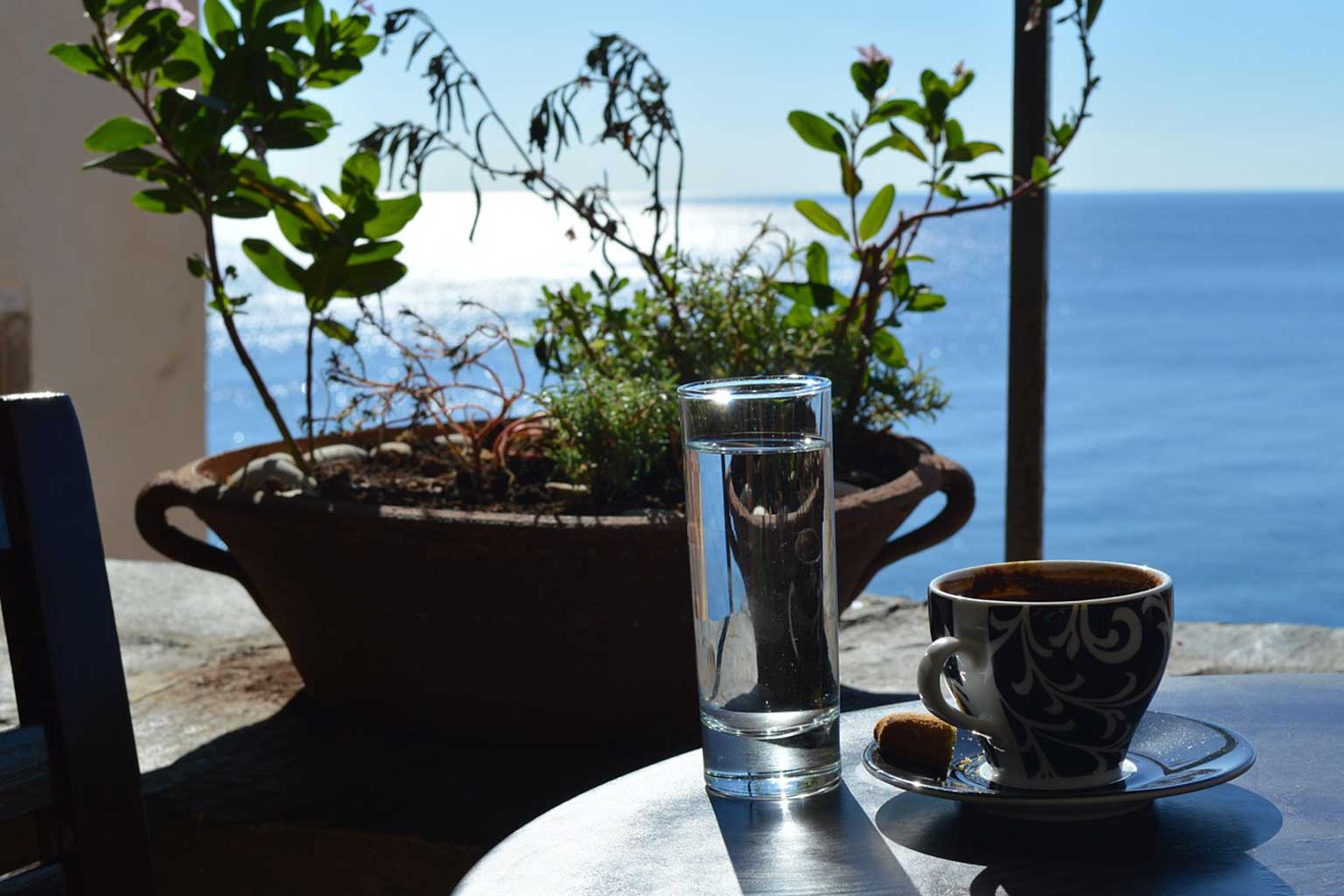
Greek coffee, prepared in briki (small pot), remains kafeneion staple. The thick, strong brew served in small cups with grounds settling at bottom represents tradition unchanged since Ottoman times. Proper preparation requires skill: achieving ideal foam (kaimaki), avoiding boiling over, timing perfectly.
Sugar preference determines coffee style: sketo (no sugar), metrio (medium), or glyko (sweet). These aren’t adjusted at table; coffee prepared according to order. Getting preference right matters; coffee drunk as prepared without complaint or modification.
Serving ritual includes glass of cold water accompanying coffee. This pairing, practical for cleansing palate and staying hydrated, carries symbolic weight as fundamental hospitality gesture.
Ouzo, anise-flavored spirit, provides alcoholic option particularly afternoon and evening. Served with water turning clear liquid milky white, ouzo accompanies meze and conversation. Drinking ouzo alone, quickly, or to intoxication violates unwritten codes.
Tsipouro, stronger grape-based spirit, offers alternative to ouzo. This fiery drink, sometimes flavored with anise, accompanies serious discussions and male bonding rituals.
Beer, soft drinks, and bottled water available but somehow seem less authentic than traditional offerings. These concessions to modern preferences coexist with traditional items without replacing them.
Food offerings minimal: perhaps cookies, simple pastries, nuts. Kafeneions aren’t restaurants; sustenance secondary to social function. Nearby tavernas provide meals when needed.
Gender Dynamics
Male dominance remains kafeneion’s most controversial aspect. Traditionally exclusively male spaces, these establishments historically excluded women reflecting broader patriarchal social organization. Women had separate social spheres centered on homes and family networks.
Contemporary attitudes shifting but incompletely. Urban kafeneions increasingly welcome women, particularly younger educated owners recognizing changing society. Village establishments remain more traditional, women’s presence unusual and sometimes uncomfortable for regulars.
Female visitors face navigation between respecting tradition and asserting contemporary equality. Some women deliberately patronize kafeneions challenging exclusivity, others avoid from discomfort or principle. No single right answer exists to this cultural tension.
Younger generations often find gender segregation anachronistic. Modern cafes deliberately creating inclusive atmospheres attract young people of both genders. This generational shift threatens traditional kafeneion model while reflecting genuine social evolution.
Cultural Significance
Kafeneions preserve linguistic and cultural traditions. Older speech patterns, traditional idioms, and local dialects survive in conversation among elderly patrons. These linguistic environments maintain Greek language’s regional diversity against homogenizing media influences.
Political socialization occurs through kafeneion debates. Citizens develop opinions, test arguments, and engage civically through these informal discussions. This grassroots democratic participation, however imperfect, exceeds passive media consumption or isolated opinion formation.
Intergenerational knowledge transfer happens organically. Younger men absorbing older generation’s wisdom, skills like backgammon strategy passing through observation and participation, community history transmitted orally all occur naturally within kafeneion setting.
Social safety net function provides crucial support. Isolated individuals, particularly elderly widowers, maintain human connection preventing loneliness and depression. This informal welfare system, though limited, offers real mental health benefits.
Time management opposing capitalist acceleration offers alternative temporality. Kafeneion time stretches, moments extending through conversation and contemplation. This resistance to productivity culture creates space for being rather than doing.
Visitor Experience
Entering kafeneion as outsider requires cultural sensitivity. Order something, even if just coffee. Sit quietly observing before attempting interaction. Wait for invitation into conversations or games rather than forcing participation.
Language barriers complicate but don’t prevent engagement. Basic Greek phrases help tremendously. Body language, smiles, and goodwill bridge remaining gaps. Many patrons speak some English though preferring Greek conversation.
Photography requires particular care. Kafeneion isn’t museum exhibit for tourist consumption. Asking permission, being discreet, and avoiding intrusive documentation shows respect. Some locations prohibit photography entirely; respect these boundaries.
Duration expectations differ from modern cafe culture. Don’t feel rushed to leave after finishing drink. Lingering accepted, expected even. However, recognize closing time varies; eventually proprietor signals through cleaning or explicit statement.
Kafeneion culture, though challenged by modernity, persists in Corfu maintaining traditions linking present to past.