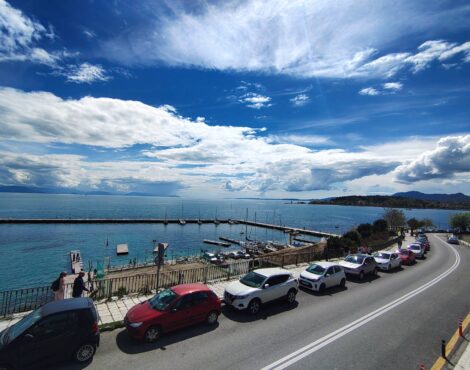

Corfu is surrounded by the Ionian Sea, and for centuries life here has been shaped by the waves. Beyond tourism and trade, fishing has always been at the heart of island life. Small communities along the coast lived by the rhythm of the sea, setting out at dawn, mending their nets at midday, and selling their catch in village markets or straight from the boats. Even today, when modern life has changed much of Corfu, the traditional fishing communities keep alive a way of life that connects the island deeply with the sea.
Villages by the Shore
Fishing was most common in coastal villages where families depended almost entirely on the sea.
-
Kassiopi in the north combined fishing with trade, its small port always busy with boats.
-
Benitses on the east coast was once a famous fishing village before it turned into a resort, and older residents still remember the days when dozens of boats filled the harbor.
-
Petriti in the south remains one of the most active fishing villages today, with tavernas that serve fish caught only a few hours earlier.
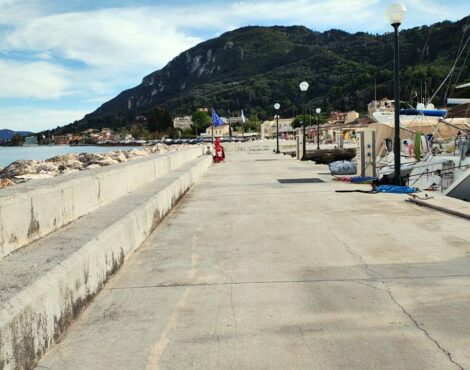
These villages grew around their harbors, where boats, nets and fish markets created the daily rhythm of life.
The Boats and the Nets
Traditional fishing boats in Corfu are called kaikia. Painted in bright colors with names of saints or family members, they are both practical and symbolic. Nets were carefully woven and repaired by hand, a skill passed from fathers to sons. Children often learned to fish before they could read, helping to haul in the catch or clean the day’s work.
Fishing methods were simple but effective. Nets were cast near the coast for sardines, mullet and bream. Octopus traps were lowered into rocky areas, while lines were used for larger fish. The work was demanding, but the sea provided enough to sustain families and feed the island.
Women’s Role in the Communities
While men went to sea, women played their own part in the fishing tradition. They prepared food for long days on the water, mended nets, sold fish at markets and kept the households running. In some villages, women also gathered shellfish and seaweed along the shore. Fishing was never only the work of men but a shared family effort.
The Market and the Meal
Fresh fish was often sold directly from the boats in the harbor. Buyers knew that what they took home had been caught that very morning. The daily catch shaped the island’s cuisine. Grilled sardines with lemon, octopus cooked in wine, and fish stews like bourdeto or bianco became household staples. For islanders, fish was not just food but a reflection of their bond with the sea.
Festivals and Traditions
Fishing communities also celebrated their connection with the sea in festivals. Saint Nicholas, the patron saint of sailors, was honored each December. Boats were blessed for safety, and processions filled the harbors with music and prayer. Summer feasts often included fish as the central dish, served to neighbors and visitors alike.
The Challenges of Today
Modern life has changed much of this tradition. Larger fishing boats and industrial practices reduced local catches. Many young people left fishing for tourism jobs that seemed easier and more profitable. Climate change and overfishing have also made the sea less generous than before.
Yet in places like Petriti, Kassiopi and smaller harbors across the island, traditional fishing still survives. Families continue to fish with respect for the sea, selling their catch to local tavernas and markets. Some have even turned to fishing tourism, inviting visitors on their boats to experience the old ways.
A Living Heritage
Fishing in Corfu is more than an occupation. It is a way of life that shaped communities, cuisine and culture. To sit in a small harbor and watch the boats return at sunset is to see a tradition that has lasted for centuries. Even as the island changes, the fishing villages remind us that life by the sea is still at the heart of Corfu’s story.