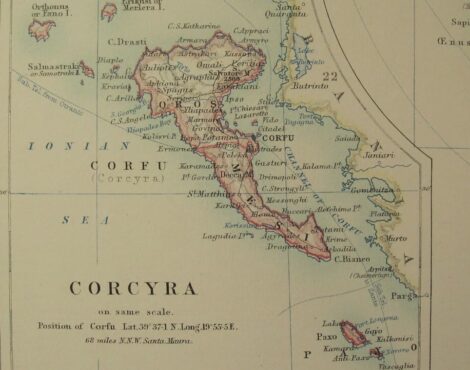
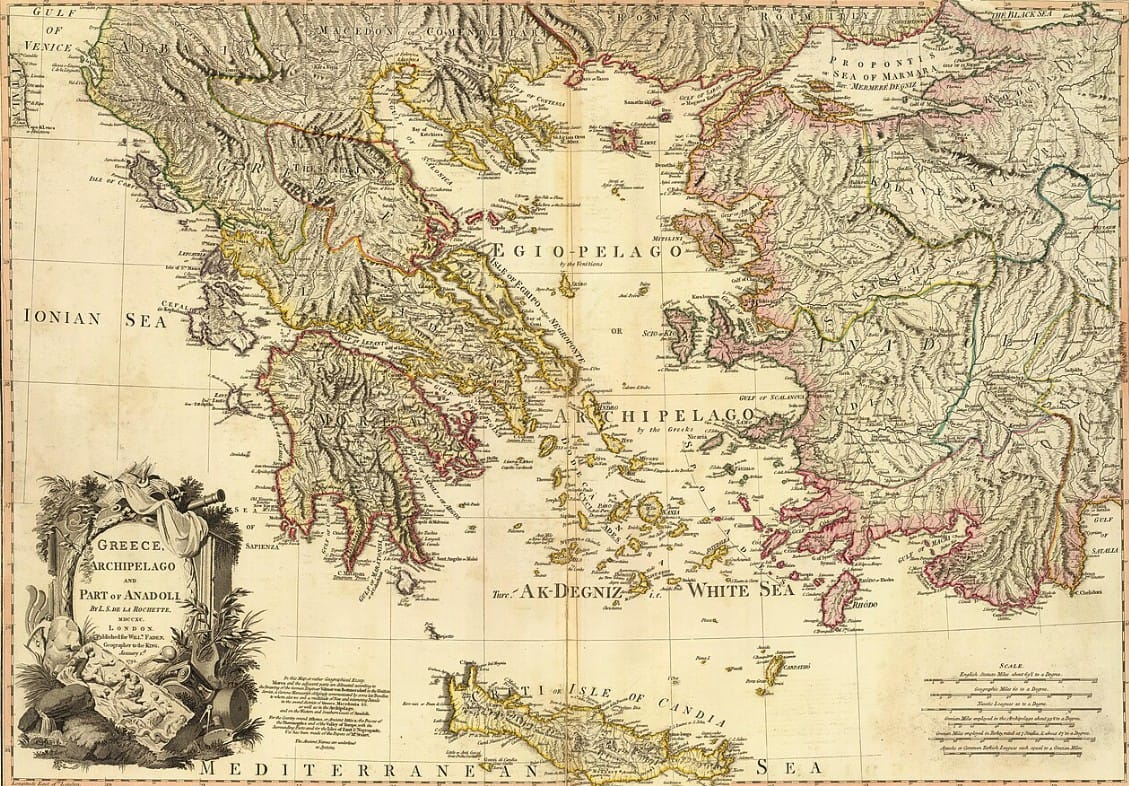
The period between the effective end of Byzantine rule in Corfu and the island’s voluntary submission to Venetian protection in 1386 is among the least studied and least understood chapters in Corfiot history, partly because it lacks the dramatic architectural legacy of the Venetian period that followed it and partly because the succession of powers that contested control of the island during these turbulent decades left records that are fragmentary and difficult to interpret. Yet the period matters considerably for understanding what Corfu became under Venice, because the political and demographic pressures of the thirteenth and fourteenth centuries shaped the Corfiot community’s understanding of its own vulnerability and its own interests in ways that made the choice of 1386 comprehensible as a rational response to a genuinely difficult situation rather than a simple surrender to superior force.
The Fourth Crusade and the Fracturing of Byzantine Authority
The sack of Constantinople by the forces of the Fourth Crusade in April 1204 was one of the most consequential events in the history of the medieval Mediterranean, an act of catastrophic violence against the capital of Eastern Christendom that shattered the political unity of the Byzantine Empire and created a power vacuum across its former territories that competing Latin and Greek successor powers spent the following century attempting to fill. For Corfu, positioned at the western edge of the former Byzantine world and directly on the maritime routes between Italy and the eastern Mediterranean, the fragmentation of Byzantine authority meant the sudden disappearance of the administrative and military framework that had provided the island’s basic political stability for eight centuries.
The immediate aftermath of 1204 brought a succession of claimants to the island whose grip was often tenuous and whose interest in the welfare of the local population was frequently secondary to their broader strategic calculations. The Latin Empire established at Constantinople, the Venetian territorial acquisitions across the former Byzantine Aegean, and the various Greek successor states that emerged in the provinces all had interests in the Ionian islands that they pursued with the military and diplomatic instruments available to them, creating a period of instability that the island’s population experienced as a succession of sieges, negotiations, and transfers of authority whose underlying logic was often opaque from the perspective of those living through it.
The Despotate of Epirus and the Greek Succession
The Despotate of Epirus, the Byzantine successor state founded in northwestern Greece and the Epirote coast by Michael Komnenos Doukas following the Latin conquest of Constantinople, was the power most immediately relevant to Corfu’s situation in the early thirteenth century. The Despotate inherited the Byzantine administrative tradition and maintained the Orthodox ecclesiastical structures that the Latin conquest had threatened, making it in the eyes of the island’s Greek-speaking Orthodox population the most legitimate available successor to Byzantine authority. Epirote control over Corfu during significant portions of the thirteenth century provided a degree of cultural and religious continuity that the Latin powers around it did not offer, and the administrative frameworks and the ecclesiastical structures that persisted through the Epirote period contributed to the preservation of the island’s Byzantine heritage through the turbulent decades of the early post-Byzantine era.
The Despotate’s hold on Corfu was never entirely secure, however, its position challenged not only by the Latin powers seeking to extend their influence in the Ionian but also by internal conflicts within the Epirote state itself that periodically diverted attention and military resources from the defence of peripheral territories. The strategic value of Corfu, consistently recognised by every power that engaged with the Adriatic and Ionian region, ensured that any weakening of Epirote authority on the island was immediately identified and exploited by competing claimants.
The Angevin Administration and the Latin Church
The Angevin rulers of Naples acquired Corfu in 1267 as part of the territorial arrangements that accompanied Charles of Anjou’s construction of a southern Italian and Mediterranean empire in the aftermath of his papal-supported campaign against the Hohenstaufen rulers of Sicily. The Angevin administration brought the island firmly within the orbit of western European feudal political culture and introduced the Latin ecclesiastical hierarchy alongside the existing Orthodox structures, creating the dual religious administration that would characterise the island’s ecclesiastical life through the subsequent Venetian period and that contributed to the development of a distinctive Corfiot religious culture in which Orthodox and Catholic traditions coexisted in closer proximity than almost anywhere else in the medieval Mediterranean world.
The Angevin period also saw the development of the feudal land tenure system that shaped the agricultural economy of the island for centuries, with the distribution of landed estates among a Latin-oriented nobility creating social structures that the Venetian administration subsequently maintained and modified rather than dismantling. The physical legacy of the Angevin period in Corfu is less immediately visible than that of the Venetian centuries, but the social and institutional frameworks it established contributed significantly to the conditions that made the Venetian acquisition of 1386 possible and its subsequent administration relatively stable.
The Choice of Venice and Its Significance
The voluntary submission of Corfu to Venetian protection in 1386 was the culmination of a political process in which the island’s community, exhausted by decades of contested sovereignty and acutely aware of the accelerating Ottoman advance across the former Byzantine territories, made a deliberate and reasoned choice in favour of the power most capable of providing the security and stability that the community required. Venice, at the height of its commercial and maritime empire in the eastern Mediterranean, possessed the naval capability to defend the island against Ottoman assault, the administrative experience to govern it efficiently, and the commercial connections to integrate it into the most dynamic economic system available in the late medieval Mediterranean world.
The terms negotiated for the submission were carefully designed to preserve the essential elements of the existing Corfiot social and legal structure, including the rights and privileges of the local nobility, the maintenance of the Orthodox ecclesiastical tradition alongside the Catholic hierarchy that the Angevin period had introduced, and the preservation of the customary legal practices that the community had developed over the preceding centuries. These terms were not merely concessions extracted by a community negotiating from a position of weakness but the expression of a Venetian administrative philosophy that consistently preferred accommodation and co-option to confrontation and replacement when governing the diverse communities of its island empire. The Corfiot submission of 1386 thus marked not merely a change of rulers but the beginning of a relationship between the island and its governing power that would, in its best moments, be genuinely collaborative and would produce results that neither party could have achieved alone.