Water as a Lifeline
Corfu’s history is often told through its fortresses, palaces, and churches — but an equally important part of its heritage flows quietly through its landscape: its water architecture. Under Venetian rule (1386–1797), the island saw the construction of aqueducts, bridges, and cisterns that transformed daily life. These structures, blending functionality with elegant engineering, remain enduring reminders of an era when water was the lifeblood of communities.
The Venetian Vision for Water Management
The Venetians understood the strategic and economic value of water. On Corfu, they invested heavily in infrastructure to ensure a reliable water supply, facilitate agriculture, and connect settlements. Their engineers adapted classical Roman techniques to the island’s unique geography, creating durable stone structures that still stand centuries later.
Venetian Aqueducts of Corfu1. The Benitses Aqueduct
Located in the coastal village of Benitses, this aqueduct is one of Corfu’s best-preserved examples of Venetian water engineering. Built to transport water from inland springs to the village, it features a graceful series of stone arches partially overgrown with vegetation.
Highlights:
- Elegant arched design blending with the surrounding hills.
- Historical importance for irrigation and domestic supply.
- Scenic walking paths along the aqueduct route.
2. The Potamos Aqueduct
Near Corfu Town, the Potamos area was once a major agricultural hub. The Venetian aqueduct here channeled water from higher ground to supply farms and households. Though less intact today, its remnants are still visible, offering a glimpse into centuries-old water management.
3. The Mon Repos Aqueduct
Within the grounds of the Mon Repos estate, a charming stone arcade lined with greenery once formed part of a water distribution system. Today, it provides a shaded walkway for visitors, where nature has entwined itself with history.
Venetian Bridges: Connecting the Island1. The Bridge of Kynopiastes
This small stone bridge, hidden in the lush countryside near Kynopiastes, showcases the Venetians’ ability to combine utility and beauty. Built for foot traffic and livestock, it allowed villagers to cross streams year-round.
2. Agios Markos Bridge
Situated near the village of Agios Markos, this bridge formed part of an old road network that linked northern settlements to Corfu Town. Its robust stonework has withstood centuries of use, making it a living monument to Venetian craftsmanship.
3. Gouvia Bridge
Close to the former Venetian shipyard in Gouvia, this bridge was strategically located to connect maritime and inland routes. Standing near historic docks, it offers insight into the integrated nature of Venetian infrastructure.
The Maitland Rotunda
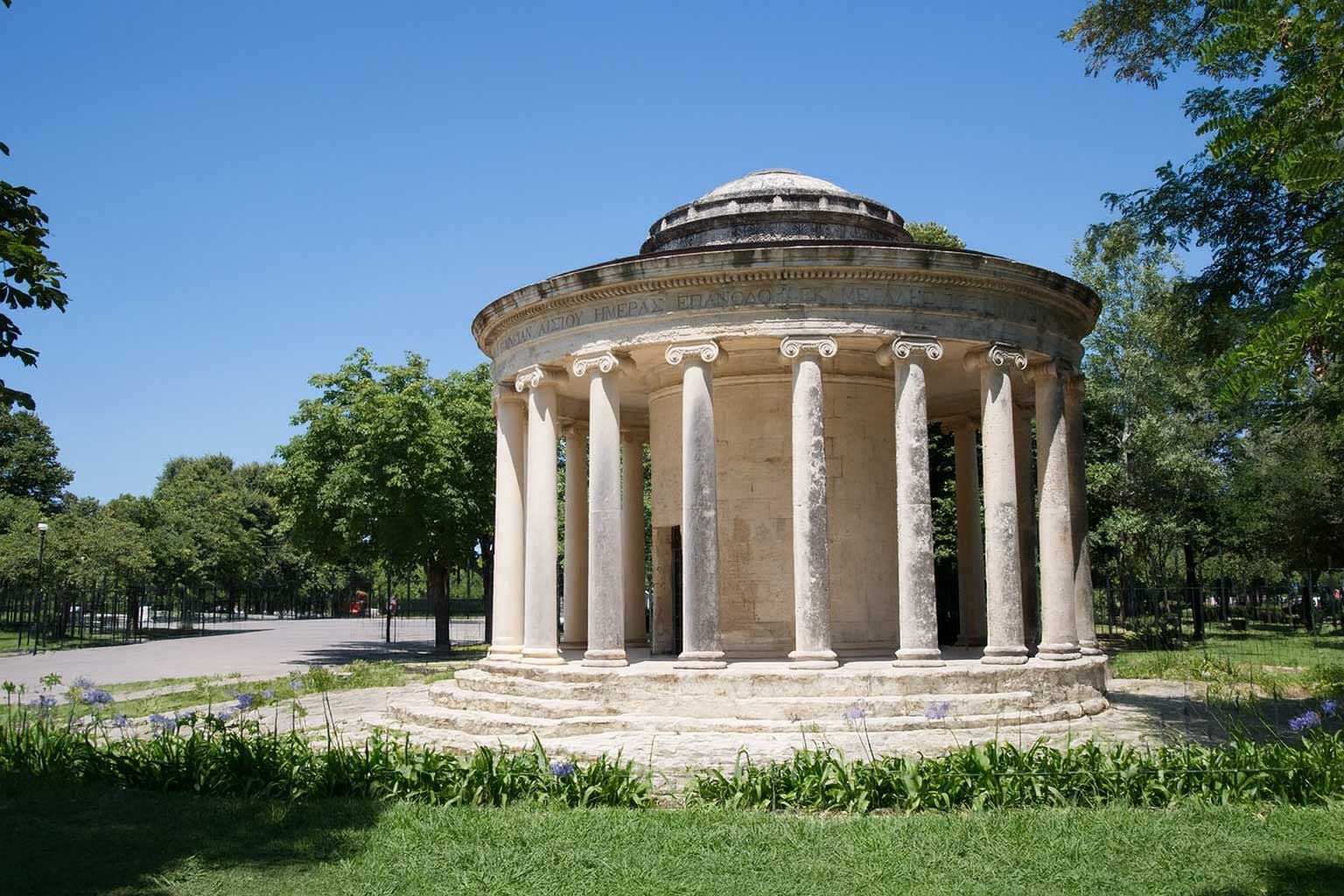
In the heart of the Spianada, among the Anglo-Venetian monuments of Corfu, stands the Maitland Rotunda. Although built in 1816 during the British Protectorate, its architectural style and use of local stone blend harmoniously with the historic environment inherited from the Venetians.
Constructed to honor Sir Thomas Maitland, the first Lord High Commissioner of the Ionian Islands, the rotunda is built above an older circular water cistern. This underground cistern was part of the city’s water supply system and represented a significant public utility for its time.
Architectural Features:
- Circular design with 20 Doric columns.
- Made from local yellow limestone.
- Underground chamber housing the cistern.
Historical Significance:
The Maitland Rotunda is not just a commemorative monument but also a place where public memory and infrastructure meet. The hidden cistern and its neoclassical design make it unique in Greece and a lasting part of Corfu’s cultural identity.
Architectural Features of Venetian Water Works
- Stone Masonry – Locally quarried limestone, meticulously cut and fitted.
- Arches – Both functional and decorative, distributing weight and allowing water or traffic to pass beneath.
- Water Channels – Lined with lime mortar to reduce seepage.
- Integration with Landscape – Structures followed the natural terrain, minimizing disruption and maximizing efficiency.
Cultural and Economic Impact
Venetian water architecture did more than provide drinking water:
- Agriculture – Reliable irrigation increased olive and citrus production.
- Trade – Bridges improved overland transportation for goods.
- Settlement Growth – Villages expanded thanks to stable water supply.
These structures also played a role in defense, ensuring that fortified towns had secure access to fresh water during sieges.
Exploring Corfu’s Water Heritage Today
Many of these sites are accessible to visitors, often along hiking trails or within historical estates:
- Benitses Aqueduct Trail – A scenic walk linking the aqueduct to village springs.
- Mon Repos Estate – Combining botanical beauty with historic architecture.
- Countryside Bridges – Found in villages like Kynopiastes and Agios Markos.
- Spianada Square – Visit the Maitland Rotunda and learn its dual story as a monument and water structure.
Preservation Challenges
Centuries of exposure to weather, vegetation growth, and modern development threaten these delicate structures. While some are maintained as heritage sites, others risk disappearing without restoration efforts. Local heritage groups advocate for increased protection, recognizing the value of these engineering feats.
Photography Tips
- Morning or late afternoon light – Highlights textures of stone and surrounding greenery.
- Wide-angle lenses – Capture the full span of arches and bridges.
- Close-up details – Showcase stonework, moss, and engravings.
- Include human scale – Helps convey the size and grandeur of the structures.
Timeless Arches Over Corfu’s Past
The Venetian bridges and aqueducts of Corfu are more than relics; they are enduring symbols of the island’s resilience and ingenuity. They tell a story of adaptation — how foreign rulers merged their engineering expertise with Corfu’s landscape to create something lasting. For travelers, discovering these hidden gems offers a journey into a quieter, often overlooked chapter of the island’s history.
When you walk beneath a weathered arch, follow the curve of an aqueduct, or stand in the shadow of the Maitland Rotunda, you are quite literally tracing the flow of history.