The Byzantine period of Corfiot history, spanning roughly from the fourth century AD to the thirteenth, represents one of the longest and in many respects most formative chapters in the island’s development, though it is also the chapter that receives the least attention from the casual visitor whose eye is drawn to the more immediately dramatic legacy of the Venetian period. The transition from Roman provincial administration to the Christian Eastern Roman Empire brought with it a transformation of the island’s religious and cultural landscape that the subsequent Latin, Ottoman, and finally Greek national periods modified and overlaid but never entirely displaced. The Orthodox tradition that defines the religious life of the Corfiot community to the present day, the Byzantine churches that punctuate the urban fabric of the Old Town and the rural landscape of the island’s interior, and the administrative and social structures that the Byzantine centuries established all represent the enduring legacy of a chapter of history that deserves more recognition than it typically receives.
From Roman Province to Christian Empire
The administrative transition from Roman to Byzantine governance that took place across the eastern Mediterranean during the fourth and fifth centuries AD brought Corfu within the orbit of the Christian empire that Constantine the Great had established at Constantinople with his famous edict of toleration in 313 AD and his subsequent foundation of the new imperial capital. The island, which had functioned throughout the Roman period as a significant way station on the maritime routes between Italy and the eastern Mediterranean, retained this strategic importance within the Byzantine administrative system, its position at the entrance to the Adriatic making it a critical node in the empire’s western communications network.
The Christianisation of the island’s population during this period was a gradual process that transformed the urban and rural landscape in ways that are still partially legible in the surviving ecclesiastical buildings and the patterns of settlement that the Byzantine period established. The pagan temples of the ancient city, many already in decay by the later Roman period, gave way progressively to Christian basilicas and martyria, and the religious institutions of the new faith established themselves in the principal settlements with the permanence of organisations that expected to administer the spiritual life of the community for the long term. The tradition that the apostles Jason and Sosipater, disciples of Paul, brought Christianity to Corfu during the first century AD is commemorated in the church that bears their names in the Garitsa suburb, one of the finest surviving Byzantine ecclesiastical buildings in the Ionian islands.
The Norman Threat and Byzantine Military Response
The Norman kingdoms of southern Italy and Sicily, established by the descendants of the Viking adventurers who had carved out territorial power in the Italian south during the eleventh century, posed the most persistent and the most destructive military threat to Byzantine control of Corfu during the middle Byzantine period. The Normans under Robert Guiscard attacked Corfu in 1081 as part of a broader campaign to extend Norman power into the Byzantine Balkans, and the subsequent military engagements of the twelfth century, when the Normans under Roger II and later William II repeatedly raided and briefly occupied the island, tested the Byzantine defensive system at Corfu to its limits and beyond.
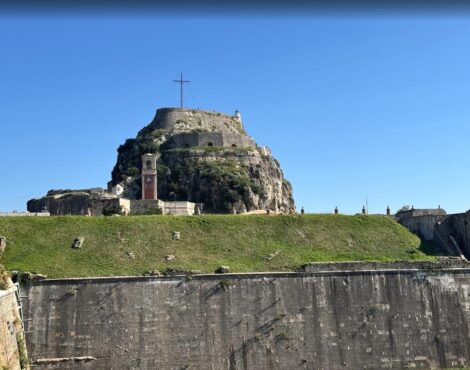
These Norman assaults were not random raids but components of a systematic strategy to challenge Byzantine authority in the western Balkans and the Ionian, and their repeated occurrence over more than a century reflects the structural vulnerability of a Byzantine imperial system that was increasingly stretched across too wide a frontier to defend every point with the strength that each required. Corfu’s position at the western edge of Byzantine territorial control made it consistently among the first objectives of any western power seeking to challenge the empire, and the fortification infrastructure that the Byzantine period developed in response to this threat, though subsequently rebuilt and extended by the Venetians, laid the physical and conceptual foundations for the defensive architecture that still defines the skyline of Corfu Town.
Byzantine Cultural and Religious Legacy
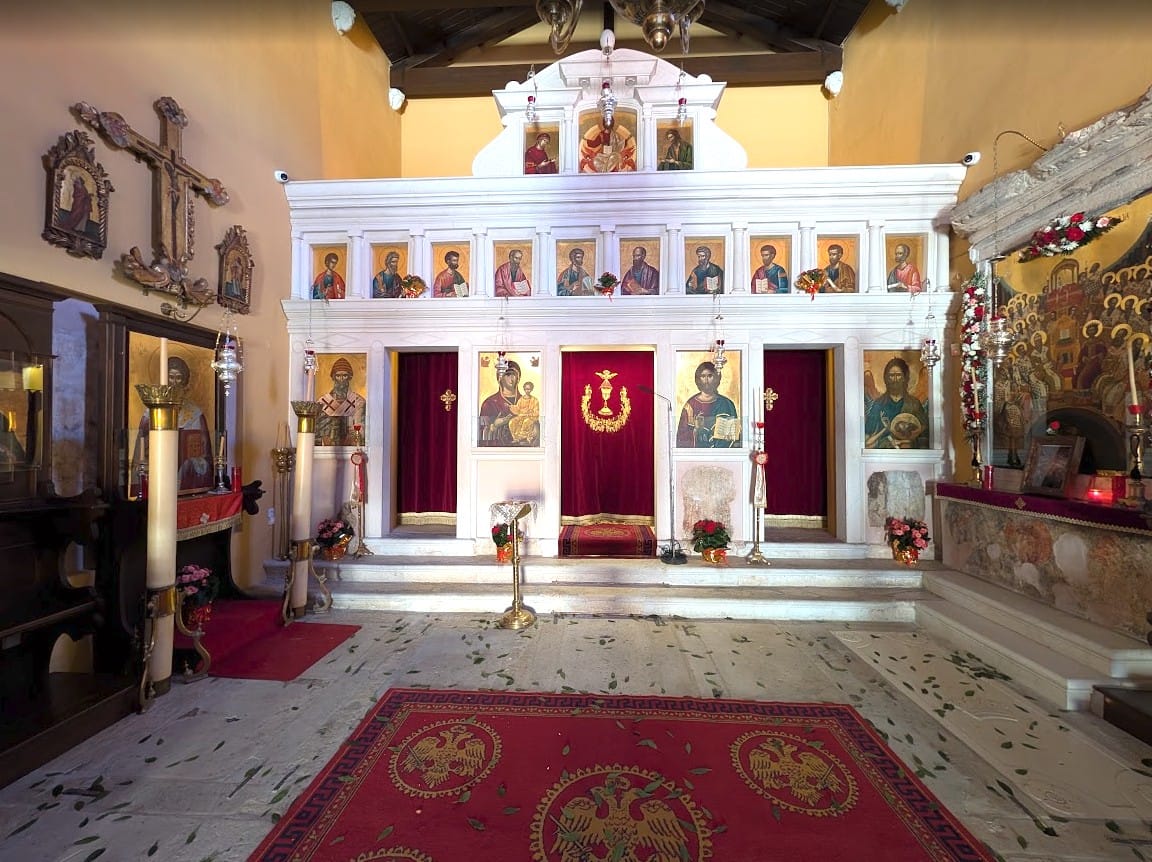
The cultural legacy of the Byzantine period in Corfu is most directly and most beautifully visible in the island’s surviving ecclesiastical architecture. The Church of Saints Jason and Sosipater in the Garitsa suburb, built in the eleventh or twelfth century on the site of an earlier Christian building, preserves the architectural vocabulary of the middle Byzantine ecclesiastical tradition with a completeness that few comparable buildings in the western part of the former Byzantine world can match. Its cruciform plan, its drum dome, its carefully composed exterior articulation in alternating brick and stone courses, and its interior programme of painted decoration represent the Byzantine architectural tradition in its most mature and most characteristically Corfiot expression.
Beyond this outstanding individual monument, the Byzantine period left its mark on the island’s ecclesiastical geography in a pattern of church foundations that structured the religious life of the community across the rural landscape as well as within the urban centre. The monasteries that the Byzantine period established on the island’s higher ground, several of which survive in modified form to the present day, represent the more contemplative dimension of Byzantine religious culture and the enduring role that monastic institutions played in the preservation and transmission of the Byzantine intellectual and spiritual heritage through the turbulent political changes of the medieval period.
The End of Byzantine Rule and Its Aftermath
Byzantine rule over Corfu ended definitively in the aftermath of the Fourth Crusade’s sack of Constantinople in 1204, an event that fragmented the Byzantine Empire into a series of successor states and created the conditions for Latin powers to assert control over territories that had been Byzantine for centuries. The Despotate of Epirus, the most significant of the Byzantine successor states in the region, exercised intermittent control over Corfu during the thirteenth century and maintained a degree of cultural and ecclesiastical continuity with the Byzantine tradition that the subsequent Angevin rule was less concerned to preserve. The Latin ecclesiastical hierarchy that the Angevins introduced alongside the existing Orthodox structures created a situation of dual religious administration that persisted in various forms through the Venetian period and contributed to the complex religious character of the island that distinguished it from both the purely Orthodox mainland and the more thoroughly Latinised western islands.
The Orthodox population of Corfu maintained its ecclesiastical identity and its Byzantine cultural inheritance throughout the centuries of Latin political control, preserving the liturgical tradition, the artistic conventions, and the social structures of the Byzantine community with a tenacity that reflects the depth of the roots that eight centuries of Byzantine administration had put down in the soil of the island. The Byzantine legacy in Corfu is not simply a historical residue but an active component of the island’s living cultural identity, present in the Easter celebrations that fill the streets of the Old Town each spring and in the Orthodox ecclesiastical tradition that continues to provide the framework within which the community’s deepest ceremonial and spiritual life unfolds.