Greek Independence Day: March 25th Celebrations in Corfu
March 25th carries profound significance for Greeks everywhere. The date commemorates 1821’s revolutionary beginning when Greeks rose against four centuries of Ottoman occupation, launching independence struggle ultimately establishing modern Greek state. This dual celebration, simultaneously marking the Annunciation religious feast, intertwines national liberation with Orthodox faith creating observance uniquely meaningful in Greek cultural consciousness. Corfu’s celebrations, while following national patterns, carry distinctive local character reflecting the island’s particular historical experience and fierce independence spirit. Understanding this day’s significance and how Corfiots mark it provides visitors rare opportunity witnessing authentic patriotic expression and glimpsing what Greek identity means to those living it rather than simply visiting.
Historical Context and Significance
The Greek War of Independence, beginning March 25, 1821, represented culmination of growing national consciousness among Greeks living under Ottoman rule since Constantinople’s fall in 1453. Secret societies, intellectual movements, and increasing European support created conditions enabling coordinated uprising’s launch.
The date’s selection held symbolic importance. March 25th, celebrated as Annunciation when Angel Gabriel announced Christ’s coming birth to Virgin Mary, provided religious legitimacy to revolutionary action. This fusion of national liberation with religious observance created powerful symbolic alignment presenting independence struggle as righteous cause blessed by faith.
The revolution’s course, spanning decade of brutal warfare, involved heroic sacrifices, devastating defeats, international intervention, and ultimate victory establishing independent Greek kingdom in 1832. Though initially comprising only small portion of Greek-inhabited lands, this achievement represented first successful nationalist uprising against Ottoman Empire, inspiring later Balkan independence movements.
Corfu’s relationship to independence struggle differs from mainland experience. The island, under British protection from 1815-1864, never experienced Ottoman rule though surrounded by Ottoman territories. However, Corfiots contributed significantly to independence movement through financial support, revolutionary organization, and fighters joining mainland struggles. The island served as refuge for Greek revolutionaries and intellectuals planning resistance.
The eventual unification with Greece in 1864, when Britain ceded the Ionian Islands, represented Corfu’s independence moment. This peaceful transition contrasted with violent mainland liberation but meant equally much to islanders finally joining the nation their ancestors helped create.
Contemporary March 25th celebrations honor not just historical events but ongoing meaning of Greek identity, sovereignty, and cultural survival against historical threats. The day reminds Greeks of sacrifices enabling present freedoms while affirming continuing commitment to national values and independence.
Morning Observances and Religious Services
March 25th begins with religious observances reflecting the day’s dual sacred and national character. Churches across Corfu hold special liturgies commemorating Annunciation while acknowledging independence significance.
Church bells ring throughout morning calling faithful to services that blend standard Annunciation liturgy with patriotic prayers and national themes. These services, attended by government officials, military representatives, and ordinary citizens, demonstrate Orthodox Church’s integral role in Greek national identity.
Priests’ homilies typically address both religious significance and historical commemoration, drawing parallels between Virgin Mary’s acceptance of divine will and Greek people’s willingness sacrificing for freedom. These theological-patriotic messages reinforce connections between faith and nation central to Greek consciousness.
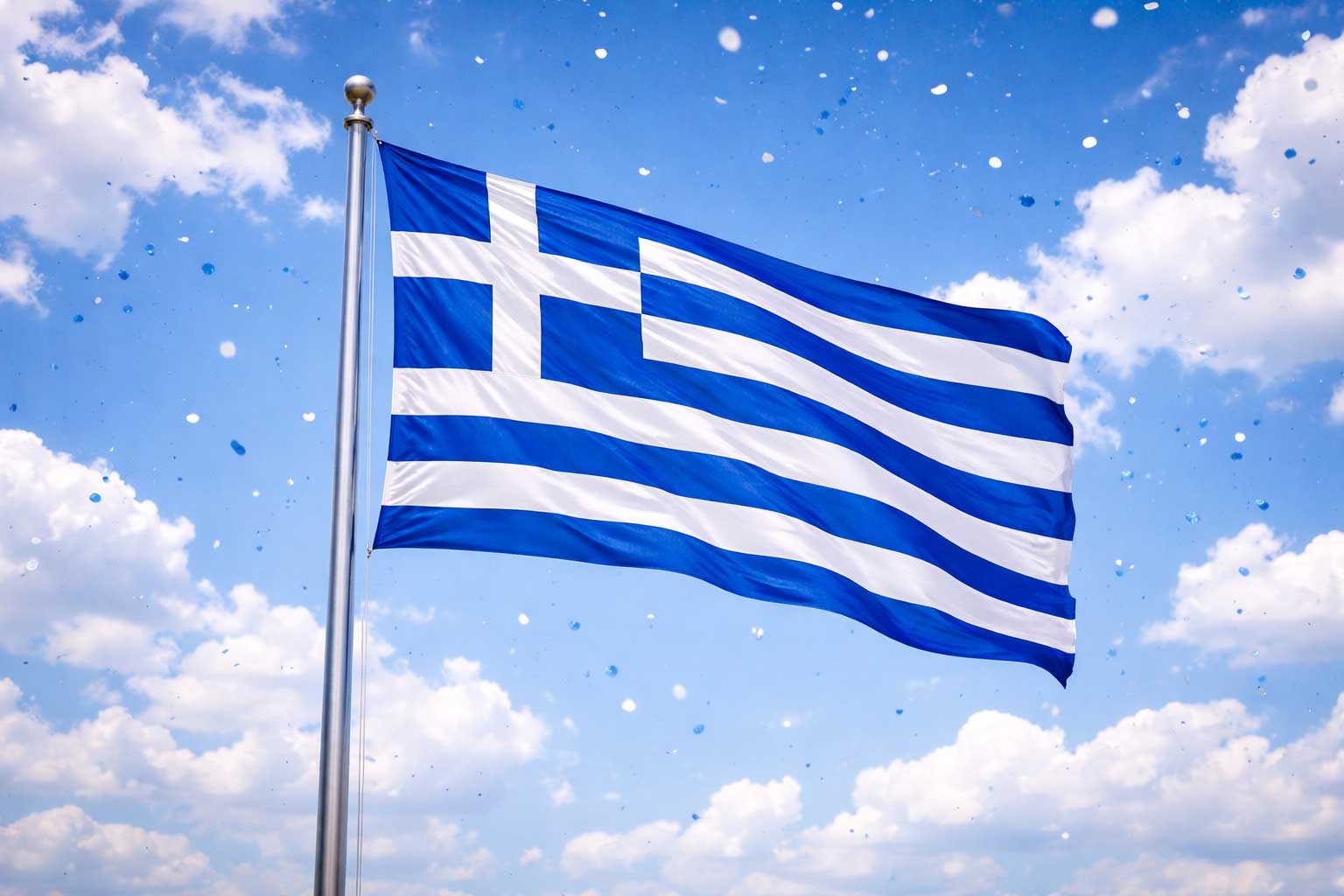
Icons and church decorations combine religious imagery with Greek flags and national symbols. The blue and white colors, representing both Greek flag and traditional religious associations with Virgin Mary, create visual harmony between spiritual and patriotic elements.
Following liturgy, clergy often lead processions to war memorials or significant historical sites. These solemn walks, combining religious ritual with patriotic commemoration, honor those who died for independence. Wreaths laid at memorials by officials and veterans’ organizations create poignant moments connecting present to past sacrifices.
The Grand Parade
Corfu Town’s main parade represents celebration’s centerpiece, attracting thousands of spectators lining streets. This organized procession combines military precision with school participation creating spectacle both impressive and emotionally moving.
Military units including army, navy, and air force personnel march in formal dress uniforms. These professional soldiers, representing modern Greek armed forces, connect to revolutionary fighters who began independence struggle. Their disciplined formations and precise movements demonstrate national defense capability while honoring historical military tradition.
Veterans’ organizations, though aging membership includes fewer survivors of major 20th century conflicts each year, march with pride and dignity. These elderly men, many wearing medals from World War II, Greek Civil War, or other service, embody living connection to more recent struggles defending Greek freedom.
School children’s participation represents celebration’s heart. Students from primary through high school march in uniforms, carrying Greek flags and often wearing traditional costumes. Their fresh faces and enthusiastic participation symbolize nation’s future while demonstrating cultural transmission across generations. Parents watching their children march display visible pride and emotion.
Traditional costumes, particularly evzones’ distinctive uniform with white kilts, represent connection to independence era and regional Greek identities. These ceremonial guards, though now largely symbolic, evoke revolutionary fighters and maintain visual traditions linking present to independence struggle.
Bands accompanying parade provide musical backdrop alternating between military marches and patriotic songs. The music, stirring and emotional, amplifies parade’s impact creating soundtrack to visual spectacle. Well-known melodies including national anthem and resistance songs trigger collective singing from spectators.
The parade route, typically along waterfront and through Old Town’s main streets, provides spectacular backdrop. Venetian architecture, fortresses, and sea views create setting befitting national celebration while emphasizing Corfu’s particular historical character and Mediterranean identity.
Patriotic Atmosphere and Public Displays
Beyond organized events, March 25th sees Corfu Town transforming through spontaneous patriotic expression creating atmosphere impossible to experience any other day.
Greek flags appear everywhere: homes, businesses, vehicles, and public spaces display national colors. The visual saturation of blue and white creates striking urban landscape reinforcing collective participation in national celebration.
Shop windows and public buildings display historical images, revolutionary heroes’ portraits, and independence-themed decorations. These visual reminders of historical struggle and its heroes educate younger generations while evoking emotional responses in older citizens remembering when these stories learned in childhood.
Public spaces host informal gatherings where people congregate watching parade, discussing history, and sharing national pride. These spontaneous assemblies, combining festival atmosphere with patriotic seriousness, demonstrate how public holidays create community cohesion beyond family units.
Speeches by officials at various venues throughout day provide opportunities for patriotic rhetoric connecting past sacrifices to present freedoms and future responsibilities. These addresses, varying in eloquence and sincerity, nevertheless serve ritual function in collective celebration.
Family Traditions and Private Celebrations
Beyond public ceremonies, March 25th involves family traditions and private celebrations reflecting day’s importance in domestic life.
Family meals, often including traditional foods and dishes associated with both Annunciation and national celebration, bring extended families together. These gatherings, combining holiday feast with family reunion, strengthen bonds while marking important date.
Conversations during family gatherings often turn to historical topics, older family members sharing stories heard from their elders about independence era or more recent struggles. This oral history transmission, though sometimes mixing fact with legend, maintains family and community memory.
Visiting elderly relatives, particularly those unable attending public celebrations, ensures they’re not isolated on important national day. These visits, bringing younger family members to elders, facilitate intergenerational connection and respect.
Some families visit ancestral villages or family graves, connecting personal history to broader national narrative. These pilgrimages, though quiet and personal, represent profound engagement with identity and continuity.
Cultural Events and Entertainment
Evening brings cultural programs celebrating Greek heritage through performances, exhibitions, and entertainment combining education with festivity.
Traditional music concerts featuring rebetiko, folk songs, and patriotic anthems provide entertainment while reinforcing cultural identity. These performances, free and public, attract diverse audiences sharing cultural appreciation.
Dance performances showcasing regional Greek dances demonstrate diversity within national culture. Seeing dances from different regions, all performed on same program, illustrates Greece’s rich regional traditions united within national identity.
Theater productions, often presenting historical dramas about independence struggle, educate through entertainment. These performances, sometimes amateur productions by schools or community groups, engage audiences emotionally with historical events.
Film screenings of Greek historical cinema, particularly films about independence war or later struggles, appear on television and in public venues. These cinematic celebrations, though sometimes propagandistic, nevertheless move audiences and reinforce collective memory.
Visitor Experience and Etiquette
Foreign visitors attending March 25th celebrations witness authentic expression of national identity impossible to access through tourism infrastructure. However, appropriate behavior demonstrates respect for observance’s significance.
Standing during national anthem shows basic respect even when not sharing Greek nationality. The gesture acknowledges importance to those for whom this day carries profound meaning.
Photography acceptable and encouraged but discretion regarding solemn moments, particularly at memorial wreaths and during religious observances. Balancing documentation desire with respectful presence ensures appropriateness.
Asking Greeks about day’s meaning and their personal or family connections to history demonstrates genuine interest. Most Greeks happy sharing thoughts about national identity and historical significance when approached respectfully.
Participating where invited, whether informal celebrations, family gatherings, or public events, provides deeper experience than mere observation. Greek hospitality often extends to including interested foreigners in celebrations.
Learning basic historical facts before attending demonstrates respect and enables better understanding. Knowing 1821 represents revolution’s start, understanding Ottoman rule’s duration, and recognizing key figures shows effort appreciating significance.
March 25th in Corfu offers visitors rare window into living national culture during its most authentic expression. The combination of historical commemoration, religious observance, military ceremony, and public celebration creates complex event revealing Greek identity’s multiple dimensions. Those attending respectfully witness patriotism, faith, cultural pride, and historical consciousness interweaving in ways defining what being Greek means to those living this identity daily rather than visiting temporarily. The experience, impossible to access through museums or guided tours, provides cultural understanding valuable beyond simple sightseeing, revealing human dimension of national identity and historical memory that transforms abstract history into lived, felt, and celebrated reality connecting millions of Greeks to their ancestors’ struggles and achievements.