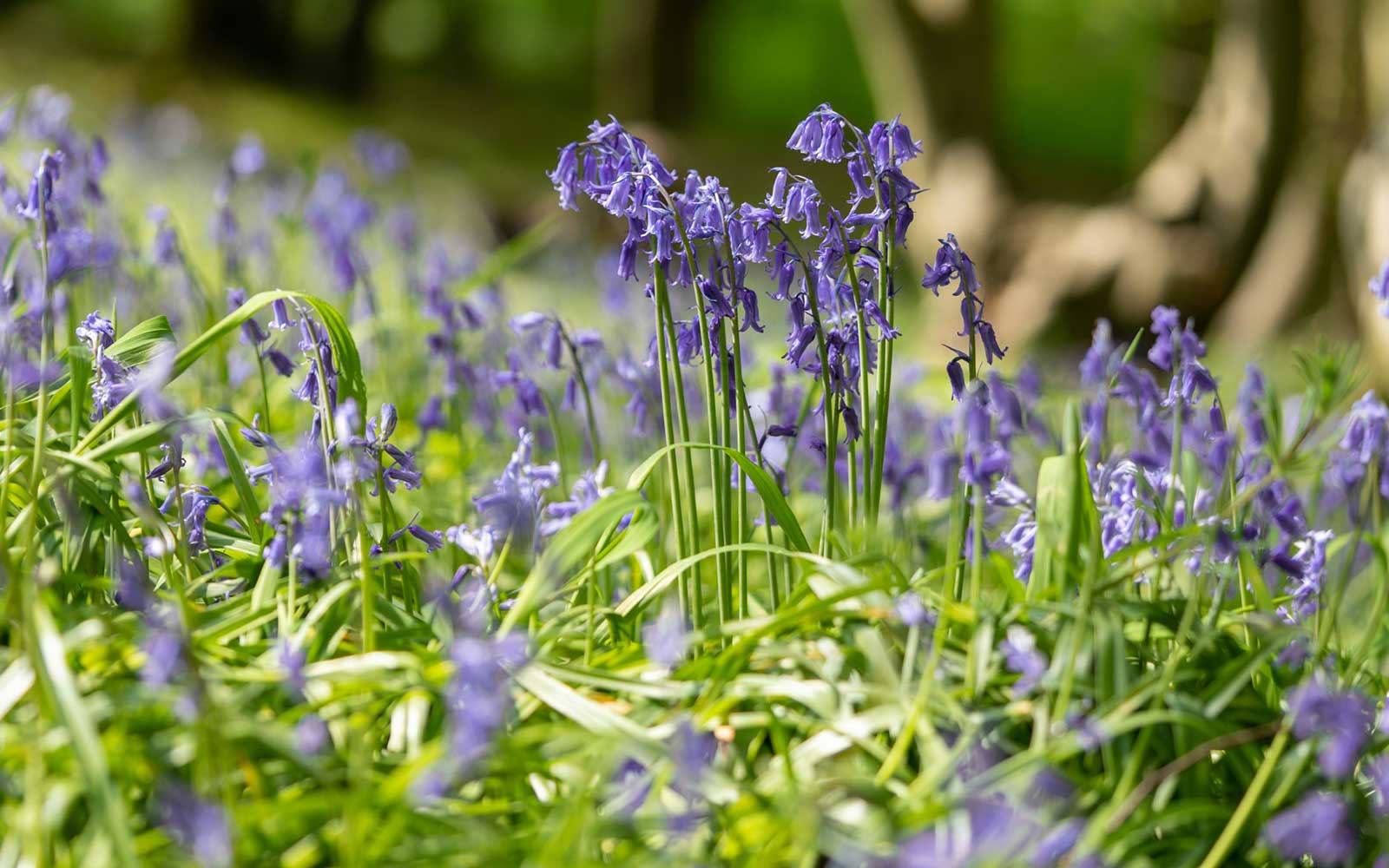
April Wildflowers: Corfu’s Countryside at Peak Botanical Beauty
There is a version of Corfu that the summer visitor never sees. It exists only in spring, and within spring, most completely in April. It is a Corfu of extraordinary colour, of roadsides blazing with poppies and daisies, of olive groves carpeted in anemones and clover, of hillside paths where the air is dense with the fragrance of cistus and thyme and the particular sweetness of flowers that have been waiting all winter for this precise moment to open.
April is Corfu’s botanical peak. For anyone with an interest in the natural world, or simply an appreciation for beauty in its most uncontrived form, the island in April offers something that no other season can replicate.
Why April Is Different
The Mediterranean wildflower season follows a logic of its own, governed by the balance between winter rain and spring warmth. Corfu receives generous rainfall through the winter months, saturating the soil and building the reserves that spring flowers require. As February and March advance, the first early blooms appear. But it is April that brings everything together simultaneously, in a display of botanical abundance that transforms the entire landscape.
The timing is precise and fleeting. By the time the first serious summer heat arrives in late May and June, many of the finest wildflowers will have faded or set seed. The poppies will have gone. The orchids will be past their moment. The meadows that in April look like something from a northern European painting will have begun their slow progression toward the dry gold of the Mediterranean summer. April is the window, and it is a generous one, but it closes.
The Wildflowers of the Countryside
Driving through Corfu in April, the most immediately visible element of the floral display is also the most exuberant. The roadsides are thick with crown daisies, their yellow and white faces turning toward the sun in every verge and field margin. Among them, common poppies introduce their particular shade of red, a colour so saturated that it reads almost as artificial against the green of the surrounding vegetation.
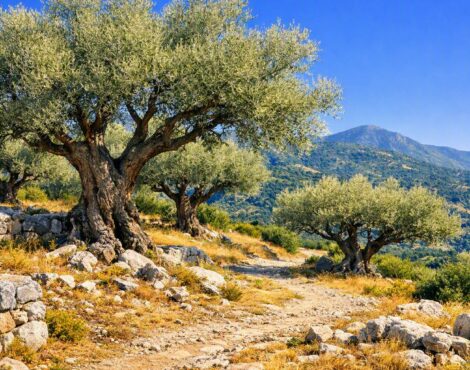
The olive groves, which cover so much of Corfu’s landscape, offer a different kind of floral experience. Under the silver canopy of the ancient trees, where dappled light falls across ground that has never been heavily cultivated, spring wildflowers find ideal conditions. Anemones in shades of blue, purple, red, and white carpet the ground between the roots. Wild gladioli push up through the grass. Asphodels send their pale flower spikes into the filtered light.
The island’s more open hillsides and garrigue habitats support a different community of plants. Cistus species, with their large, paper-thin flowers in white and pink, cover entire slopes and fill the air with a resinous fragrance that is among the most characteristic scents of the Mediterranean spring. Phrygana, the low thorny scrub of the drier hillsides, bursts into colour with the flowers of thorny burnet, spiny spurge, and dozens of smaller species that require closer examination to fully appreciate.
Corfu’s Wild Orchids
Among the botanical treasures of Corfu’s April landscape, the wild orchids occupy a special position. The island is home to an exceptional diversity of orchid species, a consequence of its varied geology, altitude range, and the relative absence of the intensive agriculture that has eliminated orchid populations from much of northern Europe.
April is peak orchid season on Corfu. The bee orchid, with its extraordinary flower that mimics the body of a female bee with remarkable precision, can be found on limestone grasslands and road banks across the island. Mirror orchids, tongue orchids, pyramidal orchids, and several species of Ophrys and Orchis add to a list that rewards the specialist and delights the generalist in equal measure.
Finding orchids in Corfu requires no specialist equipment or unusual knowledge. A slow walk along any quiet country lane in the right habitat, with eyes directed downward and a willingness to move at the pace the landscape suggests, will almost certainly produce rewarding sightings.
Where to Walk in April
The mountain interior of Corfu offers some of the finest wildflower walking on the island. The area around the Troumbetas Pass, on the road that crosses from the west coast toward the northeast, passes through habitat that in April is covered in flowers at every turn. The slopes of Mount Pantokrator, the island’s highest point at 906 metres, support a botanical community that includes species found nowhere else on the island, and the views from the upper paths across to the Albanian coast and the Greek mainland add a dramatic backdrop to the botanical experience.
The Ropa Valley, in the centre of the island, provides a different kind of April walking. The flat agricultural land and surrounding wetland margins support a rich community of spring flowers alongside exceptional birdwatching opportunities, as migrating species pass through on their way northward. The combination of flowers and birds makes the Ropa Valley one of the most rewarding natural areas to visit during April.
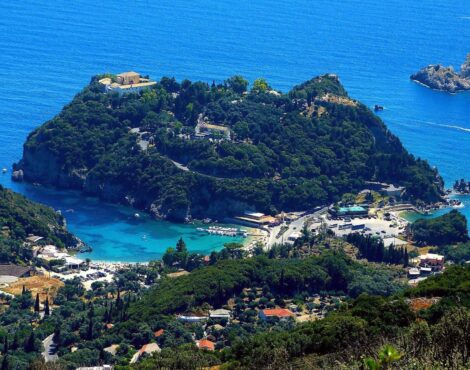
The coastal headlands of the northwest, where the limestone meets the sea and the vegetation is kept low by exposure, produce their own distinctive wildflower communities. Walking the clifftop paths in April, with flowers at your feet and the deep blue of the Ionian spreading to the horizon, is one of the experiences that defines a Corfu spring and that remains in the memory long after the summer season has come and gone.
Connecting the Botanical Season to the Villa Experience
For guests planning a summer stay at Villa Kapella, the April wildflower season represents part of a broader natural calendar that the villa’s location allows guests to engage with throughout the season. May arrivals will still find considerable botanical interest across the island, as the transition from spring to early summer brings its own succession of flowering plants.
The lanes and paths around Villa Kapella connect guests directly to the Corfiot countryside, with its ancient olive groves, fragrant hillsides, and the particular quality of natural light that falls across the landscape at different hours of the day. This connection to the natural environment is one of the lasting pleasures of staying in a private villa rather than a resort hotel, and it begins the moment guests step outside and discover that the island is, in every season, in the process of becoming something beautiful.