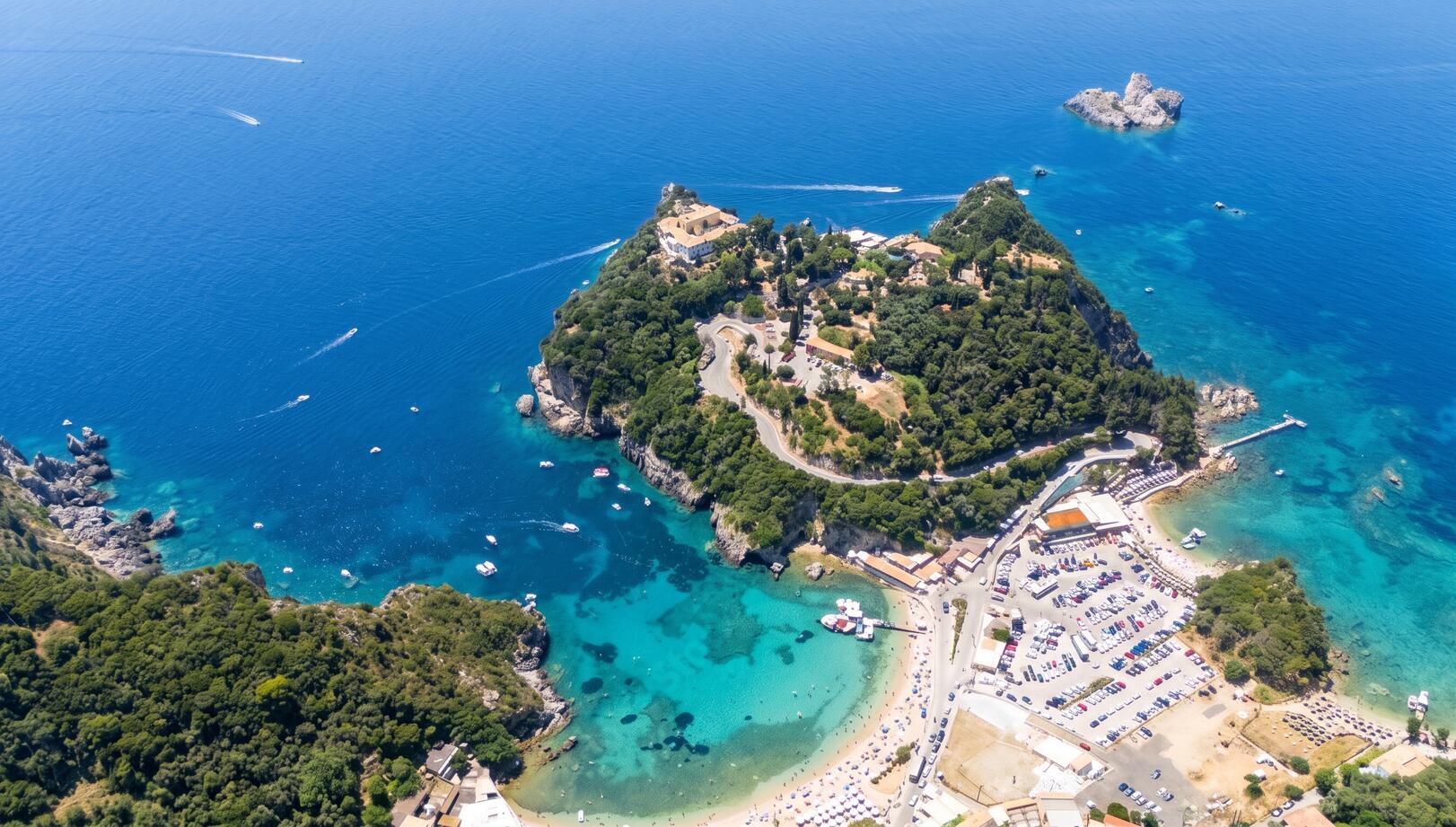
Paleokastritsa is often described as the most scenic spot on Corfu, and a first visit usually explains why. Set on the west coast, roughly 25 kilometres from Corfu Town, it consists of a cluster of small bays divided by green headlands and sheer rock, with sea of an intense turquoise and a backdrop of wooded hills. The area combines swimming, boat trips, a historic monastery and a medieval castle within a short distance of one another, so it rewards visitors who allow a full day. This guide explains the best ways to enjoy Paleokastritsa, from the beaches and the sea caves to the viewpoints above the bay.
The Bays of Paleokastritsa
The coast here is made up of several coves, each with its own character. The main beach near the village is the busiest, with sunbeds, tavernas and easy access, while Agios Spyridon beach on the opposite side of the headland tends to be a little quieter. Smaller coves such as Alipa and Platakia are reached by boat or by short paths, and they offer calm water that is ideal for snorkelling.
The water is exceptionally clear, and the rocky sea floor supports plenty of marine life close to shore. Visitors who prefer a more active day can rent a kayak or a paddle board and explore the coastline at their own pace, moving between the bays and slipping into small caves that are invisible from the road. Early morning is the best time for calm conditions and fewer people on the water.
Boat Trips and Sea Caves
A boat trip is the best way to understand the shape of the coast. Small local boats leave the main harbour throughout the day, and many include a tour of the sea caves, among them the famous Blue Eye grotto, where the light reflecting from the sea floor gives the water a vivid blue colour. Glass-bottomed boats offer a view of the fish and the rocks below, which is especially popular with families.
Longer trips continue along the coast to remote beaches and to the cliffs beyond Liapades. Many operators stop for swimming in coves that cannot be reached from land, and some offer lunch on board. It is worth booking a morning departure in the high season, when the sea is calmer and the light on the cliffs is at its best, and it is sensible to carry a hat, water and a light layer for the breeze on the water.
The Monastery of Paleokastritsa
High on a promontory above the main bay stands the Monastery of the Virgin Mary, traditionally dated to the thirteenth century in its origins, although the present buildings are mostly from the eighteenth century. Its whitewashed courtyards, flower-filled terraces and quiet cloisters create a peaceful contrast with the busy beaches below. A small museum displays icons and ecclesiastical objects, and the views over the bays from the terrace are among the finest on the island.
Visitors are asked to dress modestly, with covered shoulders and knees, and to respect the quiet of a place that remains an active religious community. The monastery is open for much of the day with a short midday break, and a visit takes around an hour. Many people combine it with a coffee on the terrace before heading down to the beach.
Angelokastro and the Viewpoints Above
Above Paleokastritsa, the Byzantine fortress of Angelokastro stands on a cliff around 300 metres above the sea. Built in the early thirteenth century, it served as a refuge for the local population and as a lookout for approaching ships, and it played a significant part in the defence of the island. The climb to the top is steep but rewarding, and the panorama over the coast and the open sea is exceptional, especially at sunset.
The village of Lakones, on the road above the bay, is known for its Bella Vista viewpoint, often called the balcony of Corfu, which looks down over the whole coastline. Together with nearby villages such as Liapades and Krini, it offers a quieter side of the area, with traditional houses, small tavernas and olive groves. These places are well worth including in a day around Paleokastritsa.
Swimming, Snorkelling and Diving
The clarity of the water is the main reason that Paleokastritsa is so popular with swimmers. The sea floor drops quickly beside the rocky headlands, and in the shelter of the coves it is calm enough for confident swimming even for those who are not experienced. A mask and snorkel are all that is needed to see the schools of small fish that gather along the rocks, and the shallow areas near the main beach are suitable for children under supervision.
Several diving centres in the area offer introductory dives, guided dives for certified divers and snorkelling excursions to the best underwater sites. Beginners are usually taken to shallow areas close to the shore, while more experienced divers can explore caves, walls and small reefs along the coast. Equipment can normally be rented on site, and instructors give a full briefing before every dive. It is a good idea to book a day or two ahead in July and August, when demand is highest.
Eating, Staying and Planning Your Visit
Paleokastritsa has a good choice of tavernas along the waterfront and on the hillsides, and the area is well known for its fresh fish and for lobster dishes. Prices are higher than in the villages inland, so many visitors choose to eat at a village taverna on the way back. In summer the road to the bays can be busy, and it is wise to arrive early or to take a bus from Corfu Town to avoid parking difficulties.
Because it makes a long day, Paleokastritsa works best as an excursion rather than a base. Guests at Kapella Apartments can return in the evening to the garden for a quiet end to the day, which is a pleasant contrast to the activity of the coast. Allow a full day, bring swimwear and sun protection, and take time to stand at the viewpoints, since the best views of Paleokastritsa are often found above the bay.