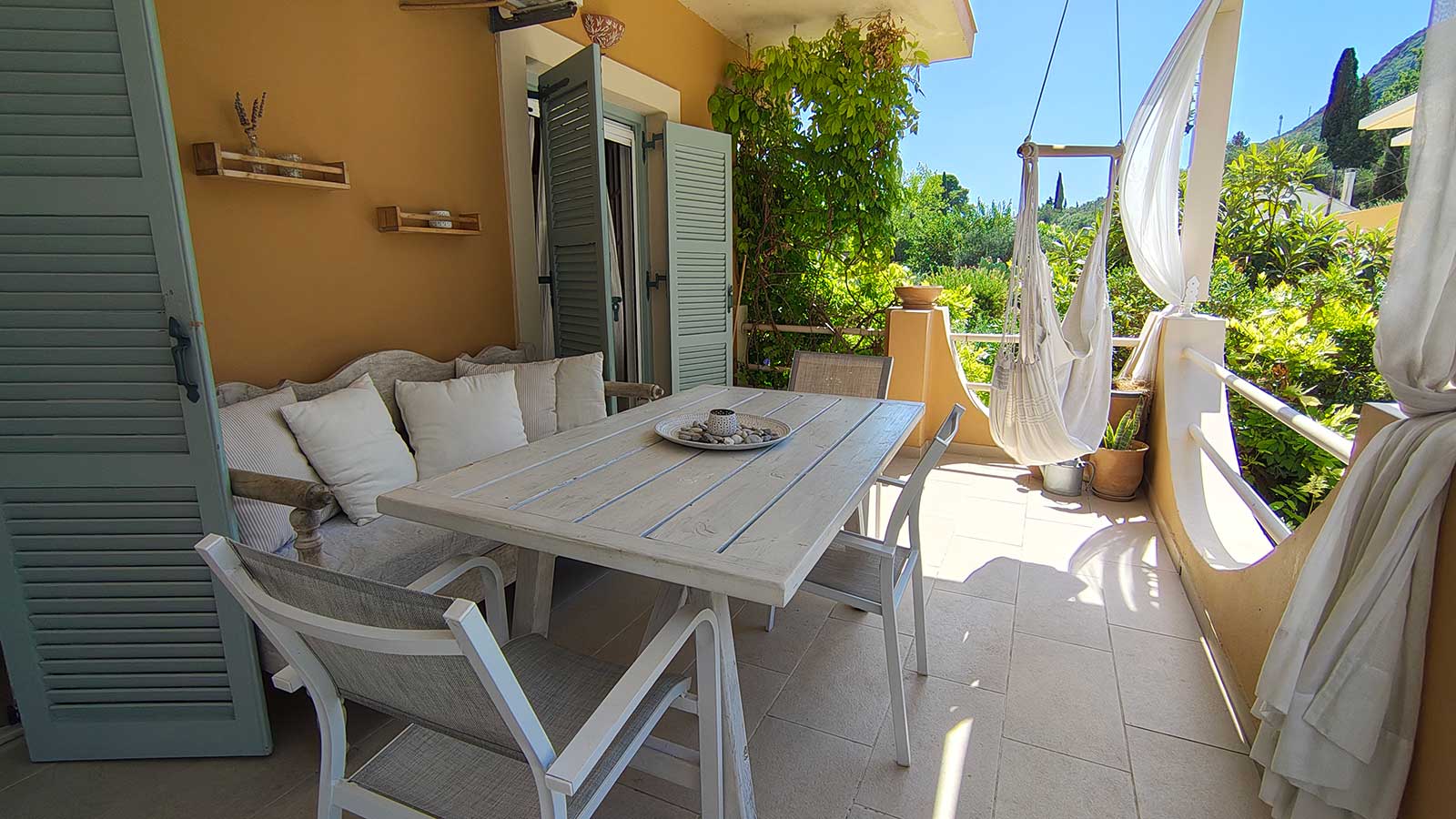
The best way to understand what a week at Villa Kapella is like is to follow it from the beginning. Not the promotional version, with every moment arranged and every experience curated, but the actual version: the ordinary extraordinary days that accumulate, over the course of a week in the Ionian summer, into something that guests consistently describe as the finest holiday they have taken.
This is that week.
Arrival Day
The flight from wherever you have come from lands at Corfu International Airport in the late afternoon. The approach is low and spectacular, the aircraft descending over the brilliant blue of the Ionian with the island spread below in its extraordinary green and the Albanian mountains rising beyond the narrow channel to the northeast. The transfer from the airport takes less than an hour, the road climbing through the Corfiot countryside as the sun moves toward the western horizon.
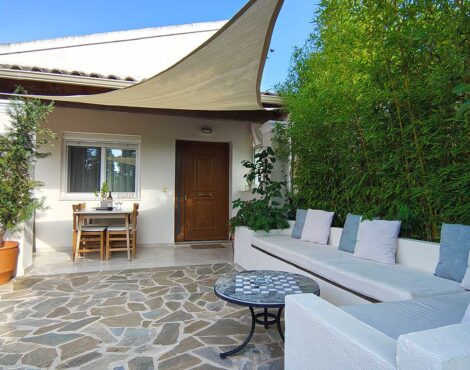
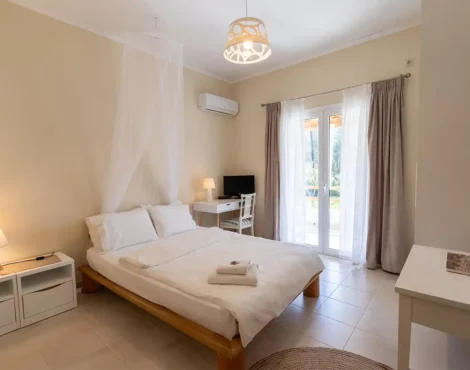
Villa Kapella appears at the end of a lane, the gate opening onto the property with the particular quality of arrival that a place waiting to be inhabited always produces. The garden is immediately present, the outdoor spaces visible from the entrance, the evening light warm on the stone and the vegetation. The villa has been prepared and is ready in every detail.
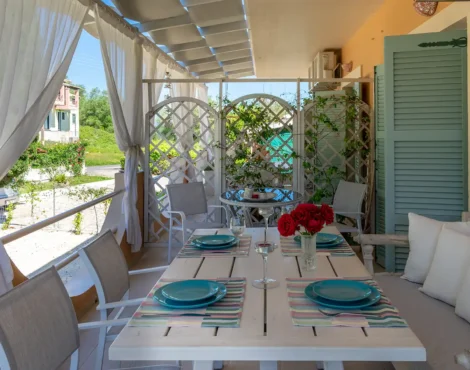
The first evening is spent at the villa. There is wine in the kitchen and provisions for a simple dinner. The terrace is set, the outdoor table the obvious place to eat. The conversation moves slowly and without particular direction. The sky above the garden darkens through its gradations and the stars appear with the clarity that only a sky without urban light pollution delivers. Nobody suggests going anywhere. Nobody needs to.
Day Two: The Town
The first full day begins early, partly from the particular alertness that a new and beautiful place produces and partly because the Corfu morning is already warm and bright by seven and the garden is simply too inviting to sleep through.
Corfu Town is the destination for the day. The drive takes less than half an hour on roads that pass through olive country and small villages before the outskirts of the town begin. The morning is spent in the Old Town: coffee at the Liston, a long walk through the Campiello quarter, the Archaeological Museum with its Gorgon pediment, and the slow progress through the covered market that produces the evening’s dinner in the form of local cheese, fresh vegetables, and a bottle of Corfiot wine chosen on the advice of the shopkeeper.
Lunch is at a small restaurant in the Campiello, found by following a local rather than a map, the food simple and exactly right. The afternoon is spent at the Kanoni viewpoint, then the short boat trip to Pontikonisi, then the walk back along the Garitsa promenade as the light begins its evening shift. The return to Villa Kapella is in time to cook the market purchases slowly and eat them at the outdoor table as the last light leaves the sky.
Day Three: The Beach
The northwest coast is the destination, specifically Paleokastritsa, the bay that most visitors to Corfu identify as the moment the island exceeded their expectations. The drive crosses the island through its olive-covered interior, the road rising and falling through a landscape that becomes gradually more dramatic as the western coast approaches.
Paleokastritsa in June is magnificent without being overwhelming. The inner bay, enclosed by wooded headlands and containing water of a colour that requires some moments of adjustment before it registers as natural, is accessible from the main beach or, better, by hiring a small boat from the beach operators to reach the more secluded coves on the outer headlands. The boat is the obvious choice, and the hour spent moving along the coastline, entering coves inaccessible from the land, swimming in water of complete clarity, is among the finest hours of the week.
Lunch is at one of the seafront restaurants above the bay, a table in the shade with the water directly below. The afternoon drive back crosses the island by a different route, through villages that seem to exist in a different and slower time, the return to the villa delayed deliberately by the desire to keep moving through the landscape for as long as the afternoon permits.
Day Four: The Quiet Day
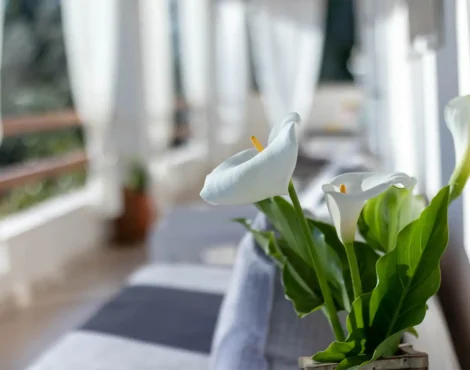
Every good holiday has a day of deliberate quietness, and the fourth day at Villa Kapella is that day. The morning begins late. Breakfast extends through the morning hours in the garden, the coffee refilled several times, the conversation or the book or the simple silence all equally sufficient occupation for the hours before noon.
The afternoon does not improve on the morning. The garden offers shade and the particular pleasure of doing nothing in a beautiful place with complete conviction. A walk through the surrounding countryside in the early evening, following the lanes that connect the villa to the nearest village and back, produces the kind of ordinary loveliness that the Corfiot landscape delivers reliably and without effort: the light on the olive leaves, the sound of bells from somewhere over the hill, the smell of the earth warming in the last heat of the day.
Dinner is cooked at the villa from the provisions still remaining from the Corfu Town market, supplemented by a visit to the village shop that produces local tomatoes of a quality that reminds everyone at the table of how far supermarket tomatoes fall short. The evening ends late and reluctantly, as evenings at Villa Kapella consistently do.
Day Five: The Boat Trip
The boat trip is the day that the entire group will reference longest and most precisely in the years after the holiday has ended. A small boat, hired from one of the operators along the nearest stretch of coast, with no fixed itinerary and the entire coastline available for the day.
The morning moves northward along the coast, stopping at coves identified by their colour from the water rather than by any map or recommendation. Swimming happens at each stop, the water consistently clear and warm enough that nobody counts the time spent in it. Lunch is improvised from the provisions brought from the villa, eaten on a beach accessible only from the sea, the boat pulled up on the stones and the afternoon spreading ahead without any pressure to become anything in particular.
The return in the late afternoon, with the sun behind the western hills and the sea taking on the particular deep blue of the Ionian in the evening hours, delivers the group back to the villa sunburned and salt-dried and in the particular state of satisfied tiredness that a day spent entirely outdoors and entirely on the water produces. Nobody has difficulty sleeping that night.
Day Six: The Villages
The interior of Corfu, the mountain villages and olive country that most beach-focused visitors never reach, is the destination for the sixth day. The drive northward from Villa Kapella follows the road that climbs into the hills above the east coast, passing through villages where the houses are built in the Venetian style that the island’s centuries of occupation left embedded in its domestic architecture.
The village of Ano Korakiana, the hilltop settlement of Strinilas on the slopes of Mount Pantokrator, the views from the upper road across the channel to the Albanian coast and south along the entire length of the island: these are the rewards of a day spent moving through the landscape rather than toward a specific destination. The taverna lunch in Strinilas, at a table outside with the mountain air noticeably cooler than the coast below, is one of the finest meals of the week, the food straightforward and the setting extraordinary.
The return to the villa takes the long way, following the coast road southward through the late afternoon, the sea on one side and the olive groves on the other, the light on the water exactly the particular shade of gold that this coast produces in the hour before sunset.
Day Seven: The Last Morning
The final morning at Villa Kapella arrives too quickly, as final mornings always do. The garden, which by now has become entirely familiar and entirely indispensable, is the location for a breakfast that extends as long as it possibly can. The bags are packed but not yet at the door. The table is set one more time.
The conversation at the last breakfast covers the week just passed with the particular pleasure of recollection that good holidays produce: the boat day, the Paleokastritsa morning, the Campiello lunch, the quiet day in the garden, the village drive. The list of what was not reached, the beaches not visited, the tavernas not tried, the walks not taken, is as long as the list of what was, and both lists point in the same direction.
The return to Villa Kapella is already being discussed before the bags are loaded into the car.