Spring Wildflower Explosion: Corfu’s Botanical Awakening in March
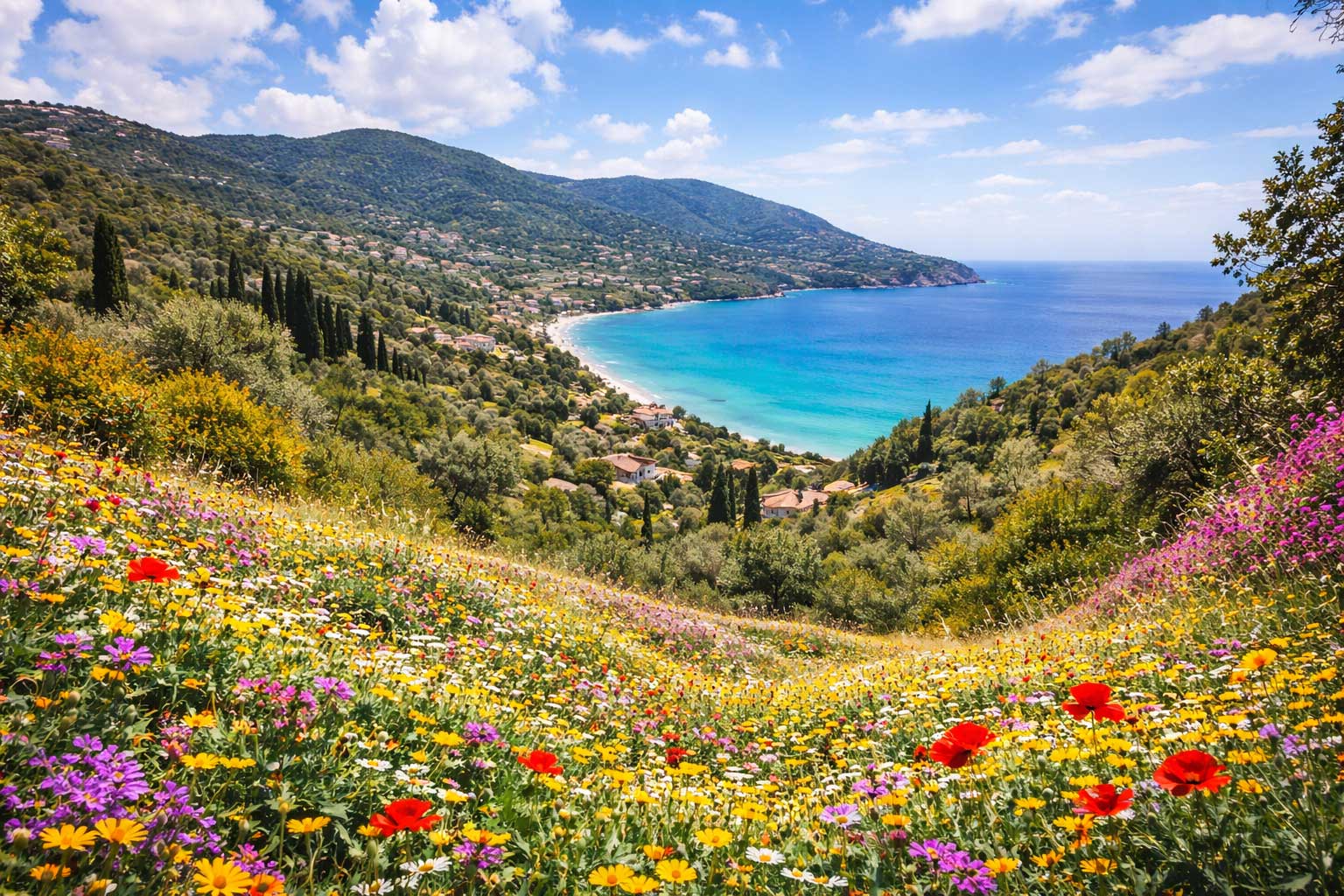
March transforms Corfu’s landscape from winter’s muted greens into botanical carnival. Hillsides explode with color as thousands of wildflower species carpet meadows, line paths, and colonize every patch of undisturbed ground. This annual spectacle, though brief, rivals any horticultural display through sheer abundance, diversity, and wild beauty impossible in cultivated gardens. Understanding when, where, and what blooms enables witnessing one of Mediterranean nature’s most spectacular yet underappreciated shows. Those visiting Corfu during spring’s peak discover the island possesses treasures beyond beaches and historical sites, natural wonders requiring only attentive eyes and willingness to walk slowly observing what roadside rushing misses entirely.
Why March Brings Botanical Explosion
Mediterranean climate’s peculiar rhythm creates conditions producing March’s wildflower abundance. Winter rains saturate soils while mild temperatures prevent freezing. Spring warming triggers growth while moisture remains adequate. This perfect combination of water, warmth, and lengthening days creates brief window when conditions optimal for plant growth before summer’s drought imposes harsh limitations.
Annual wildflowers, completing entire lifecycle within single growing season, must germinate, grow, flower, and set seed during this narrow window. This urgency concentrates blooming into intense period maximizing reproductive success before inhospitable summer arrives. The result creates botanical fireworks rather than gradual seasonal progression.
Perennial species, surviving summer underground, similarly concentrate flowering into spring when energy and water availability optimal. Bulbs, corms, and tuberous plants emerge rapidly utilizing stored energy accumulated previous year. Their flowers, appearing before leaves in some species, demonstrate adaptations maximizing reproductive opportunity.
Diverse ecological niches across Corfu support different wildflower communities. Coastal areas, olive groves, open grasslands, forest clearings, and mountain slopes each host distinct assemblages creating varied experiences within relatively small island. This habitat diversity multiplies species count beyond what single ecosystem would support.
Limited human disturbance in many areas allows wildflower populations thriving impossible in intensively cultivated or developed landscapes. Traditional extensive agriculture, particularly olive cultivation, maintains conditions supporting botanical diversity. This accidental conservation through traditional land use preserves natural heritage increasingly rare across developed Mediterranean.
Early Spring Species
March’s first weeks bring initial bloomers emerging while winter still technically present. These pioneers, adapted to cooler conditions, provide first color after winter’s restraint.
Crocuses, including several species, push through soil producing delicate flowers in white, yellow, and purple. These small bulbs, often growing in large colonies, create carpets of color in meadows and olive groves. Their appearance signals spring’s undeniable arrival despite occasional cool days.
Anemones, particularly scarlet and blue varieties, splash brilliant color across hillsides. These cheerful flowers, opening fully in sunshine and closing during clouds, create dynamic displays changing through day. Large populations create spectacular shows visible from considerable distances.
Wild cyclamen species, both autumn and spring flowering types, produce delicate pink and white flowers. These charming plants, often growing in shaded areas under trees, require closer observation than showier species but reward attention with exquisite beauty and sweet fragrance.
Asphodel, tall spikes of white star-shaped flowers, colonizes disturbed areas and roadsides. This common species, though perhaps too abundant for wildflower purists, creates impressive displays and holds mythological significance in Greek culture connecting botanical observation to deeper cultural meanings.
Various orchid species begin appearing, though peak orchid season comes later. Early species including some Ophrys types produce flowers showing remarkable adaptations mimicking insects to facilitate pollination. These sophisticated flowers demonstrate evolutionary complexity and botanical wonder beyond simple color appreciation.
Peak Wildflower Locations
Knowing where to look multiplies wildflower encounter success dramatically. Certain locations and habitats consistently deliver exceptional displays.
Olive groves, particularly those managed traditionally without herbicides, host remarkable diversity. The semi-shade, limited ground disturbance, and moderate grazing create conditions supporting numerous species. Walking through any traditional grove during March reveals botanical treasures with every step. The combination of ancient gnarled trees and delicate wildflowers creates aesthetically perfect scenes.
Roadside verges, particularly along quieter rural roads, display continuous flower shows. These linear habitats, though narrow, concentrate species creating colorful ribbons through countryside. Driving slowly with frequent stops allows enjoying these displays while exploring island. The roadsides accessibility makes wildflower appreciation achievable even without hiking.
Coastal areas including dunes, cliffs, and scrubland support specialized species adapted to salt spray, wind exposure, and sandy or rocky soils. These harsh conditions reduce competition allowing specialized species thriving. Coastal walks reveal unique flowers absent inland creating distinct botanical communities worth targeted exploration.
Mountain slopes on Pantokrator and other elevations show altitude-dependent flowering with different species at various elevations. Lower slopes bloom first with progression moving upward through March and April. This altitudinal variation extends flowering season and creates opportunities observing diverse communities within single day’s hiking.
Lake Korission area, with wetland, dune, and scrubland habitats converging, creates botanical hotspot. The habitat diversity concentrates species from different ecological communities. Serious botanists particularly value this area though casual observers equally enjoy visual abundance without scientific understanding.
Abandoned agricultural terraces and fallow fields, recovering from cultivation, often support dense wildflower populations. These transitional habitats, between agricultural and natural, create conditions favoring annual wildflowers. Finding these locations requires exploration and local knowledge but rewards with spectacular displays.
Identification and Appreciation
Wildflower appreciation operates on multiple levels from simple visual enjoyment through serious botanical study. Each level offers satisfactions appropriate to interest and commitment.
Visual appreciation requires no knowledge beyond color sensitivity and aesthetic openness. Simply observing fields of flowers, enjoying color combinations, and feeling joy from natural beauty provides genuine experience regardless of species identification. This most accessible level welcomes everyone.
Basic pattern recognition distinguishes broad groups even without precise identification. Recognizing orchids’ distinctive flowers, distinguishing daisy family members, noting legume characteristics, and grouping similar forms creates organizational framework even when exact species remain unknown. This intermediate level develops naturally through repeated observation.
Precise identification using field guides creates deeper engagement. Learning characteristics distinguishing similar species, understanding family relationships, and acquiring proper scientific and common names builds knowledge enabling communication with other enthusiasts and contributing to citizen science. This advanced amateur level provides intellectual satisfaction.
Ecological understanding places wildflowers within broader natural systems. Recognizing habitat preferences, understanding pollinator relationships, noticing how different species coexist, and comprehending seasonal succession creates holistic appreciation beyond isolated species focus. This ecological perspective reveals interconnections and complexity.
Photography challenges and rewards simultaneously. Capturing wildflowers’ delicate beauty requires technical skill, patience, and artistic sensibility. Macro photography reveals details invisible to casual observation. Wide angle compositions show ecological context. The photographic process slows observation encouraging attention producing deeper appreciation.
Ethical Wildflower Viewing
Wildflower tourism, though low-impact compared to many activities, still requires ethical awareness preventing inadvertent damage to precisely what attracts visitors.
Path adherence prevents trampling. Walking directly to photogenic flowers destroys dozens or hundreds surrounding them. Staying on established trails, even when requiring accepting less perfect photographic angles, preserves broader populations. The aggregate impact of many visitors taking shortcuts creates significant damage.
Never picking wildflowers maintains populations and allows others enjoying same blooms. The temptation taking samples, while understandable, deprives plants of reproductive opportunity and other observers of visual pleasure. Photograph, don’t pick, ensures flowers remain benefiting nature and future visitors.
Avoiding disturbing pollinators allows ecological relationships functioning. Insects visiting flowers provide essential pollination service. Scaring them away or interfering with their activities disrupts natural processes. Observation from slight distance allows appreciating flower-pollinator interactions without destructive interference.
Vehicle parking attention prevents crushing roadside populations. Pulling completely off roads onto grassy verges destroys precisely what visitors came seeing. Parking in designated areas or on hard surfaces prevents this casual destruction.
Social media responsibility regarding location sharing requires judgment. While sharing botanical discoveries enriches others’ experiences, publicizing precise locations sometimes creates overwhelming pressure on sensitive sites. Balancing sharing versus protection represents ongoing ethical consideration.
Respecting private property where wildflowers grow maintains access and relationships. Much flower-rich habitat lies on agricultural or residential land. Walking respectfully when permitted and avoiding trespass maintains good relations enabling continued access.
Scientific and Cultural Significance
Wildflowers represent more than aesthetic pleasure, carrying scientific importance and cultural meanings deserving recognition.
Biodiversity indicators, wildflowers reveal habitat health and ecological integrity. Rich wildflower communities indicate limited pollution, appropriate management, and functioning ecosystems. Conversely, wildflower absence or species loss signals degradation requiring attention.
Pollinator support through wildflowers sustains bee, butterfly, and other insect populations essential for agricultural production and ecosystem function. Wildflower conservation directly benefits agriculture and natural systems beyond immediate aesthetic considerations.
Genetic resources within wild plant populations potentially possess value for crop improvement, pharmaceutical development, or other applications. Maintaining diverse wild populations preserves genetic variation potentially valuable for unpredictable future needs.
Traditional knowledge surrounding wildflowers encompasses medicinal uses, culinary applications, and cultural practices passed through generations. Older Corfiots often recognize species by Greek names and traditional uses unknown to younger generations. Recording this knowledge before it disappears preserves cultural heritage.
Mythological and symbolic meanings attach to certain wildflowers in Greek culture. Anemones, asphodels, cyclamens, and narcissus all carry associations with Greek mythology and folklore. Understanding these connections adds cultural dimension to botanical observation.
Educational opportunities through wildflowers introduce children and adults to botany, ecology, and nature observation. The accessibility and visual appeal create excellent introduction to scientific thinking and environmental awareness. Spring wildflower walks become outdoor classrooms teaching multiple subjects simultaneously.
March’s wildflower explosion represents Corfu revealing natural treasures equal to human-created architectural and cultural heritage. The annual botanical carnival, brief but spectacular, rewards those timing visits for nature’s rather than human schedules. Walking slowly through flower-carpeted meadows, kneeling to photograph delicate orchids, and simply sitting amid color and fragrance provides experiences many travelers never imagine possible, discovering that Mediterranean islands offer not just history and beaches but also botanical wonders rivaling any famous garden yet utterly wild, free, and accessible to anyone willing looking carefully at what roadside rushing otherwise misses entirely.