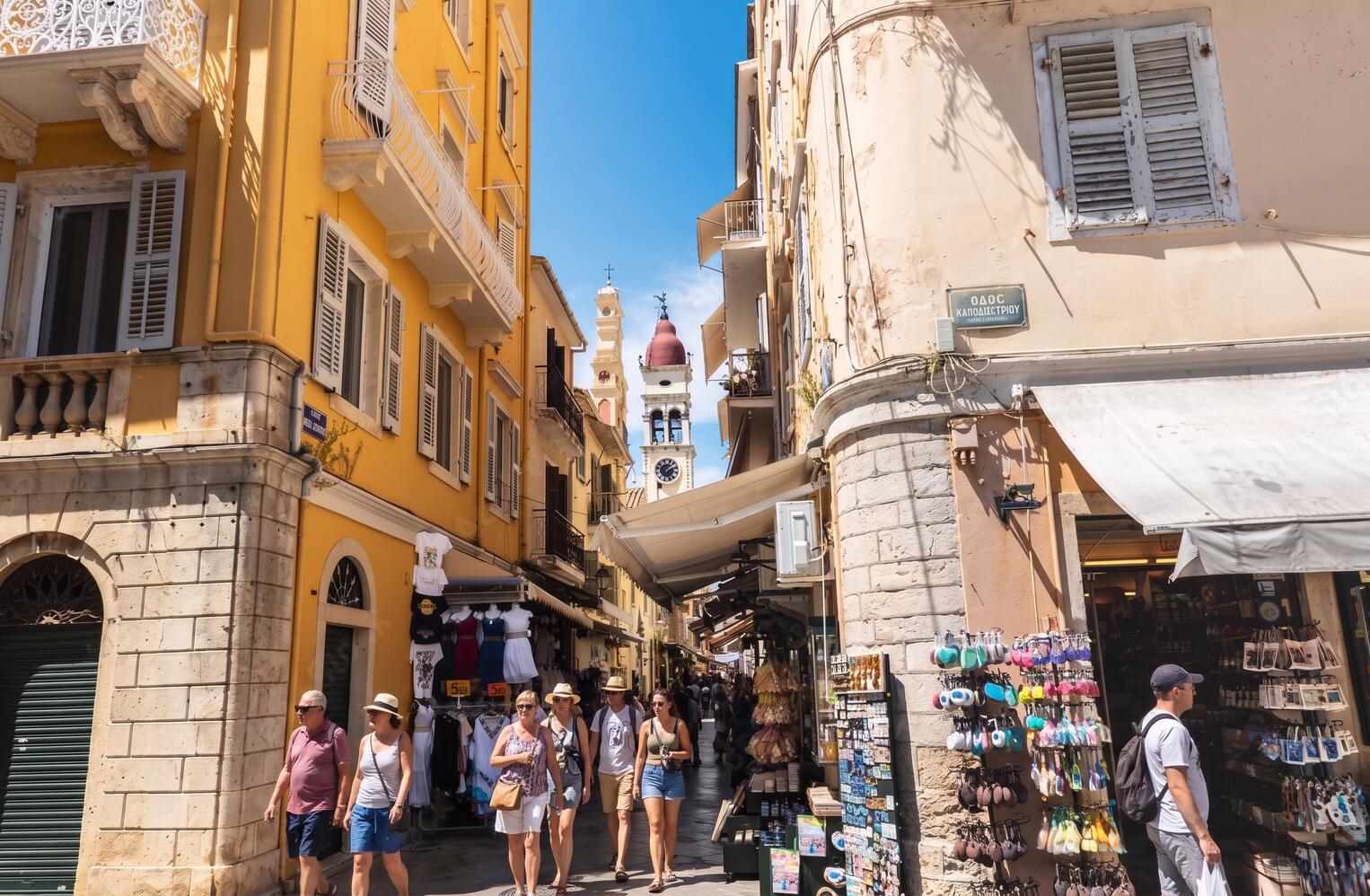
Corfu Old Town is one of the most attractive historic centres in the Mediterranean, and since 2007 it has been listed as a UNESCO World Heritage Site. It is compact, car-free in its central lanes and best explored on foot, with arcades, squares, churches, museums and fortresses within a short walk of one another. The layers of Venetian, French and British influence give the town a character found nowhere else in Greece. This walking guide suggests a route through the main sights and the quieter corners, with practical advice on timing and on where to pause for a coffee.
The Spianada and the Liston
The natural starting point is the Spianada, the large open esplanade between the Old Town and the Old Fortress. It is one of the biggest squares in Europe and remains a popular place for a stroll, for a game of cricket in summer and for the evening promenade. Along its western side runs the Liston, an elegant arcade of arches inspired by the Rue de Rivoli in Paris, now lined with cafes where people have gathered for generations.
Sitting at a Liston cafe in the early evening, watching the town pass by, is one of the most characteristic experiences of Corfu. Prices are higher than in the side streets, but the setting justifies a single coffee or a glass of local wine. At the northern end of the Spianada, the Palace of St Michael and St George now houses the Museum of Asian Art, a worthwhile stop for a rainy day or the heat of midday.
The Old Fortress and the New Fortress
The Old Fortress occupies a rocky promontory at the eastern end of the town, separated from the mainland by a moat and reached by a bridge. Its walls date from the Byzantine and Venetian periods, and a climb to the top rewards visitors with sweeping views over the Old Town, the sea and the mountains of Albania. The lighthouse and the small chapel inside are especially photogenic.
On the opposite side of the town, the New Fortress was built by the Venetians in the sixteenth and seventeenth centuries. Its tunnels and bastions can be explored, and the terraces offer a fine view over the old harbour and the rooftops. Both fortresses are best visited in the morning or late afternoon, when the light is soft and the heat is less intense, and both require comfortable shoes for the stone ramps.
Lost in the Campiello
The Campiello is the oldest part of the Old Town, a maze of narrow lanes, tall pastel-coloured houses and laundry hanging from balconies. The Venetians built densely here, and the passages between the buildings are often only a few metres wide, which keeps them cool in summer and gives them a distinctive atmosphere. It is easy to lose your bearings, and that is part of the pleasure.
Small squares appear unexpectedly, many with a church, a shrine or a simple taverna with tables under an awning. Look for the Venetian doorways and the carved stone details, and for the small shops selling local products such as kumquat liqueur, olive oil and handmade soap. The early morning and the late evening are the best times to walk here, when the lanes are quieter and the light is at its most atmospheric.
Saint Spyridon, the Museums and the Churches
The Church of Saint Spyridon, with its tall red-topped bell tower, is the spiritual heart of the town. It houses the relics of the island’s patron saint, which are carried through the streets in processions several times a year, and its interior is richly decorated with icons and silver lamps. Visitors should dress modestly and keep their voices low.
Nearby, the Cathedral, the Byzantine Museum in the former church of the Panagia Antivouniotissa and the Archaeological Museum, with its famous Gorgon pediment, offer deeper insight into the history of the island. If time allows, the Banknote Museum and the Serbian Museum provide a different perspective on the more modern past. A well-planned visit might combine one or two museums with a walk, leaving time to sit and enjoy the atmosphere.
Beyond the Old Town: Garitsa Bay and Mon Repos
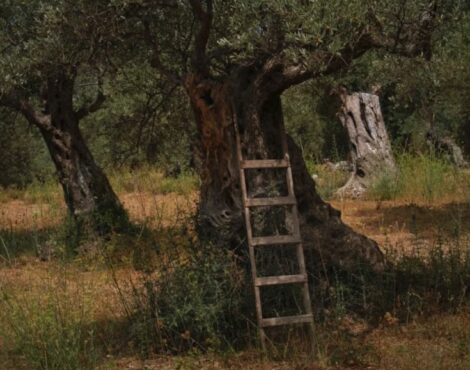
A short walk south of the Spianada, the waterfront of Garitsa Bay offers a pleasant promenade along the sea, with the old harbour wall, a view back toward the fortress and a number of cafes. Continuing further along the coast, you reach the Mon Repos estate, a wooded park beside the sea that contains a neoclassical villa built during the British period and now housing a museum. The grounds are well suited to a quiet walk beneath tall pines and olive trees, and the ruins of the ancient city of Corcyra lie within and around the park.
The same area is a good place to see how the Old Town relates to its surroundings. From the park, the path leads down to a small pebble beach, and the walk back toward the centre takes around forty minutes at a gentle pace. Boats to the small island of Vido leave from the old port in season, and the short crossing gives a fine view of the fortress and the town from the water. These additions make it easy to extend a day in the Old Town into something more varied.
Shopping, Cafes and the Evening Atmosphere
The main shopping streets of the Old Town combine local craft shops with small boutiques, bakeries and delicatessens. Products worth looking for include olive oil soaps, kumquat liqueur and preserves, local honey, herbs and handmade leather goods. Prices are usually fair in the smaller shops of the Campiello, and many shopkeepers are happy to offer a taste before you buy. Mornings are the best time for browsing, before the heat builds and the narrow streets fill up.
In the evening the town changes character. The arches of the Liston fill with people, the squares come alive with music and the lanes fill with the smell of grilled food. It is a good time to sit in a quiet square with a glass of wine and watch the old town light up, and a short walk after dinner along the sea wall completes the day. Visitors who stay late should remember that the stone lanes are uneven, so comfortable shoes are as useful at night as they are during the day.
Practical Tips for Your Walk
The Old Town can be explored comfortably in half a day, although a full day allows time for museums and lunch. Summer afternoons are hot, so it is best to start early, rest during the middle of the day and return in the evening. Wear flat, comfortable shoes, since the stone paving can be uneven and slippery after rain, and carry water.
For lunch, choose a taverna in the side streets of the Campiello, where prices are fairer than on the Liston, and try local dishes such as sofrito or pastitsada. Guests staying at Kapella Apartments can spend the day in the Old Town and return to the quiet of the garden in the evening, which makes a restful close to a day of sightseeing. Take your time, wander without a map for an hour and let the town show you its quieter corners.