Choosing where to stay in Corfu is one of the most important decisions of the holiday, because the island is large and each region has its own character. The north is green and mountainous, the east coast is sheltered and the west is dramatic and open, while the south is flat and quiet and the capital offers history and nightlife. The best base depends on whether you want beaches, culture, quiet or activity, and on how you plan to get around. This guide compares the main regions, describing the atmosphere of each and the kinds of traveller who enjoy them most.
Corfu Town and Its Surroundings
Staying in or near Corfu Town suits visitors who love history, architecture, cafes and an evening atmosphere. The UNESCO listed Old Town is compact and walkable, with fortresses, museums, churches and a wide choice of restaurants close together. The nearby districts of Garitsa and Kanoni offer sea views and quick access to the airport, which is only a few kilometres away. Public transport is better here than anywhere else on the island.
The disadvantages are the summer heat, the traffic and the lack of large beaches within the town itself. Visitors who stay here usually take a bus, taxi or rental car to reach the coast. It is an excellent choice for short stays, for those who enjoy city life and for travellers without a car, and it also works well as a first or last stop on a longer holiday.
The North and the Northeast
The northeast coast, from Kassiopi through Kalami and Nissaki to Barbati, is among the most beautiful stretches of the island, with pebble coves, wooded hills and views of the Albanian mountains. It attracts couples, walkers and those who enjoy quieter surroundings and clear, calm water. Kassiopi offers a lively harbour village with tavernas and shops, while the smaller bays are more secluded and traditional.
The north coast has a different character, with the sandy beaches and sandstone cliffs of Sidari, Roda and Acharavi, and a longer tradition of organised tourism. It suits families who want shallow water, shops and restaurants within walking distance. The trade off is distance, since the north is an hour or more from the airport and from the southern beaches, and visitors should plan on having a car for exploring.
The East Coast Resorts
The resorts of Dassia and Ipsos, north of Corfu Town, are among the most developed on the island. They offer long, sheltered beaches, calm water, a wide choice of restaurants and a good range of facilities for families and groups. The coast road is lined with shops, bars and water sports centres, and the evenings are lively in summer.
These areas are convenient and easy, with the town only a short drive away and plenty to do close at hand. They are less quiet than the villages of the west and the northeast, and the beaches can be busy in July and August. Travellers who value convenience, services and a relaxed beach holiday without much planning often find that the east coast suits them well.
The West Coast and the Interior
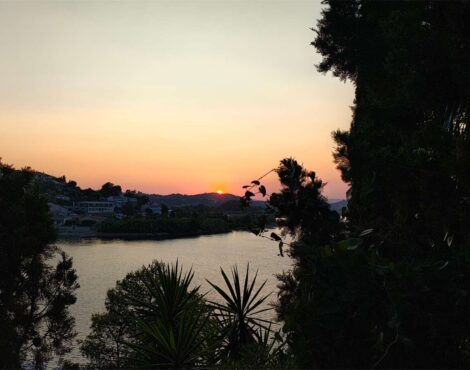
The west coast is perhaps the most varied region, with golden beaches at Glyfada and Agios Gordios, the cliffs and coves of Paleokastritsa and the hillside villages of Pelekas and Lakones. The sunsets are some of the finest on the island, and the villages offer a quieter, more traditional atmosphere than the large resorts. It is a good choice for visitors who want a mixture of beach days and sightseeing without being too far from the town.
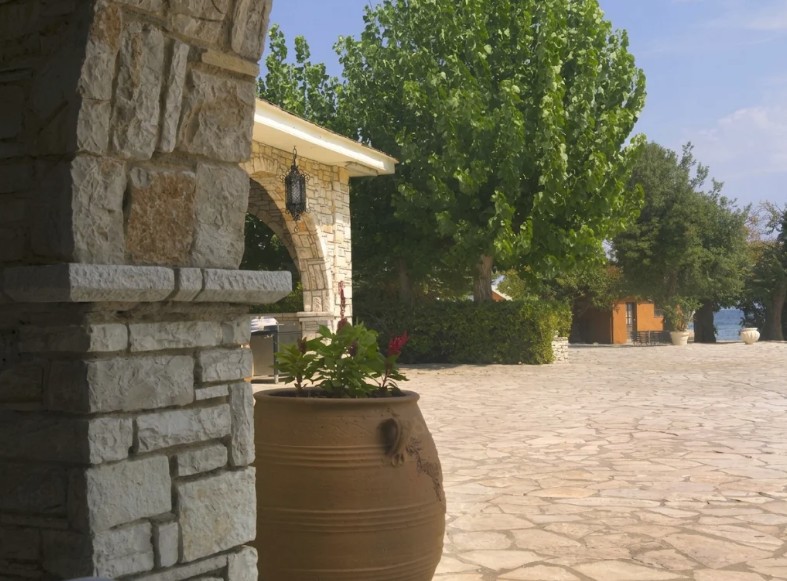
A base in the west, around Pelekas, Ermones and Vatos, gives a central position from which the town, the beaches and the interior are all accessible. Kapella Apartments in Vatos welcomes guests from May to October and offers a quiet garden setting for those who prefer a village atmosphere to a resort. A car is advisable here, since the pleasure of the west lies in exploring beaches, viewpoints and tavernas at your own pace.
Where to Stay in Corfu by Travel Style
Families with young children usually do best on the east coast or in the sandy resorts of the north, where the water is shallow and facilities are close at hand. Couples often prefer the northeast coast, the villages of the west or the quieter corners of the south, where evenings are calm and the scenery is romantic. Groups of friends who enjoy nightlife may be drawn to Corfu Town, Sidari or Kavos, while walkers and nature lovers will find the interior and the north more rewarding.
Travellers without a car should favour Corfu Town or a resort on a main bus route, and those who plan to explore widely will value a central position. It helps to be realistic about how much time you wish to spend in the car, since journeys that look short on the map can take longer on winding roads. A base that matches your daily rhythm will make the whole holiday feel easier and more enjoyable.
Timing and Booking Advice
The most attractive accommodation in every region is reserved early, particularly for July and August, so it is wise to decide on an area and make a booking as soon as your dates are fixed. In May, June, September and October there is usually more choice, along with lower prices and quieter beaches. If you plan to travel in the shoulder seasons, check that restaurants and services in your chosen area are open, since some smaller resorts close at the end of the main season.
It is also worth thinking about the length of your stay. A week in a single base allows you to settle in, while a longer holiday can be divided between two regions, for example a few nights in Corfu Town followed by a stay on the coast. Changing bases involves a little extra planning, but it offers a richer experience of the island and ensures that you see more than one face of Corfu.
The South of the Island
The south is flatter and quieter, with long sandy beaches, dunes and the Korission Lagoon, a protected wetland for birds. Messonghi and Moraitika offer a gentle resort atmosphere with a long beach and a good choice of tavernas, while Agios Georgios Argyradon and Issos provide wide spaces and sea breezes that suit windsurfers and kitesurfers. Kavos, at the southern tip, is known for its nightlife and is quite different in character from the rest of the south.
The south suits visitors who want space, simple beaches and a slower pace, but it is far from the north and from many of the main sights. A car makes it easy to reach the rest of the island, though the journeys are longer. Whichever region you prefer, the secret is to match the area to your priorities and to remember that, in an island of this size, no base is ever too far from something beautiful.
Frequently Asked Questions
What is the best area to stay in Corfu?
It depends on your priorities. Corfu Town suits culture lovers, the northeast suits couples and walkers, the east coast suits families, and the west offers a mix of beaches and villages.
Where should first time visitors stay in Corfu?
Many first time visitors choose Corfu Town for its sights or the west coast for its beaches and central position. A rental car makes either option more flexible.
Is it better to stay in Corfu Town or by the beach?
Corfu Town offers history, restaurants and public transport but no large beach. A beach base gives easier swimming, with the town a short drive away.
Which part of Corfu is quietest?
The villages of the northeast, the interior and the south are generally the quietest, especially outside July and August.
Do I need a car to stay in Corfu?
A car is recommended outside Corfu Town and the main east coast resorts, since public transport is limited and many of the best beaches and villages are off the bus routes.