Corfu in July: A Practical Guide for First-Time Summer Visitors
Arriving in Corfu for the first time in July, the combination of the heat, the beauty, and the sheer variety of what the island offers can be simultaneously exhilarating and slightly overwhelming. The island is larger than first-time visitors typically expect, its coastline more varied, its interior more rewarding, and its cultural and historical offer more substantial than the beach holiday reputation suggests. July is the month when all of this is available in its fullest form and also the month when the practical decisions about how to organise a stay matter most, because the peak season brings with it the logistics of crowds, heat, and availability that the shoulder months manage more forgivingly.
This guide addresses the practical questions that first-time July visitors most consistently ask and provides the framework within which the extraordinary experience of a Corfu summer holiday can unfold without the complications that inadequate preparation introduces.
Getting There and Getting Around
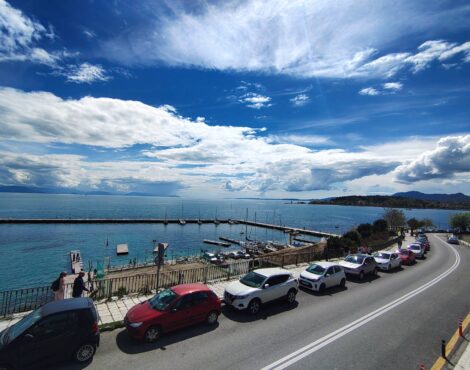
Corfu International Airport receives direct flights from numerous European cities throughout the summer, with July frequencies reflecting the peak season demand and connections from most major northern and central European departure points available without layovers. The airport is small enough that arrivals and baggage collection are typically swift, and the transfer to Villa Kapella, by pre-arranged private transfer, takes less than an hour on roads that pass through the Corfiot countryside with an immediacy that begins the holiday proper before the accommodation is reached.
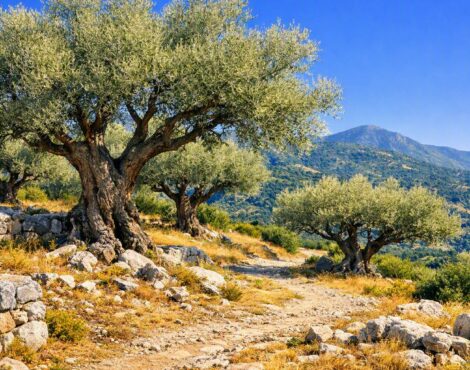
The car hire that most visitors arrange either through the airport operators or through the villa team’s local recommendations is the single most important practical decision of the stay. Corfu without a car is Corfu reduced to the destinations that the bus network and the organised excursions reach, which is a significantly smaller and significantly less satisfying island than the one available to the visitor who can follow the coast road north on a whim or take the interior road through the mountain villages because the light on the olive groves looked inviting as it passed the junction.
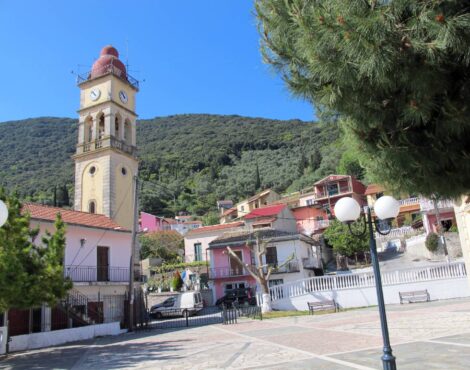
The roads of Corfu are generally well surfaced on the main routes and become progressively narrower and more adventurous on the smaller roads connecting the interior villages and the more remote coastal access points. The narrowness of some village lanes requires the confidence to reverse when a wider vehicle is encountered coming the other way, a skill that most visitors acquire within the first day of driving and that becomes second nature by the third. The Corfu road is not the Corfu problem. The Corfu road, taken slowly and with attention, is part of the Corfu pleasure.
Managing the July Heat
The July heat in Corfu is the primary practical reality that first-time visitors must address and that experienced visitors have already incorporated into their daily rhythm. The temperature at midday, reaching 32 to 34 degrees Celsius on most July days and occasionally exceeding this in the hottest spells, is the temperature of a climate that evolved the siesta for good reason, and the visitor who attempts to conduct a full programme of active exploration through the peak heat hours will find the island considerably less rewarding than the one who follows the local rhythm.
The practical accommodation of the July heat follows a natural structure. The morning hours, from the earliest light until around eleven, are the finest for active exploration: beach arrivals, town walking, trail sections, boat departures, village drives. The middle hours, from eleven to four, are the hours for the beach itself, for shade and swimming, for the long lunch at a well-positioned taverna, for the afternoon rest that the siesta exists to provide and that the Villa Kapella garden provides with particular comfort. The late afternoon and evening, from four onward, are the hours for the return of energy and the second phase of the day’s activity: the drive home through the countryside, the Corfu Town evening, the sunset restaurant, the return to the villa for the outdoor dinner.
Sunscreen of a high protection factor, applied before leaving the villa and reapplied after swimming and at midday regardless of the apparent cloud cover, is the most important single protective measure for a July stay. The Ionian sun in July is considerably stronger than the northern European summer that most visitors have arrived from, and the speed with which it produces the burn that the Corfiot pharmacies treat throughout the peak season is consistently underestimated by first-time visitors who have brought the sun protection habits of a cooler latitude to a significantly more demanding solar environment.
The Beach Programme
The beach decisions of a July stay at Villa Kapella are among the most consequential for the overall quality of the holiday, and making them with some knowledge of what different options offer is the difference between a beach programme of sustained excellence and one that accidentally concentrates effort on the most crowded and least rewarding options.
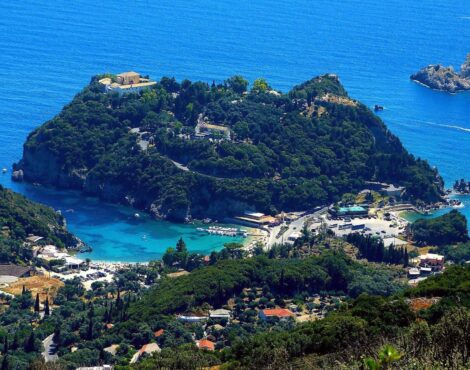
The northwest coast, and Paleokastritsa in particular, is the non-negotiable element of any July Corfu beach programme and the destination that most first-time visitors correctly identify as the island’s finest coastal experience. The boat hire at Paleokastritsa, which converts a good beach day into the finest day of the holiday, should be attempted early in the stay rather than saved for later, when the remaining July dates may not permit the return that the experience will immediately inspire.
The northeast coast provides the calmer alternative to the northwest’s more exposed conditions, its Albanian mountain backdrop and its succession of pebble bays offering a different and equally rewarding beach experience that a week’s programme should include at least once. The southern beaches, longer and sandier than either coast but less visually dramatic, are the appropriate destination for days when the group’s priority is simple, comfortable, family swimming rather than the more adventurous coastal exploration that the northwest and northeast best deliver.
The hidden coves, accessible by boat or footpath from various points along the island’s coastline, represent the July beach experience at its most solitary and most naturally beautiful, and the effort required to reach them is the price that the July peak season charges for the solitude that the main beaches cannot provide.
Food and Eating
The first-time visitor to Corfu in July who restricts their eating to the tourist-oriented restaurants of the main resort areas will eat adequately and return home without having encountered the food culture that makes Corfu one of the most rewarding culinary destinations in the Greek islands. The Corfiot kitchen, with its Venetian-influenced dishes of sofrito and pastitsada and bourdeto, its fresh seafood from the local boats, and its exceptional local olive oil and cheeses, is available in its finest form at the family tavernas of the interior villages and the seafront restaurants of the fishing communities, and finding these places is the most directly rewarding food investigation available during a July stay.
The covered market in Corfu Town, visited in the morning when the fish is freshest and the vegetable stalls are at their fullest, provides the ingredients for the villa kitchen meals that complement the restaurant programme and that produce, in the garden setting of Villa Kapella, some of the finest eating experiences of the stay. A morning at the market, followed by an afternoon cooking and an evening dinner at the outdoor table, is the Corfu food experience in its most direct and most satisfying form.
The kumquat liqueur that ends every proper Corfiot meal, offered as a matter of course in virtually every restaurant on the island, is the flavour of Corfu in the same way that the turquoise of the northwest coast water is its colour and the silver of the olive groves its light: entirely specific to this place and entirely unreproducible anywhere else.
Cultural Priorities
First-time visitors to Corfu in July who approach the island purely as a beach destination consistently return having missed the half of the experience that the island’s exceptional cultural richness provides. The UNESCO-listed Old Town of Corfu, with its Venetian architecture, its French promenade, and its British palace, is one of the finest urban environments in the Greek islands and deserves at least two visits during a July stay: one in the morning for the Archaeological Museum and the Campiello walking tour, and one in the evening for the volta and the dinner.
The Achilleion Palace, the Venetian fortifications of both the Old and New Fortress, the Archaeological Museum’s Gorgon pediment, the Byzantine churches of the old town, and the philharmonic tradition that fills the island’s public ceremonial life with music of European sophistication: these are the cultural dimensions of a Corfu July that the beach programme does not address and that the first-time visitor who addresses them alongside the beach programme returns home having understood an island of considerably greater depth and complexity than the one that the holiday photographs alone record.
The Villa Kapella Foundation
For guests staying at Villa Kapella, the practical guidance above operates within a framework that the villa itself provides with a completeness that simplifies the organisation of the July stay considerably. The villa team’s local knowledge, available from the moment of arrival for questions about beaches, restaurants, excursion logistics, and the practical details of island navigation that first-time visitors most need, converts the general advice of this guide into specific recommendations tailored to the current season and the particular interests of the group.
The villa itself, its garden and terrace providing the private, comfortable base from which the July Corfu programme is conducted and to which it returns each evening, is the element that makes the first-time Corfu visit not merely a good holiday but the beginning of the relationship with an island that most Villa Kapella guests find themselves planning to continue before the current stay has ended.
July in Corfu, experienced from Villa Kapella with some practical preparation and the willingness to engage with everything the island offers beyond the beach, is the holiday that justifies the word exceptional without qualification or apology. It is, for most of those who experience it, the standard against which subsequent holidays are measured and found, more often than not, to fall short.