
September in Corfu: Why Early Autumn Rivals the Peak Summer Months
The conventional wisdom about Mediterranean island holidays places the peak season, July and August, at the apex of the desirable calendar and everything before and after it in a descending hierarchy of adequacy. By this logic, September is the month for those who could not arrange July, the compromise month, the second-best option taken by people whose school holiday calendar or whose budget or whose failure to book early enough has removed the preferred window from their available choices.
The conventional wisdom is wrong. September in Corfu is not the compromise month. It is, for the visitor who approaches it with accurate information rather than inherited assumption, the month that delivers the most complete and most personally rewarding version of the Corfu holiday, combining the essential qualities of the peak summer with advantages that July and August specifically cannot provide. The guests who return to Corfu year after year and who have experienced the island in multiple months are not, as a group, choosing August. They are choosing September.
The Essential Summer Qualities: All Present
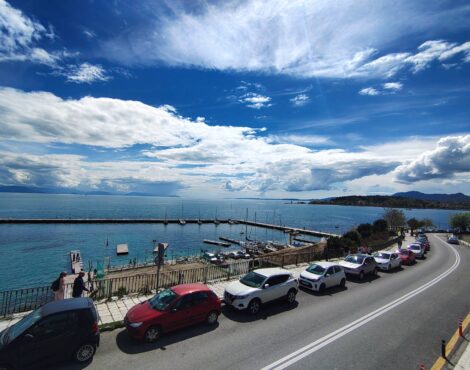
The case for September begins with what it is not: it is not a cold month, not a rainy month, not a month when the island is closed or the sea is unwelcoming or the outdoor life that defines the Corfu summer experience has retreated indoors. Average daytime temperatures of 26 to 30 degrees Celsius, predominantly sunny conditions, a sea temperature of 24 to 26 degrees, and long days of twelve to thirteen hours of daylight: these are the essential summer qualities, and September in Corfu delivers them in their entirety.
The visitor who arrives at Kapella Apartments in September expecting to find a diminished version of the July or August experience finds instead that the fundamental conditions of the Ionian summer are entirely present. The beach days are possible and excellent. The boat hire is operating. The outdoor dining that has been the natural centre of the Corfiot summer holiday since May continues with every quality intact and several improved. The sea is not merely warm enough for swimming. It is warmer than it was in July, the accumulated heat of three months stored in the water mass and releasing slowly through the early autumn in a way that makes the September sea the most comfortable swimming environment of the entire season.
The Peak Season Disadvantages: All Absent
What September removes from the Corfu equation is as significant as what it retains. The beach crowds that in August require the early morning arrival strategy and the boat hire solution to manage disappear in September with the speed of the northern European school holiday exodus, and the beaches that recover their natural character in the first week of the month do not lose it again until the following July. Paleokastritsa in September is not the Paleokastritsa of the August photographs where the main beach is covered edge to edge with sunbeds and umbrellas. It is the Paleokastritsa of the postcards that made the place famous: the turquoise bays largely uncrowded, the boat hire available without advance arrangement, the entire coastal landscape accessible without the competition of the peak season visitor numbers.
The restaurants and tavernas of Corfu in September recover from the peak season pressure with a quality of service and a standard of cooking that the August volume inevitably compromises. The kitchen that has been feeding three hundred covers an evening through July and August and is now feeding eighty gives its best with a completeness that the peak season kitchen, however accomplished, cannot consistently achieve. The waiter who has been managing six tables simultaneously through the busiest weeks of the summer is managing three in September, and the attentiveness that results is immediately and directly apparent to the guest who has experienced the same establishment in both months.
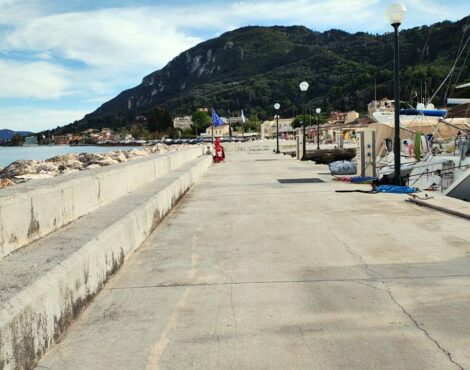
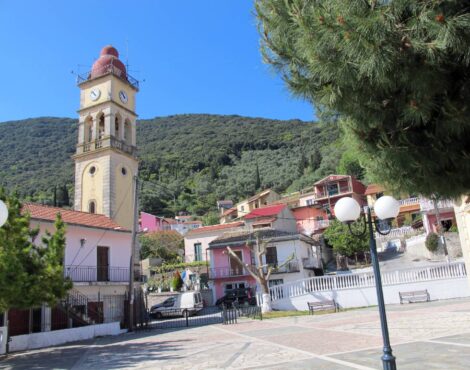
The roads are quieter. The car parks have space. The archaeological sites and the museums can be explored at the pace they deserve rather than the pace that the peak season crowds impose. The covered market in Corfu Town has the unhurried character of a market that is serving its community rather than its tourists, and the stallholders have the time and the inclination for the conversations about produce and provenance and cooking that the August rush prevents. The island, in short, has given itself back to the people who actually live in it, and the visitor who is present for this return discovers a Corfu of considerably greater depth and authenticity than the peak season months provide.
The September Light
The light of September in Corfu is the element of the early autumn month that most consistently exceeds the expectations of first-time September visitors and that most reliably produces, in the guests who have experienced it, the specific desire to return to the island in this month rather than any other. The August sun, at its most overhead and its most direct, illuminates the Corfiot landscape with an intensity that is spectacular in its own terms but that the photographers and painters who have worked on the island through the summer months understand as the season’s most demanding light, flattening the textures and the tonal range that the more oblique illumination of the spring and autumn produces.
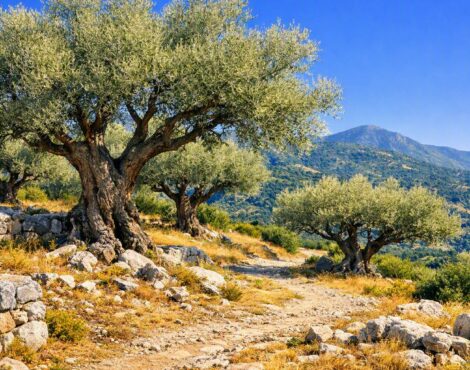
The September sun, lower in the sky as the season advances and the Earth’s axial tilt carries the northern hemisphere away from its summer orientation, falls across the Corfiot landscape at an angle that the summer months cannot provide. The olive groves, lit from the side rather than from above, reveal the silver undersides of the leaves and the ancient textures of the trunks in a way that the overhead August light never achieves. The sea, seen from the clifftop viewpoints of the northwest coast in the September afternoon, has the deep, saturated blue of the early autumn Ionian that the slightly paler tone of the August sea does not match. The hillsides of the island’s interior, beginning their gradual transition from the green of the summer to the gold of the autumn in the final weeks of the month, carry a warmth of colour that the uniformly green summer months do not produce.
The September Calendar
The cultural and natural calendar of Corfu in September adds dimensions to the September experience that the peak summer months, focused on the beach and the boat and the evening entertainment, do not consistently provide. The first signs of the autumn migration, the birds that began their southward movement in August and that pass through Corfu in increasing numbers through September, make the island an exceptional birdwatching destination in the early autumn month. The Ropa Valley and the wetland areas of the south, which produce their finest spring birding in April, deliver a different but equally rewarding autumn equivalent as the season’s second migration pulse moves through.
The September harvest, with the figs and the grapes and the first of the autumn vegetables arriving in the market alongside the last of the summer produce, gives the Corfu Town covered market a particular richness and variety that the summer months, abundant as they are, do not quite match. The local wines, pressed from the September grape harvest at the island’s small vineyards, will not be available until later in the autumn, but the grapes themselves, eaten fresh from the vine in the September warmth, are among the finest seasonal pleasures available on the island in any month.
The September Conclusion
The comparison between September and the peak summer months resolves, for any visitor who makes it with accurate information and direct experience, in September’s favour for a wide range of holiday priorities. The beach visitor finds quieter beaches with warmer water. The cultural visitor finds uncrowded museums and more attentive restaurants. The outdoor enthusiast finds walking and cycling conditions that the peak heat makes unavailable. The couple or the family seeking a private, relaxed, intimate Corfu experience finds an island that has returned to itself and a property, Kapella Apartments, that delivers the September Ionian with the full quality of a season that peaks, for those who know where to look for the peak, not in August but in the golden, warm, uncrowded weeks of early autumn.