Every place has its story, and some places have stories more dramatic and more instructive than others about the forces that the tourist economy exerts on the communities it reaches. The story of Benitses is one of the most dramatic of these, a tale of transformation so complete that it temporarily replaced the village’s original character with something almost entirely different, and a recovery so gradual and so still incomplete that the Benitses of 2026 is neither the fishing village it was nor the resort it became but something in the process of becoming itself again in a form that neither the original nor the peak resort version quite prepared for.
Understanding Benitses in October, which is the month when the village is most fully in its own contemporary character rather than in the overlay of the tourist season that the summer months apply, is to understand something important about how tourist economies affect the places they reach and what happens to those places when the tourism that has shaped them changes in scale or in character or in both.
The Original Village
Before the package holiday era discovered it, Benitses was what the east coast of Corfu had always produced in its sheltered bays and natural harbours: a fishing village whose relationship with the sea was the practical, daily, functional relationship of a community that drew its livelihood from the water and that organised its physical and social life around the harbour that made that livelihood possible.
The east coast of Corfu, facing across the Corfu Strait toward the Albanian coast with the particular sheltered character that the island’s geography provides against the prevailing westerly winds, has historically supported a series of fishing villages and small harbours whose populations have lived with the sea in the manner of communities whose fishing tradition predates any tourist economy by many centuries. Benitses was one of the finest of these villages, its natural harbour providing shelter for the local fleet and its position on the coastal road connecting it to Corfu Town without removing it from the more intimate character of the east coast fishing settlement.
The village before the tourist era was the village of the fishing fleet and the waterfront tavernas that served it: the boats returning to the harbour in the early morning with the night’s catch, the stallholders setting out the fish on the waterfront in the manner of a market that served the local population as much as it served the passing visitor, and the simple cooking of the east coast tavernas transforming the morning’s catch into the lunch that the fishing community and the occasional tourist shared at tables that made no particular distinction between the two categories of customer.
The natural setting of the original Benitses, with the harbour as its centre and the Albanian mountains visible across the channel and the fishing boats giving the waterfront the working character of a genuine maritime community, was the setting of a place of considerable beauty and considerable authenticity. The photographs of Benitses from the early decades of the tourist era, before the package holiday industry reached the village in its fullest force, show a community that the tourist economy had begun to affect but had not yet fundamentally altered: the harbour still primarily occupied by fishing boats, the waterfront still primarily oriented toward the fishing activity that had always defined it, and the new tourist facilities existing alongside rather than in replacement of the original character.
The Resort Era
The transformation of Benitses from the fishing village of the early photographs to the resort that became famous throughout Europe in the 1980s was the transformation that the package holiday industry at the peak of its cultural influence produced in the most extreme form that the eastern Mediterranean coastal village could accommodate. The infrastructure that the resort era built in and around Benitses, the bars and the clubs and the entertainment facilities that the young package holiday market of the 1980s specifically demanded and that the village’s location on the coastal road south of Corfu Town made logistically convenient to supply, overlaid the original fishing village character so completely that the two barely coexisted in the peak years of the resort’s notoriety.
The name of Benitses in the 1980s and early 1990s was a byword throughout Europe for the package holiday resort at its most uninhibited. The combination of the cheap beer, the late night entertainment, and the concentrated young tourist population that the resort attracted in its peak years produced a social environment that was entirely coherent on its own terms and that served its specific market with considerable efficiency, but that had essentially nothing in common with the fishing village that had occupied the same geographical location before the tourist economy arrived.
This is not a simple story of good original character corrupted by bad tourist development. The people who came to Benitses in the 1980s were having the holiday they specifically came for, and the community that provided it was engaging with the economic opportunity that the package holiday market represented with the practical intelligence of a fishing village whose traditional economy had never been particularly lucrative. The resort era of Benitses was a genuine social and economic phenomenon, not a simple imposition of external forces on a passive community, and its legacy is correspondingly complex.
The Return
The resort era of Benitses began to pass in the 1990s, as the package holiday market that had created it shifted in its preferences and its demographics toward other destinations and other forms of entertainment. The infrastructure that had been built for the peak of the resort era found itself partially stranded as the market that had required it moved on, and the village that remained after the most extreme elements of the resort had concluded was a village in the process of understanding what it was now and what it might become.
The decades since have seen a gradual and still incomplete process of recovery that the word return most accurately describes, though the village that is returning is not the original fishing village with all its pre-tourist characteristics restored but something more complex: a community that carries the layered history of both its original character and its resort transformation and that is finding its way toward a form of itself that acknowledges both while not being entirely defined by either.
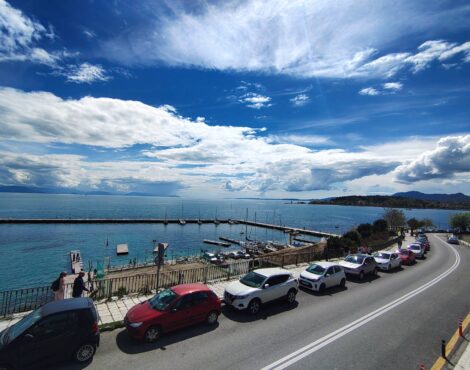
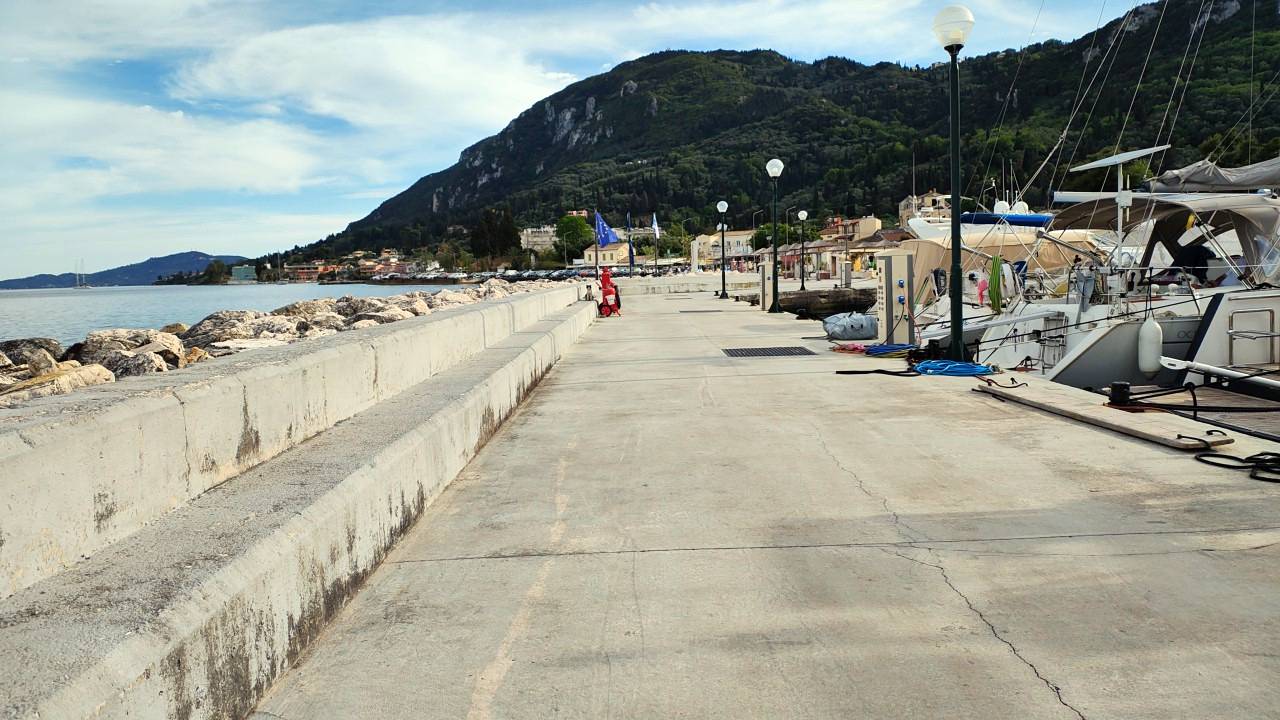
The harbour is the most instructive location for observing this recovery. The fishing boats that remain in the Benitses harbour in October 2026 are the boats of a fleet that the resort era reduced but did not eliminate, and their presence on the water alongside the tourist boats of the summer season and the empty moorings of the boats that have not returned gives the harbour the character of a working space in partial recovery: genuinely functional in its fishing activity, genuinely reduced from its original scale, and genuinely different from the tourist amenity that the resort peak had briefly made it.
The waterfront tavernas that have returned to the Corfiot kitchen tradition, serving the fish from the morning’s catch in the manner of the original village tavernas rather than the tourist menu of the resort era, are the most immediately rewarding expression of the recovery for the visitor who comes to Benitses in October specifically for the food. The fresh fish, the simple preparation, the local olive oil and the lemon, and the view across the harbour to the fishing boats and the Albanian mountains beyond: this is the Benitses waterfront meal in its recovered form, and it is a meal of genuine quality in a setting of genuine character that the resort era temporarily replaced with something entirely different and that the decades of recovery have been gradually restoring.
Benitses in October
The October visit to Benitses is the visit that most completely reveals the contemporary character of the village in the process of its recovery. The tourist season has concluded, the entertainment infrastructure of the summer is closed or operating at minimal capacity, and the village is most entirely in its own contemporary character: the fishing harbour, the waterfront community, the older buildings of the original village behind the waterfront, and the mixture of the recovered and the not-yet-recovered that the decades of gradual return have produced.
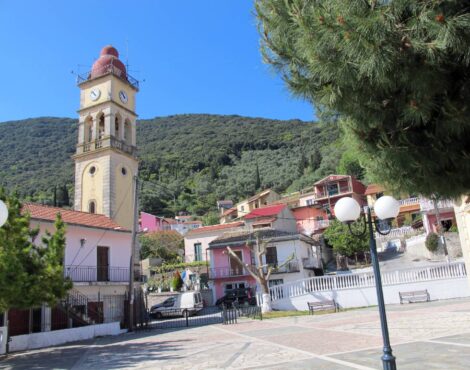
Walking through Benitses in October, from the harbour end of the waterfront through the older village lanes and back along the coastal front, is to walk through the full complexity of the village’s story. The original character is present in the harbour and the older buildings and the fishing activity that remains. The resort era is present in the infrastructure that the recovery has not yet removed or transformed. And the recovery itself is present in the waterfront tavernas that serve the Corfiot kitchen tradition and in the gradual reassertion of the fishing village character that the decades since the resort peak have been producing.
The October visitor who sits at a waterfront taverna table in Benitses with the morning’s fish from the harbour boats on the menu and the Albanian mountains across the channel providing the backdrop has chosen the finest context in which to engage with this complex and instructive story. The fish is excellent. The setting is beautiful. And the village around the table is, in October, most completely and most honestly the place it is in the process of becoming.
Benitses and Kapella Apartments
For guests at Kapella Apartments, Benitses is the east coast village visit that most directly engages with the complicated and instructive story of what the tourist economy has done to the island’s coastal communities and what some of those communities are doing, with varying degrees of success, to recover from the most extreme effects of that engagement. It is not the most beautiful village on the east coast, and it is not the most architecturally distinguished or the most historically significant. But it is the most honest, in October, about the full complexity of the relationship between a traditional community and the tourist economy that discovered and transformed and is now in the process of partially losing interest in it, and that honesty makes it one of the most specifically and most enduringly rewarding village visits available to the October guest at Kapella Apartments.