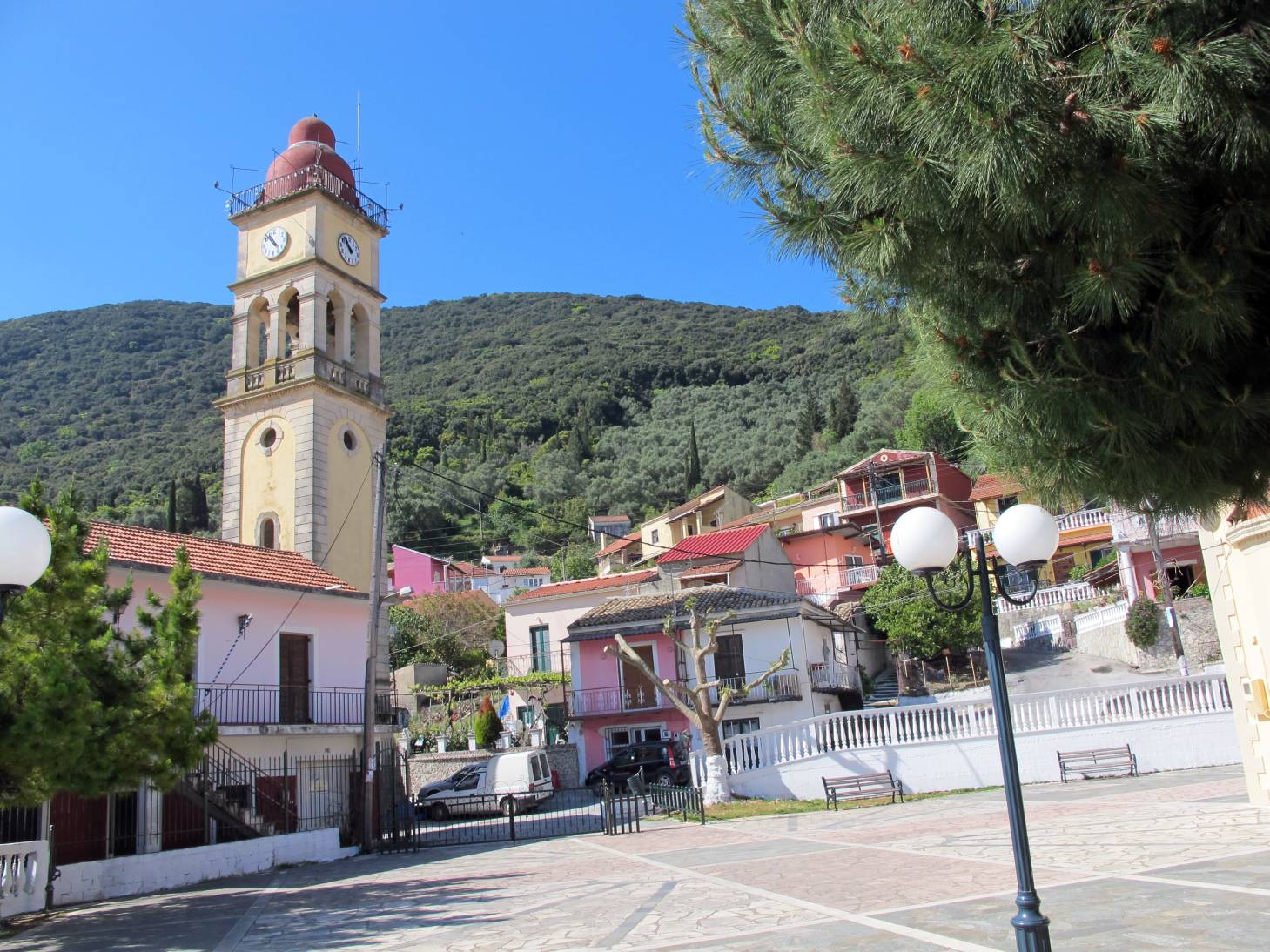
There is a category of place that travel writing consistently underserves: the place that is excellent not because of a single dramatic feature or a celebrated attraction but because of the accumulated quality of its ordinary character, the combination of good food and genuine community life and the particular atmosphere of a settlement that has not been significantly reorganised by tourism and that consequently retains the authentic relationship between its physical environment and its human population that the tourist village, however charming, has typically modified in the service of its visitors.
Agios Mattheos is this kind of place. It is not a spectacular village. It does not have the Venetian architectural distinction of Ano Korakiana or the mountain panorama of Strinilas or the celebrated sunset view of Pelekas and Lakones. What it has is something that the specifically architectural or the specifically scenic village cannot provide: the quality of a community that is entirely and completely itself, whose tavernas serve the food of the surrounding agricultural landscape because that is what the village produces and what its people eat, and whose daily life in the village square and the kafeneion and the working streets of the settlement is the daily life of the southern Corfiot agricultural community going about its business without the mediation of the tourist economy.
The Southern Agricultural Landscape
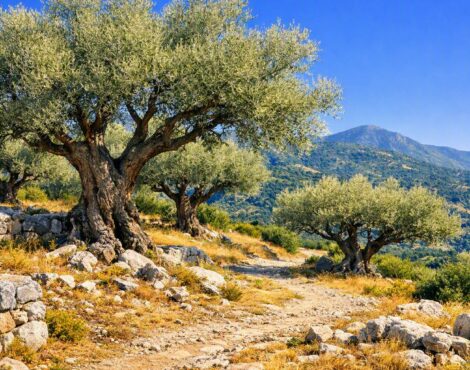
The approach to Agios Mattheos from the north, through the central island roads that pass through the olive country of the Corfiot interior before reaching the slightly more elevated terrain of the southern hill range, is an approach through the agricultural landscape that defines the character of the Corfiot south more completely than any other single feature. The olive groves of the southern plain, managed with the careful attention of communities whose livelihoods depend on the annual harvest, have the particular quality of an agricultural landscape that has been in continuous productive use for centuries and that carries in its organisation and its condition the evidence of that long and purposeful relationship with the land.
The village itself sits on the lower slopes of the hill that rises above the southern plain, its position elevated enough to provide the views across the surrounding olive country and toward the southern coast that the agricultural communities of the Corfiot interior have always valued as the practical advantage of an elevated position in a landscape where the ability to see the surrounding terrain has historically been as important as the access to the soil and the water that the lower ground provides.
The architecture of Agios Mattheos reflects the agricultural character of the community that built it. The older buildings of the village, constructed in the vernacular tradition of the Corfiot south rather than the Venetian architectural language of the more aristocratic interior settlements, are the buildings of a working farming community: solid, practical, oriented toward the function of housing the family and the animals and the equipment of the agricultural operation rather than the display of social status or cultural refinement. The occasional older building that carries the influence of the Venetian period in its proportions or its detail is the exception in Agios Mattheos rather than the rule, and the overall character of the village’s built environment is the character of a southern agricultural settlement rather than a village shaped by the aesthetic priorities of the island’s aristocratic tradition.
The Village Square and the Kafeneion
The social life of Agios Mattheos centres on the village square with the unhurried confidence of a community whose relationship with its public space has been developing for generations and that does not require the mediation of tourist activity to give the square its function and its character. The plane trees that shade the square in the manner of the Mediterranean village square tradition, providing the cool and the dappled light that the summer heat demands and the autumnal warmth that October maintains, are old enough to have been providing this service for longer than anyone in the village can remember, and the kafeneion tables beneath them have been occupied by the village’s population through the various seasons and the various generations of the community’s life.
In October, with the tourist season concluded and the village entirely in its own rhythm, the kafeneion at Agios Mattheos is the kafeneion at its most genuinely itself. The morning occupants, the older men of the village who regard the square kafeneion as the natural extension of their domestic routine and whose presence there from the early morning through to the midday is as regular and as unremarkable as the sunrise that precedes it, conduct their conversations with the particular combination of local knowledge and seasonal observation that the agricultural community’s calendar provides in October with especial richness: the state of the olive crop, the timing of the harvest, the quality of the rain that the October weather has begun to provide, and the various other topics that the turning of the agricultural year from the summer to the winter season naturally produces.
The visitor who takes a coffee at the Agios Mattheos kafeneion in October and allows the experience to unfold at the pace of the village rather than at the pace of a tourist itinerary will find, in the unhurried hour or two that the square and the coffee and the surrounding activity of the morning provide, one of the most directly and most honestly authentic encounters with the Corfiot community life that the island makes available to the October visitor.
The Tavernas: The Heart of the Matter
The tavernas of Agios Mattheos are the reason that the people who know the southern Corfu food scene most thoroughly speak of the village with the particular enthusiasm that the finest eating experience always generates. The establishments that serve the village and its visitors are not remarkable in their physical presentation: the tables in the square or the street, the handwritten menu on the board inside, the open kitchen from which the smells of the cooking emerge with the directness of a place that has nothing to conceal about what it is doing or how it is doing it. What is remarkable, in each of the finest establishments, is the food.
The Agios Mattheos kitchen is the kitchen of the southern agricultural community, and the ingredients it works with are the ingredients of that community’s own production. The lamb comes from the herds of the surrounding hillsides, raised on the combination of the olive grove undergrowth and the rougher grazing of the southern hill range and producing meat with the particular flavour that the mixed herbage diet of the Corfiot pastoral tradition gives to the animals that grow on it. The vegetables come from the gardens of the village and the surrounding agricultural land, the October garden at its most fully productive and its most richly flavoured in the concentrated warmth of the late season. The olive oil is the oil of the groves visible from the taverna table, produced from the trees whose harvest is being prepared in the weeks around the visit and whose oil, from the previous winter’s pressing, is at the fully developed quality that several months of bottling has brought it to.
The cooking that these ingredients receive in the Agios Mattheos kitchen is the cooking of the Corfiot agricultural tradition in its most unadorned and most honest form. The lamb slow-roasted in the wood-fired oven with the herbs of the surrounding hillside. The aubergines stuffed with the rice and the herbs and the local cheese in the manner that the southern Corfiot kitchen has developed for this most abundant of the October vegetables. The fresh fish from the catch of the southern coast, simply grilled and dressed with the olive oil and the lemon that the Mediterranean kitchen has applied to fish of this quality since the first kitchen fire was lit on this island three thousand years ago. These are the dishes that Agios Mattheos produces, and they are produced with the accumulated confidence of a kitchen that has been cooking them since before the tourist season existed as a concept and that will continue cooking them long after it has concluded for another year.
The October Context
The visit to Agios Mattheos in October has a specific and irreplaceable quality that the summer months cannot provide. In July and August, the village receives sufficient visitor traffic that the tourist overlay on the natural agricultural character of the community is visible and occasionally slightly obscuring. In October, with the tourist season concluded and the village entirely in its own rhythm, the agricultural and community character of Agios Mattheos is as completely and as directly available as it is at any point in the year.
The October olive harvest preparation that is underway in the surrounding groves gives the village in this month a purposefulness and an agricultural energy that the summer months, when the olive is developing its fruit in the relatively invisible way of fruit accumulating its oil content through the warm season, do not produce in the same visible form. The conversations at the kafeneion tables in October are the conversations of people who are thinking about the harvest: when to begin, how the fruit looks this year compared to last, which sections of the grove will be ready first and which will need another few weeks before the oil content has reached the point that makes harvesting worthwhile. This is the conversation of a community in a specific and practically important moment of its annual cycle, and the visitor who is present at Agios Mattheos in October is present at this moment with a directness and an immediacy that the tourist season months do not provide.
Agios Mattheos and Kapella Apartments
For guests at Kapella Apartments, Agios Mattheos is the southern village day that most completely and most honestly delivers the authentic Corfiot agricultural community experience. The drive from the property through the central island roads and into the southern landscape is itself a rewarding journey through the olive country and the working agricultural terrain of the Corfiot interior, and the arrival at the village after the drive through the south delivers the guest to a settlement that is as different from the tourist infrastructure of the coastal resorts as the island’s geography and history have made possible.
A morning in the Agios Mattheos kafeneion, followed by a visit to the village market for the October produce of the surrounding gardens, followed by a long lunch at one of the square tavernas with the lamb from the hillside herds and the olive oil from the groves visible through the taverna window and the October wine from the local producer’s unlabelled bottle: this is the Agios Mattheos day in its most complete and most nourishing form, and it is the day that the October guest at Kapella Apartments is most uniquely positioned to experience in the authentic and unhurried manner that the hidden season month most completely enables.