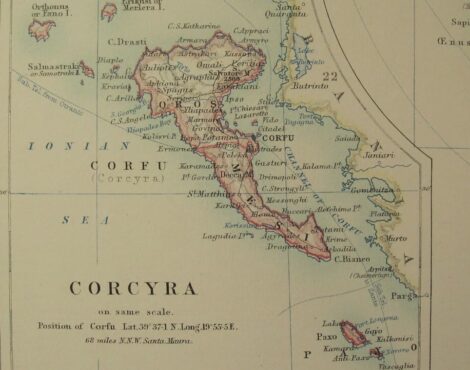
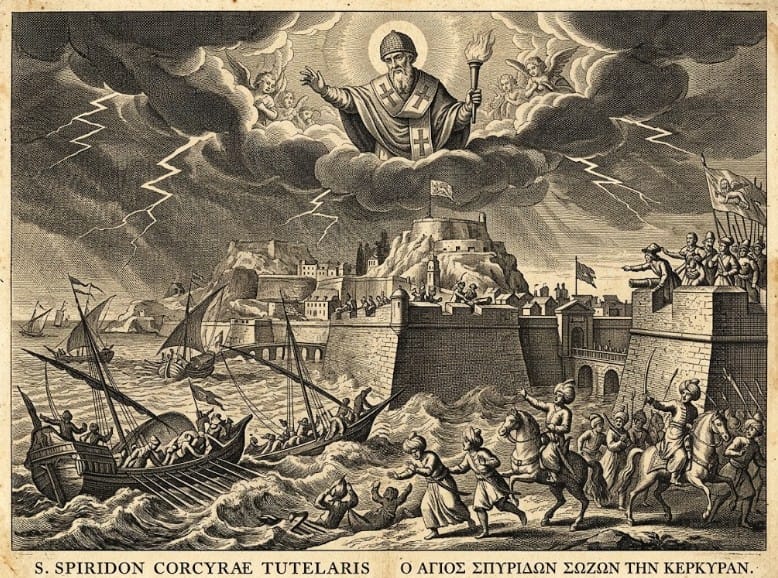
Corfu stands apart from almost every other part of what is now Greece in one historically significant and culturally defining respect: it was never conquered by the Ottoman Empire. While the Greek mainland fell to Ottoman power in the decades following the fall of Constantinople in 1453, and while the Aegean islands were progressively incorporated into the Ottoman territorial system through the fifteenth and sixteenth centuries, Corfu under Venetian protection withstood a series of major Ottoman military assaults and remained throughout the entire Ottoman period a Venetian possession and, by extension, a part of the Latin Christian world rather than the Ottoman one. This distinction is not merely a historical footnote of interest only to specialists. It is the primary explanation for the most fundamental and the most immediately perceptible characteristics that make Corfu different from every other part of the Greek world, and understanding it requires understanding what the Ottoman sieges were, why they ultimately failed, and what that failure meant for the island and its people.
The Ottoman Advance and the First Raids
The Ottoman advance into the Ionian region began in earnest in the years following the fall of Constantinople in 1453, as the empire under Mehmed II consolidated its control over the former Byzantine territories of the Balkans and Anatolia and began to extend its military reach toward the western Mediterranean. The fall of the last Byzantine outposts in the Peloponnese in 1460 and the progressive Ottoman subjugation of the Albanian coast brought Ottoman military power to the immediate neighbourhood of Corfu, and the first Ottoman raids on the island began during the latter half of the fifteenth century.
These initial attacks were raiding operations rather than systematic siege campaigns, their primary purpose the extraction of portable wealth and human captives rather than the permanent conquest and incorporation of the island into the Ottoman territorial system. But they inflicted considerable and genuine suffering on the rural population of the island, who were the primary victims of the raiders’ advance through the unfortified countryside, and they demonstrated with brutal clarity the vulnerability of the island’s agricultural interior to Ottoman military power in the absence of adequate defensive infrastructure outside the fortified town. The experience of these raids shaped the Venetian administration’s understanding of what the defence of Corfu required and contributed to the progressive expansion of the island’s fortification system through the late fifteenth and early sixteenth centuries.
The Great Siege of 1571
The most devastating Ottoman assault on Corfu in the entire period of Ottoman-Venetian conflict occurred in the summer of 1571, the same year as the Battle of Lepanto that would prove the decisive naval engagement of the Ottoman-Christian confrontation in the Mediterranean. The context is essential: in the summer of 1571, the Holy League assembled by Pope Pius V was gathering its naval forces for the campaign that would culminate at Lepanto, and the Venetian defensive forces in the Ionian were committed to this campaign in ways that left the island more exposed than at almost any other moment in the preceding decades.
An Ottoman fleet under the command of Uluj Ali, the Algerian corsair commander who had risen to a position of major importance in the Ottoman naval establishment, conducted a systematic assault on the island in the weeks before the Battle of Lepanto. The attack on the fortified town was repulsed by the Venetian garrison, the defences of the Old Fortress proving sufficient to withstand the Ottoman assault even with reduced forces, but the rural areas of the island were comprehensively devastated. Contemporary accounts describe the burning of villages, the destruction of olive groves and agricultural infrastructure, and the capture of a significant portion of the island’s rural population into slavery, losses that took decades to repair and that left permanent marks on the island’s demography and agricultural capacity. The attack of 1571 was the most violent single episode in the long history of Ottoman-Corfiot conflict, and its memory remained vivid in the consciousness of the island’s community long after the threat itself had receded.
The New Fortress and the Architecture of Resistance
The Ottoman attack of 1571 and the broader lesson of repeated Ottoman assaults on the island’s unfortified rural areas prompted the Venetian administration to undertake a comprehensive programme of defensive investment whose most visible monument is the New Fortress constructed on the San Marco hill at the northwestern corner of Corfu Town between 1576 and 1645. The New Fortress represents the application of the most advanced principles of Renaissance military engineering to the specific defensive requirements of Corfu, its system of angular bastions, demi-bastions, and connecting curtain walls designed by engineers working within the Italian tradition of the trace italienne to create overlapping fields of fire that denied any attacker a position from which an assault on the walls could be conducted without exposure to devastating defensive fire from multiple directions simultaneously.
The construction of the New Fortress did not eliminate the Ottoman threat to Corfu, but it transformed the military calculus of any future Ottoman assault in ways that made the capture of the fortified town essentially impossible without a sustained siege of a scale and duration that the Ottoman strategic priorities in the Mediterranean did not, after Lepanto, justify. The combined defensive system of the Old and New Fortresses, together with the town walls and the sea defences that connected them, created a position that the Ottoman forces never again seriously attempted to take, and that stands today as the most substantial and most eloquent physical monument to the island’s successful resistance to the most powerful military force of the early modern Mediterranean world.
The Historical Meaning of Corfu’s Resistance
The failure of the Ottoman Empire to conquer Corfu had consequences that extended far beyond the island itself and that shaped the subsequent development of Corfiot culture and identity in ways whose effects are still visible and tangible in the present. The four centuries of Ottoman administration that transformed the social, cultural, religious, and economic life of the Greek mainland and the Aegean islands were not experienced in Corfu. The devshirme system that took Christian boys into the Ottoman military and administrative establishment, the conversion pressures that reshaped the religious demography of many Greek communities, the fiscal and legal framework of Ottoman provincial administration that organised economic life on principles fundamentally different from those of the Venetian system: none of these touched Corfu. Instead, the Western European cultural influences that Venice brought to the island continued to accumulate and deepen through the centuries when the rest of the Greek world was living a different historical experience, and the result is the island that visitors encounter today: architecturally, musically, culinarily, linguistically, and socially distinct from the rest of Greece in ways that the successful Ottoman sieges of nearly everywhere else make immediately and historically comprehensible.