Of all the civilisations and powers that have governed Corfu through its three thousand years of recorded history, none has left a more complete, more lasting, or more visually dramatic imprint on the island than the Venetian Republic. The four centuries of Venetian rule that began with the island’s voluntary submission in 1386 and ended with the fall of the Republic in 1797 shaped every dimension of Corfiot life, from the architecture of the capital and the spatial organisation of the olive groves to the musical tradition of the philharmonic bands and the culinary heritage of the island’s kitchen. To understand Corfu in the present is, in the most fundamental sense, to understand Venice in the past, and the relationship between the two is not the simple relationship of coloniser and colonised that a superficial reading of the history might suggest, but something considerably more complex and more productive: a centuries-long collaboration between a great maritime empire and a community that was both its most valued western possession and one of its most distinctive cultural creations.
Venice and the Strategic Imperative of Corfu
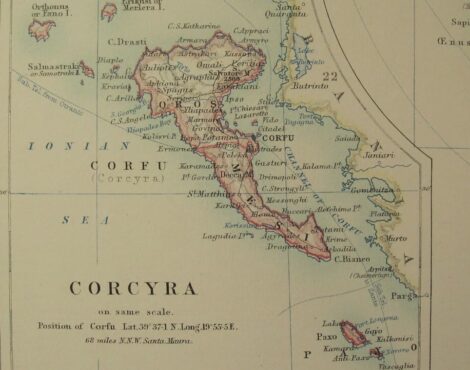
Venice acquired Corfu in 1386 not primarily for its agricultural potential, though that was considerable, nor for its existing urban wealth, though that too had value, but above all for its strategic position. The island at the northern end of the Ionian Sea, commanding the approaches to the Adriatic from the south and controlling the passage between the open Ionian and the enclosed waters of the Adriatic, was the key to the Republic’s control of the sea routes that connected Venice to the eastern Mediterranean where the bulk of its commercial empire was located. Without secure control of Corfu, the merchant fleets that carried Venetian goods between the Adriatic and the Levant were exposed at the most critical and the most vulnerable point of their journey, and the Republic understood this and invested accordingly.
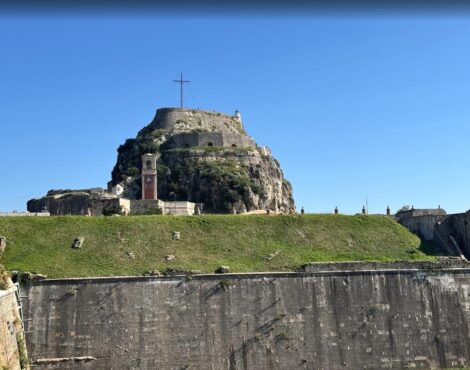
The investment took its most dramatic and most durable form in the fortification of Corfu Town. The Old Fortress on its rocky promontory at the eastern end of the town was rebuilt and extended through successive campaigns of military engineering from the fourteenth century through the seventeenth, its system of bastions, sea walls, and internal defensive works growing with each generation of Venetian military architecture to incorporate the most advanced principles of the art. The New Fortress on the San Marco hill at the northwestern corner of the town was constructed between 1576 and 1645 as a purpose-designed monument of Renaissance military engineering, its geometrically precise system of angular bastions creating overlapping fields of fire that made a frontal assault essentially impossible. Together, the two fortresses and the town walls that connected them created a defensive system of exceptional sophistication that protected the Corfiot population through multiple Ottoman sieges and remains one of the finest surviving examples of Venetian military architecture anywhere in the Mediterranean world.
The Agricultural Revolution: Four Million Olive Trees
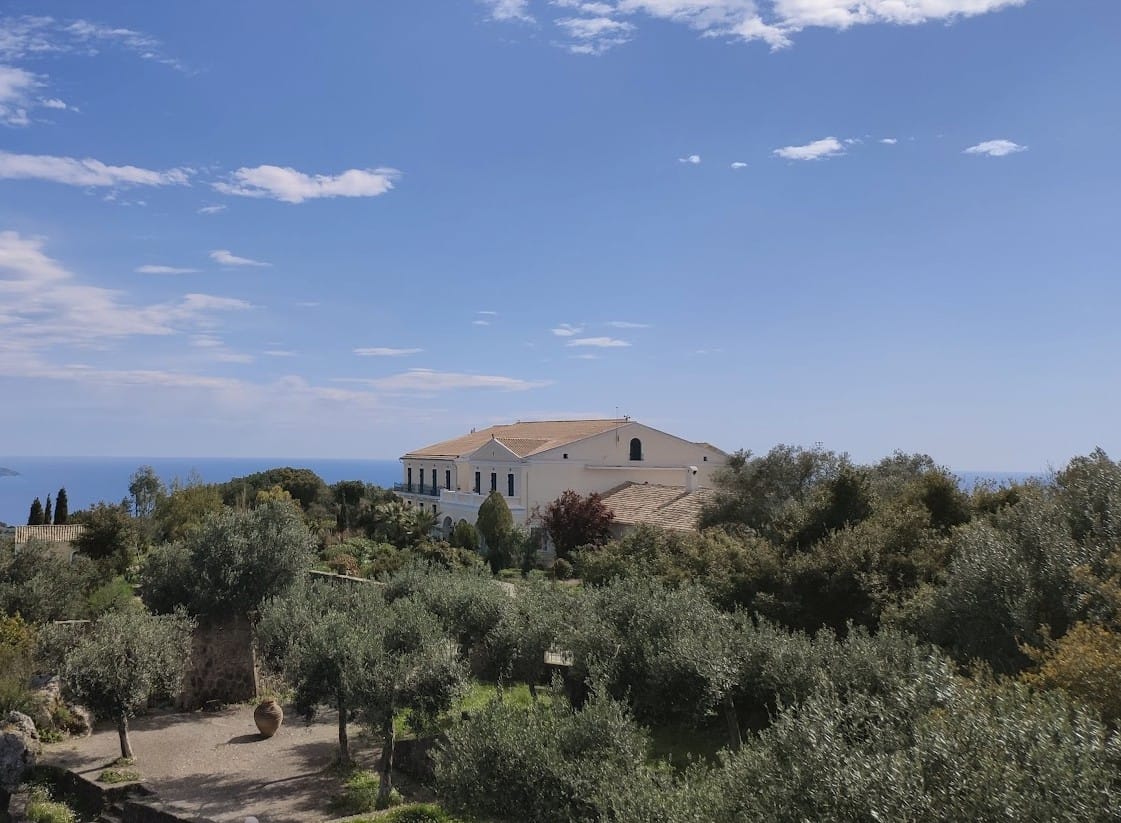
The most economically transformative and the most visually enduring consequence of Venetian rule in Corfu was the systematic expansion of olive cultivation across the island’s landscape. The Republic, recognising the commercial value of olive oil as a trading commodity and the agricultural potential of Corfu’s climate and terrain for producing it, instituted in the early decades of its administration a bounty system that paid Corfiot farmers a fixed sum for every olive tree successfully established on the island. The policy was simple in its structure and profound in its consequences: it converted the economic interest of the individual farmer and the strategic interest of the imperial power into a single aligned incentive, and the result, maintained through more than two centuries of consistent Venetian administration, was the transformation of the Corfiot landscape from the mixed agricultural terrain of the Byzantine and Angevin periods into the olive-dominated countryside that the visitor encounters today.
The estimated four million olive trees that currently cover approximately a third of the island’s surface area are the direct biological descendants of the trees planted in response to the Venetian bounty, and many of the older specimens in the island’s groves are themselves of Venetian-era origin, their massive trunks and gnarled root systems representing three to five centuries of continuous growth in the same soil. The oil these trees produce remains the foundation ingredient of the Corfiot kitchen, the base of the sofrito and the pastitsada and the dozens of other dishes that distinguish the island’s culinary tradition from that of mainland Greece, and the harvest of December through February remains the most significant agricultural event of the Corfiot year, organising the seasonal rhythm of rural communities across the island just as it has done since the Venetians planted the first of these trees six centuries ago.
Culture, Music, and the Western European Connection
The cultural life of Corfu under Venetian administration was shaped by the Republic’s integration of the island into the broader cultural world of the Italian Renaissance and the subsequent Baroque and early classical periods, an integration that gave Corfu a relationship with Western European high culture that no other part of what is now Greece has ever possessed in the same depth or with the same continuity. The establishment of formal music education in Corfu during the Venetian period, the introduction of Italian opera through the San Giacomo Theatre that was built in the town during the seventeenth century and became the first opera house in Greece, and the progressive integration of Italian architectural forms, decorative conventions, and social practices into the life of the island’s educated classes all reflect the depth of the cultural exchange that the Venetian period produced.
The philharmonic bands that today march through the streets of Corfu Town during the Easter celebrations and the feast days of the ecclesiastical calendar, performing the brass band music of the nineteenth-century Italian tradition, are the living expression of a musical culture that the Venetian period created and that the island has maintained with remarkable continuity through the two centuries since Venice fell. The cantades, the serenade tradition in the Italian popular musical form that Corfiot ensembles perform on summer evenings, represent the popular dimension of the same fundamental musical orientation toward the Western European tradition that the San Giacomo Theatre represented at the elite level. Corfu is the only place in Greece with this kind of organic, historically rooted connection to the Western European musical tradition, and the connection is Venetian in its origins.
The Fall of Venice and the Survival of Its Legacy
The fall of the Venetian Republic in May 1797, brought about by Napoleon Bonaparte’s Italian campaigns and formalised in the Treaty of Campo Formio by which France and Austria divided the Republic’s former territories, ended four centuries of Venetian governance of Corfu with an abruptness that the island’s population experienced as a genuine shock. The institutions, the legal frameworks, the social hierarchies, and the cultural practices that the Venetian period had established over four centuries did not disappear with the Republic itself, the depth of their roots in the Corfiot community making them resistant to the political changes that the subsequent French and British administrations introduced, but their political foundation was removed and the subsequent administrations operated on different principles. The legacy of Venice in Corfu is not a matter of historical nostalgia but of living cultural identity, present in the architecture of the Old Town, the music of the philharmonic societies, the food of the Corfiot kitchen, and the social character of a community that four centuries of Venetian governance shaped into something irreversibly and distinctively itself.