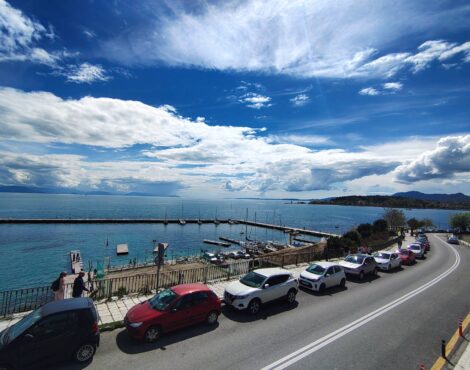
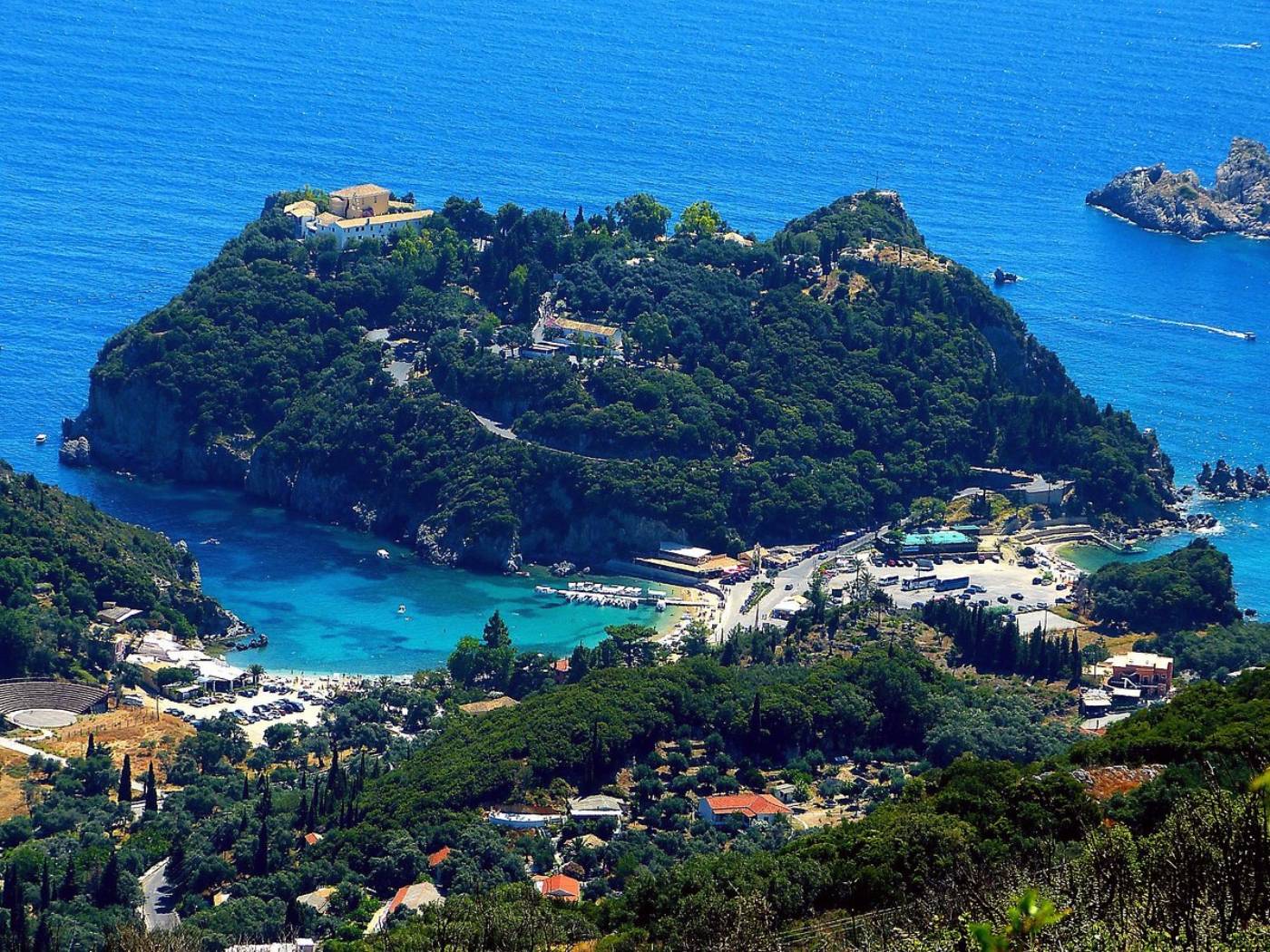
The road from Paleokastritsa climbs steeply from the coastal settlement, switchbacking up the limestone ridge that separates the bay from the agricultural interior of the island’s northwest, and at each turn it offers a wider and more complete version of the view that the previous turn has begun to reveal. The bays of Paleokastritsa, which from the beach below are experienced as a succession of separate enclosed spaces, begin from the ascending road to reveal themselves as parts of a single coherent system, the headlands that divide them shrinking with the increasing altitude into the elements of a composition rather than the barriers between individual bays. By the time the road reaches the village of Lakones on the ridge, the full extent of the northwest coastal landscape is visible in a single panorama of extraordinary scope and beauty, and the traveller who arrives at the village for the first time understands immediately why the road was worth climbing.
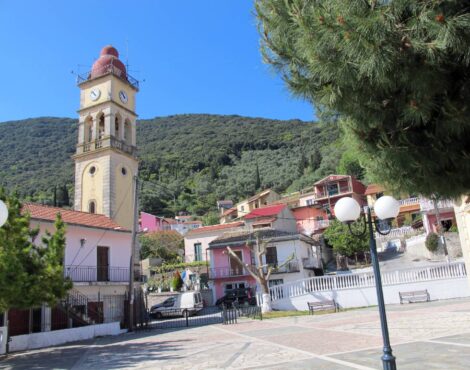
Lakones is the village that the view made significant and that the view continues to define, but it is also a village with its own character and its own history that the view, however dominant, does not entirely constitute. The community that has lived on this ridge above the Paleokastritsa coastline has been here through the centuries of the island’s Venetian administration and beyond, and the combination of the natural endowment of the position and the human history of the settlement produces a village of considerably more depth than the celebrated sunset viewpoint and the taverna terraces that most visitors come specifically to experience.
The Position and Its History
The ridge on which Lakones sits is the natural geographical feature that defines the relationship between the northwest coast of Corfu and the island’s interior. The ridge separates the coastal landscape of the northwest, with its dramatic limestone cliffs and turquoise bays, from the agricultural interior of the olive country and the hill villages of the central island, and the settlement at its highest accessible point has historically commanded this transition between two very different environments and two very different ways of engaging with the island’s resources.
The strategic significance of the Lakones position, with its views across the coastal approaches from the northwest and its direct oversight of the bay system that provided one of the island’s most important natural harbours, made it a point of observation and communication throughout the Venetian period. The Republic, which understood the defensive and communicative value of elevated positions with the practical intelligence that four centuries of island governance produced, maintained the ridge settlements of the northwest as part of the system through which the coastal approaches could be monitored and the island’s population alerted to the various threats that the maritime history of the Ionian repeatedly produced.
The village that developed on and around this strategically significant ridge position carries the layered history of a settlement that has been shaped by its position’s advantages and its position’s exposure in roughly equal measure. The elevation that provides the extraordinary views also exposes the village to the winds that move across the ridge from the southwest in the winter months and that give the Lakones location a character of considerable meteorological drama that the more sheltered valley settlements of the interior do not experience in the same way.
The Views: The Finest in the Ionian
The claim that the views from Lakones are among the finest in the Ionian islands is not a promotional exaggeration. It is the straightforward description of what the village’s position provides to anyone who stands at any of the elevated points within the settlement and looks outward in the directions that the ridge allows. The view is not a single panorama but a continuous revelation, each direction offering its own distinctive composition of sea and coastline and headland and distant horizon.
The primary view, facing west and northwest, encompasses the full Paleokastritsa bay system in its geographical entirety. The monastery of Theotokos on its promontory, visible from everywhere in the bay below but seen from Lakones as the elevated structure it actually is rather than the building at eye level that the beach visitor encounters, sits in the foreground of a view that extends behind it through the outer headlands of the bay system and across the open Ionian to the horizon. On the clearest days, and October in Corfu produces some of the clearest days of the year, the Diapontian Islands are visible on the western horizon as inhabited land masses rather than atmospheric outlines, their distinctive profiles identifying the individual islands with a clarity that the summer haze specifically prevents.
The northern view from Lakones looks along the northwest coast toward the cape above Arillas and beyond, the cliff line of the northwest coast extending in a sequence of headlands and bays that diminish with the distance toward the island’s northern tip. The Albanian coast, crossing the northeastern horizon with the authority of a mountain range that dwarfs anything visible on the Corfiot side, provides the most dramatically scaled element of the Lakones panorama and the one that most powerfully communicates the geographical reality of the island’s position at the edge of the European world.
In October, these views reach their annual finest expression. The October clarity, the atmosphere cleaner and the visibility greater than at any point in the summer season, extends the visible range to the maximum that the geography of the region allows. The October light, falling across the northwest coastal landscape from the southwest at the angle of the advancing season, illuminates the limestone cliffs of the Paleokastritsa headlands and the surface of the bays below with the warm gold of the early autumn sun at its most oblique and most dramatically beautiful. The Paleokastritsa bays in October afternoon light, seen from the Lakones ridge with the monastery catching the last direct sunlight and the water below beginning its evening colour transition, are the northwest coast landscape in the form that the finest October afternoon produces and that the summer months, however excellent their own version of the same view, do not achieve in the same richness and the same definition.
The Sunset: The Annual Finest
The sunset from Lakones in October is the event that the village’s position most completely and most specifically enables, and it is an event that the October conditions make more extraordinary than at any other point in the year. The sun, setting over the open Ionian to the west at the lower angle of the advancing season, descends toward the horizon in a sequence of colour changes that the October atmosphere, cleared of the summer haze and lit by the lower sun’s more oblique path through the air, renders in a saturation and a definition that the summer sunset at the same viewpoint does not achieve.
The pre-sunset hour from the Lakones ridge in October is the finest hour of the Corfiot day, the light on the northwest bays below warming from the gold of the late afternoon through the deepening copper of the approach to the sunset to the rose and amber of the final descent. The monastery of Theotokos on its promontory, directly below and in line with the setting sun from the Lakones viewpoint, catches the last direct sunlight of the day in a sequence of illuminations that the monastery’s white walls and terracotta roofs transform into a study in the colours of the October evening: the brilliant white of the walls warming to cream and then gold as the sun descends, and the deep red of the terracotta darkening to burgundy in the final minutes before the sun touches the horizon.
The afterglow that follows the October sunset from Lakones is as remarkable as the sunset itself, the western sky retaining the rose and amber of the departed sun for thirty to forty minutes after the horizon has swallowed the last of the direct light and the sea below gradually deepening from the gold of the sunset to the blue-grey of the early evening. Sitting at a Lakones taverna table through this entire sequence, from the first golden hour through the sunset and the afterglow to the full darkness of the October evening, is one of the most complete and most sustained experiences of natural beauty that the Ionian islands provide at any point in the year.
The Tavernas of Lakones
The tavernas of Lakones occupy the terrace positions that the village’s ridge location makes available with the generosity of a geography that could not have been better designed for the purpose. The establishments that have grown up on the Lakones ridge over the decades of the village’s tourist visibility are positioned, without exception, to take maximum advantage of the view that their location provides, and the best of them combine the view with a quality of food and service that makes the Lakones taverna dinner one of the most specifically rewarding experiences available anywhere on the island.
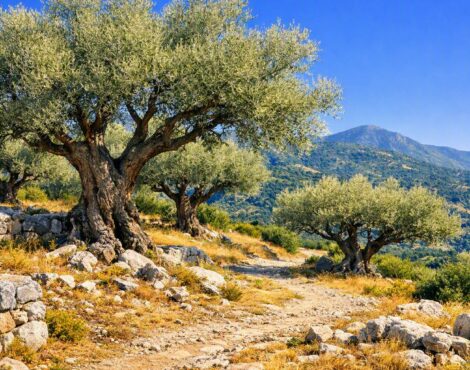
The food at the finest Lakones establishments reflects the Corfiot kitchen tradition with the directness of restaurants whose location provides sufficient reason to visit without the need for promotional elaboration of their culinary credentials. The sofrito and the fresh fish and the village salads dressed with the oil of the olive groves visible from the table are served with the confidence of a kitchen that knows its ingredients and its setting and requires nothing more elaborate than the combination of the two to produce a meal of genuine quality.
In October, the Lakones taverna is at its post-season finest. The summer pressure of managing the full complement of sunset visitors has passed, and the kitchen and the service team are giving their October best to the small number of guests who have specifically sought the village in the quieter month. The table is available without the advance booking that August requires. The service is attentive with the attentiveness of a restaurant that has time for each guest. And the view, in the October clarity and the October light, is the finest that the Lakones position provides at any point in the year.
Lakones and Kapella Apartments
For guests at Kapella Apartments, Lakones is the late afternoon and sunset destination that most completely rewards the drive through the olive country to the northwest coast. The route from the property to the village passes through the agricultural landscape of the Corfiot interior and the dramatic coastal scenery of the approach to Paleokastritsa before climbing to the ridge, and the drive itself is a journey through the island’s most characteristic landscapes in the October light that makes each of them most beautiful.
A Lakones afternoon in October, arriving at the village in time for a coffee at the ridge cafe with the Paleokastritsa bays visible below, then a slow walk through the village lanes in the hour before the sunset, then the sunset itself from the taverna terrace with the sequence of colours proceeding through its October finest from gold through rose to the warm darkness of the early autumn night, and then the dinner that the Lakones kitchen produces for the October guest in the post-season calm: this is the afternoon and evening programme that the Kapella Apartments October stay most naturally produces and most completely rewards, and it is one of the specific pleasures of the hidden season that the peak summer months, for all their considerable virtues, cannot provide in the same form.