Corfu’s Hidden Coves: Secret Beaches Away from the Summer Crowds
July in Corfu is the month when the island’s most celebrated beaches demonstrate, with full force, why they are celebrated and simultaneously why the visitor seeking solitude needs to look elsewhere. Paleokastritsa in peak July is extraordinary and crowded simultaneously, its turquoise water as beautiful as any photograph has suggested and its organised beach sections as fully occupied as a July beach in a popular Mediterranean destination will always be. Glyfada and Pelekas, Dassia and Ipsos, Barbati and Kassiopi: all of them operate in July at a capacity that reflects the island’s deserved reputation and the resulting demand that reputation generates.
For the visitor who wants the Corfu swimming experience at its most natural and its most private, the answer is not to find a less celebrated island. The answer is to find a less celebrated beach on the same island, one of the numerous hidden coves and quiet bays that the island’s varied and extensive coastline produces in abundance between its famous landmarks and that remain, even in the busiest week of the busiest month, places of genuine solitude and natural beauty.
These beaches exist. Finding them is part of the pleasure of finding them.
Why Hidden Beaches Remain Hidden
The mechanism by which certain beaches remain quiet in July while others are overwhelmed is simple and consistent: access. The beaches that can be reached easily, by a road that leads directly to a car park and a path that descends to the sand in five minutes, are the beaches that July fills. The beaches that require a boat, or a twenty-minute walk down an unmarked path, or the willingness to round a headland that the road above gives no indication of, remain available to those willing to make the necessary effort.
This is not a failure of the tourist system or a hidden secret that the guidebooks have conspiratorially omitted. It is simply the geography of the island expressing itself honestly: the coast of Corfu is long and varied, the road system covers it imperfectly, and the spaces between the organised beach destinations contain more quiet water and more natural beauty than most visitors ever discover because most visitors follow the road to its conclusion and stop where the road stops.
The visitor who does not stop where the road stops, who hires a boat or follows a footpath or asks a local which cove lies behind the next headland, finds a Corfu that the majority of July visitors never encounter and that provides the swimming and the solitude that the main beaches cannot offer in peak season.
The Northwest Coast: Coves Beyond the Headlands
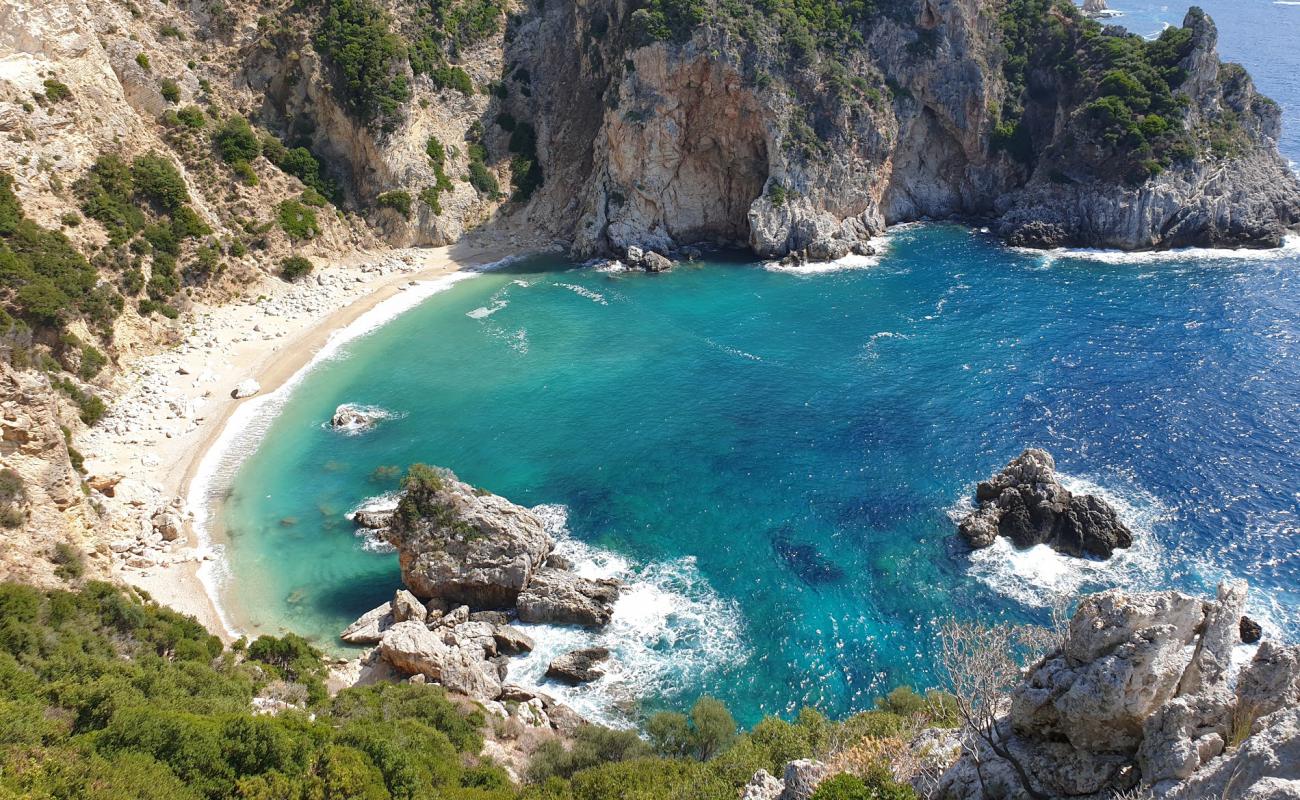
The northwest coast of Corfu, from Paleokastritsa northward to the cape above Arillas, contains the highest concentration of accessible hidden coves on the island. The limestone geography of this coast, with its succession of headlands and the bays enclosed between them, naturally produces a sequence of coves that the road above cannot reach and that the boat below can access with complete freedom.
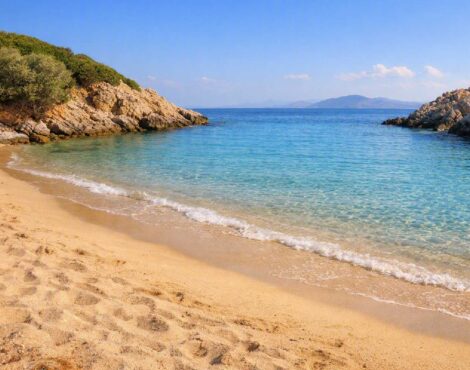
Moving northward from the Paleokastritsa bay system by hired boat, the coastline beyond the last organised section of the bay reveals itself as a succession of small coves and inlets that the main beach visitors, a few hundred metres to the south at the water, never reach. The first of these coves, appearing around the headland that marks the boundary of the organised Paleokastritsa area, typically has the character of a beach that is technically close to one of the most popular destinations on the island and practically as remote as if it were on a different coast entirely.
The coves of the northwest coast vary in their character from the intimate to the moderately sized. Some have small patches of white pebble at the waterline, the ideal landing point for a boat that can be pulled up on the stones while the group swims in the clear water of the enclosing bay. Others are purely rocky, the cliff descending directly into the sea, but with the clear deep water and the rocky underwater terrain that rewards snorkelling with an immediacy that the sandy-floored main beaches cannot match.
The sea caves that punctuate the northwest cliff line provide the most dramatic version of the hidden cove experience. Entering a sea cave that appears as a dark opening in the limestone, cutting the engine and drifting slowly into the cave interior, then entering the water within the cave to swim in the coloured, filtered light of the enclosed space, is an experience of the northwest coast that the road above and the organised beaches below make entirely inaccessible. The boat is the key that unlocks this version of Corfu, and July’s calm morning conditions on the northwest coast are the ideal context in which to use it.
The Northeast Coast: Footpath Coves
The northeast coast provides a different approach to the hidden beach experience, one in which the footpath rather than the boat is the primary method of access. The coast road that runs along the northeast shore, from Dassia in the south to Kassiopi in the north, passes above a series of small bays and coves that are visible from the road or from the satellite view of the map and that are accessible by paths that descend from the road at various points.
These footpaths, some marked and some requiring local knowledge or careful observation to locate, descend through the vegetation of the coastal slope to small beaches that the road above makes invisible and that the absence of car park facilities keeps naturally quiet. The descent typically takes fifteen to twenty minutes and involves some unevenness underfoot that appropriate footwear manages without difficulty. The beach at the bottom, when it appears through the last section of the path, consistently delivers the reward that the effort has been building toward: a bay of clear northeast coast water, a small beach of pebble or flat rock, and the particular quality of a July morning in complete quiet with the Albanian mountains across the channel and the sound of nothing but the sea.
The practical consideration for the footpath coves of the northeast is self-sufficiency. With no facilities at the beach and the path back to the road the only exit, everything needed for the day must come down with the group and return with them. The cooler with the food and the drinks, the bag with the towels and the sunscreen and the snorkelling equipment, all of it descends the path and all of it ascends at the end of the day. This is not an onerous requirement, but it is one that the first visit to a northeast coast footpath beach always makes clear and that subsequent visits accommodate with the practiced ease of people who have learned what to bring and what to leave in the car.
The South Coast: Undiscovered Beaches
The southern coastline of Corfu receives less attention from visitors focused on the northwest and northeast coasts, and this relative neglect produces, in July, a southern beach environment that is quieter than the more celebrated sections of the island’s coastline. The beaches of the south, from the long sandy shore of Agios Georgios in the southwest to the quieter coves of the southeastern tip, offer July swimming in conditions of comparative calm that the northern beaches cannot guarantee in peak season.
The southeastern tip of the island, where the coastline turns northward and the views extend across the open sea toward the Ionian islands of Paxos and Antipaxos visible on the southern horizon, contains some of the least visited swimming locations on Corfu. The footpaths that descend to the small coves of this corner of the island follow routes that see a fraction of the traffic of the northwest coast paths, and the bays at their base, in July, typically have the quality of beaches that the visitor has discovered rather than found on a list.
Finding Hidden Beaches from Villa Kapella
For guests at Villa Kapella, the search for the island’s hidden coves is one of the most naturally rewarding investigations that a July stay on Corfu produces. The villa team’s knowledge of the local coastline, combined with the advice of the boat hire operators and the accumulated intelligence of previous guests, provides a set of starting points from which independent exploration can begin. The specific coves that individual guests discover over the course of their stay, rounded into existence by their own navigation rather than by a guidebook’s directions, become the beaches they return for on subsequent visits and describe to friends with the proprietary enthusiasm of people who have found something they regard as personally theirs.
This sense of personal discovery, available in July on an island that July fills with visitors, is one of the gifts that Corfu’s geography provides to those who engage with it actively rather than accepting only what the road and the car park and the organised beach deliver. The hidden cove is there. The boat is for hire. The morning is calm and the water is warm and the headland around which the cove lies is waiting to be rounded.