Landing on Corfu for the first time, the green that covers the island from the air is striking in a way that no description quite prepares you for. Other Greek islands are brown and gold in summer, their vegetation reduced by heat and drought to the spare, aromatic scrub of the Mediterranean dry season. Corfu is green: deeply, persistently, implausibly green, its hillsides and valleys covered in a canopy of silver and grey that catches the light differently at every hour of the day and that defines the visual character of the island more completely than any other single feature of its landscape.
The green is the olive. Four million trees, covering approximately a third of the island’s total surface area, planted and tended and harvested over centuries of agricultural practice that has shaped not only the landscape but the economy, the cuisine, and the cultural identity of Corfu in ways that no other crop comes close to matching.
The Venetian Legacy
The olive groves of Corfu are not simply the product of natural advantage, though the island’s climate and soil are well suited to the tree. They are the direct result of deliberate policy, implemented by the Venetian administration that governed the island from 1386 until the fall of the Republic in 1797 and that understood, with the practical intelligence that made Venice the greatest commercial power of its era, the economic value of a reliable agricultural surplus.
The Venetian bounty system, which paid Corfiot farmers a fixed sum for every olive tree successfully planted and established, transformed the island’s agricultural landscape over the course of two centuries. Before the Venetian period, Corfu’s hillsides were covered in the mixed woodland and scrub that characterise uncultivated Mediterranean terrain. After two centuries of incentivised planting, those same hillsides were covered in the olive groves that still define the landscape today.
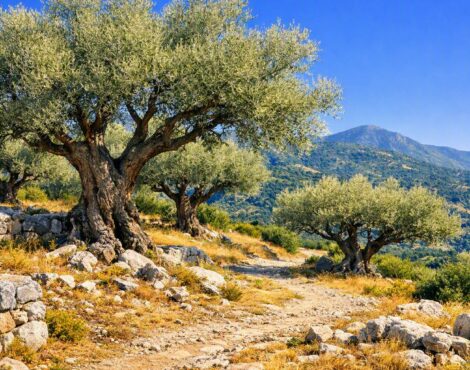
The trees planted during the Venetian period are still there. Not all of them, obviously, but enough that a significant proportion of the ancient, gnarled specimens that stand in the older groves of the island’s interior date from a period of deliberate human decision-making that is now five or six centuries in the past. Walking through these older groves, with their massive trunks and their canopies of extraordinary spread and density, is to move through a landscape that is simultaneously natural and thoroughly cultural, a product of the particular alliance between human intention and vegetable time that only agriculture at its most patient produces.
The Lianolia Olive
Corfu’s olive oil is produced almost exclusively from the Lianolia variety, a small-fruited olive that is endemic to the Ionian islands and that produces oil of a character quite distinct from the more widely known varieties of Crete, the Peloponnese, and Attica. The name, which translates roughly as thin oil olive, reflects the fruit’s relatively small size and the late date at which it reaches maturity.
The Lianolia harvest in Corfu is a late-season affair by the standards of Greek olive oil production. While mainland producers typically harvest in October and November, Corfiot growers often wait until December, January, and even February, when the fruit has ripened fully and the oil content has reached its maximum. This late harvest is a point of local pride and a source of some inconvenience, requiring producers to monitor their groves through the winter months and time the harvest to the precise moment of optimal maturity rather than the calendar.
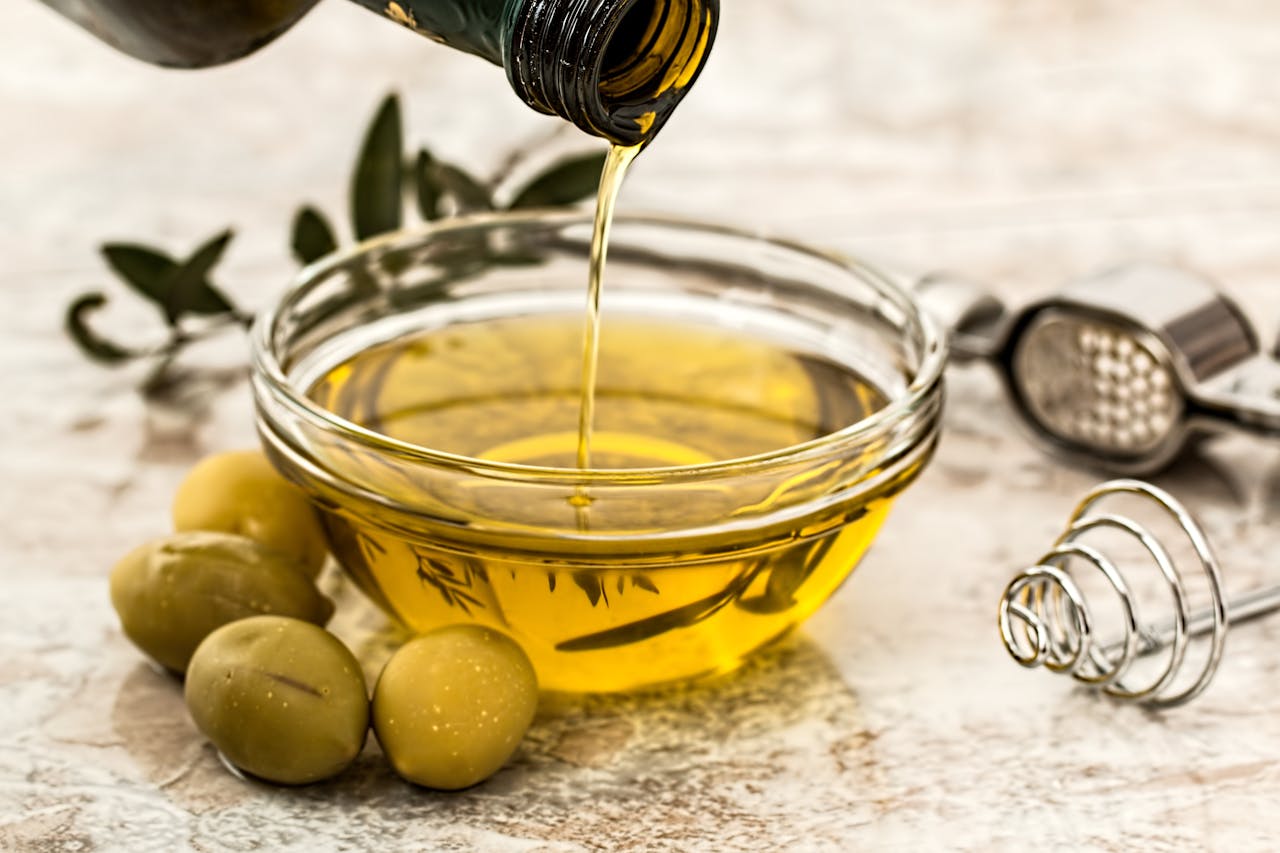
The oil that results has characteristics that distinguish it clearly from the oils that dominate the export market. Lianolia oil tends toward a mild, rounded flavour profile without the aggressive bitterness and peppery finish that younger harvest oils from other varieties produce. The colour is typically a clear golden yellow rather than the intense green of early harvest oils. The acidity is low and the polyphenol content high, giving the oil both a long shelf life and the health properties that have made high polyphenol olive oils the subject of considerable scientific and commercial attention in recent years.
The Harvest and the Mill
The olive harvest in Corfu, whenever the timing of the Lianolia variety allows it to begin, is one of the defining events of the island’s agricultural calendar. The traditional method, still used by many smaller producers, involves spreading nets beneath the trees and harvesting the olives by hand or with long raking implements that strip the fruit from the branches into the nets below.
The harvested olives are taken to one of the island’s numerous olive mills, where they are pressed within hours of picking to prevent oxidation and preserve the quality of the resulting oil. The mills, many of them family-owned and operated with equipment that is modern in function if not always in appearance, process the harvest through the winter months in a continuous operation that fills the surrounding air with the particular green, grassy fragrance of freshly pressed olive oil.
Visiting a working mill during the harvest season is one of the most authentic agricultural experiences available on a Greek island, though for summer visitors to Villa Kapella the harvest is months away. What summer visitors can do is buy the oil that last winter’s harvest produced, and this is an activity that rewards both the palate and the understanding of the island’s food culture.
Buying and Using Corfiot Olive Oil
The covered market in Corfu Town is the most convenient place for visitors to buy local olive oil, with several stalls offering oils from named producers in the island’s various olive-growing regions. The quality varies between producers, and the advice of the stallholder, who will almost invariably have strong opinions about whose oil is finest and why, is worth following.
Village shops throughout the island’s interior stock local oils of varying provenance, and the best of these, bought from a shop where the owner knows the producer personally and can tell you which grove the oil comes from and when the trees were last harvested, represent the closest most visitors will get to the source of Corfu’s most important agricultural product.
The use of Corfiot olive oil in the villa kitchen transforms even simple cooking in ways that are immediately apparent to anyone accustomed to the supermarket oils of northern Europe. Dressed over a salad of local tomatoes and cucumber, used to finish a simple pasta, or poured generously over grilled fish from the morning’s market, the oil delivers a roundness and depth of flavour that reflects the particular qualities of the Lianolia variety and the centuries of agricultural practice that produced it.
The Olive Grove as Landscape
For guests at Villa Kapella, the olive groves that surround the property are not simply an agricultural backdrop. They are the primary component of the visual landscape that the villa inhabits, and they change character at every hour of the day and in every condition of light in ways that reward attentive looking.
In the early morning, the groves are silver and still, the light coming at a low angle through the canopy and catching the undersides of the leaves with a particular luminosity. At midday, they offer shade of a dappled, shifting quality that is different from any other kind of shade and that has been sought by people working and resting in the Mediterranean heat for millennia. In the evening, the groves turn gold as the sun moves behind the western hills, and the long shadows that the ancient trunks cast across the ground have an antiquity and a permanence that the rest of the day’s beauty, for all its qualities, does not quite produce.
Walking through the groves in the early morning or the late afternoon, following the paths between the trees, is one of the quietest and most lasting pleasures of a stay at Villa Kapella. It is an experience that requires nothing from the walker beyond the willingness to move slowly through a landscape of considerable age and beauty, and it delivers, reliably and without fail, exactly what that willingness deserves.