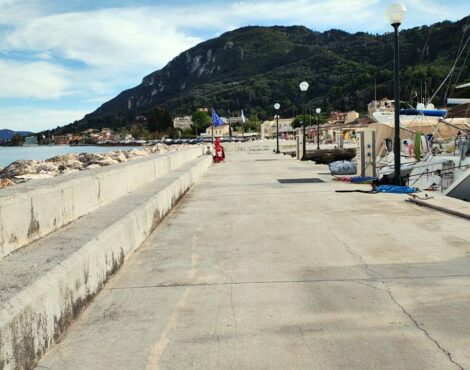
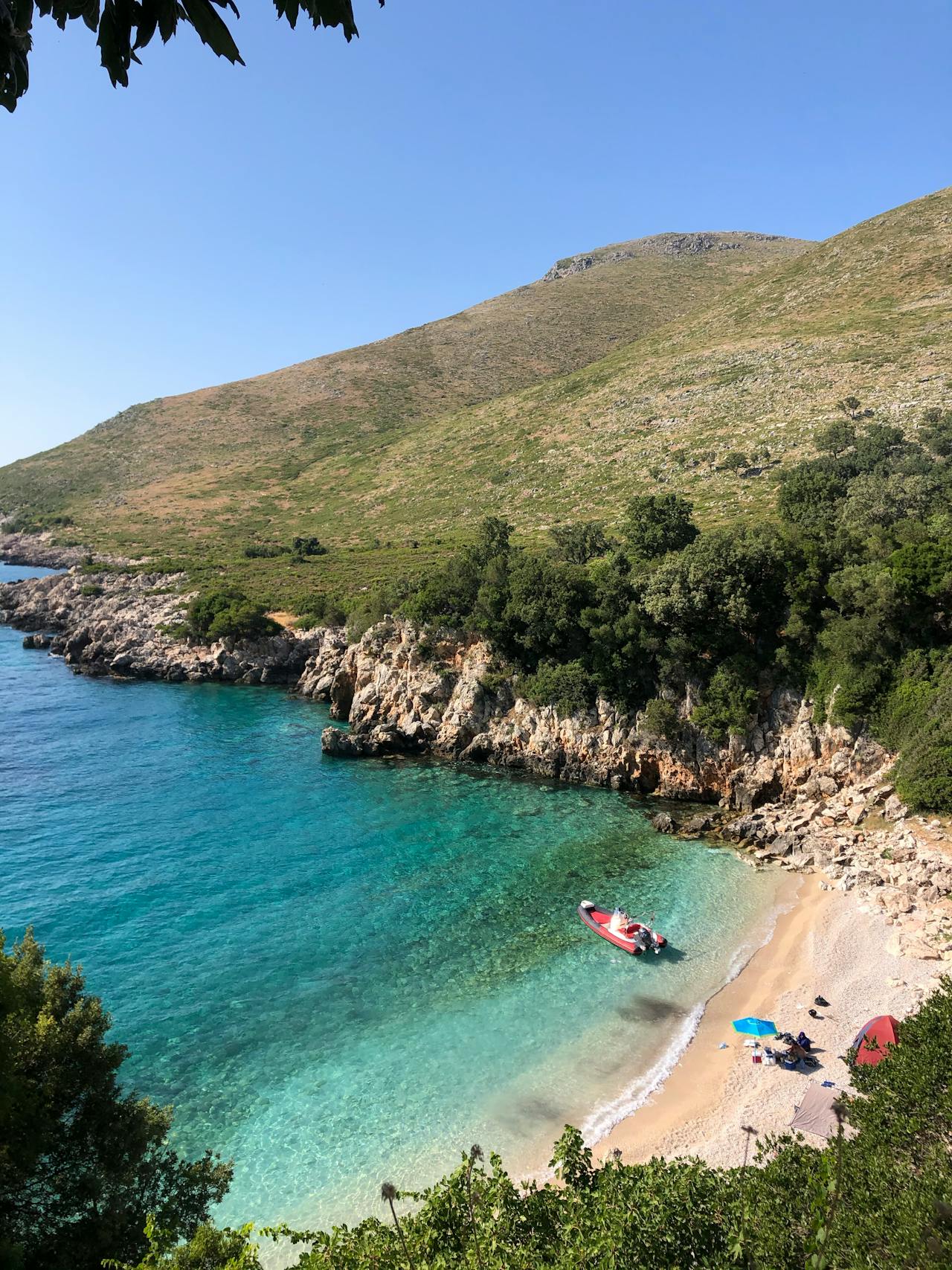
Standing on the northeast coast of Corfu on a clear morning, the Albanian mountains are so close and so sharply defined that they seem less like a foreign country than a continuation of the same landscape across a narrow channel of water. The white buildings of Saranda are visible on the hillside opposite. The ferries moving between the two shores cross in less time than it takes to drink a coffee. And yet Albania, despite this proximity, remains for most visitors to Corfu a view rather than a destination, a dramatic backdrop to the island’s northeastern horizon that comparatively few people think to explore.
This is a genuine oversight. The Albanian coast visible from Corfu is the northern end of the Albanian Riviera, one of the least developed and most naturally beautiful stretches of Mediterranean coastline remaining in Europe, and the ancient site of Butrint, located just south of Saranda within a landscape of extraordinary atmospheric power, is among the most significant and least visited archaeological sites in the region. A day trip to Albania from Corfu is among the most rewarding excursions available from the island, and its accessibility makes the decision to make it one of the easier decisions of a Corfu holiday.
The Crossing
The ferry from Corfu Town to Saranda takes approximately thirty minutes, the boat moving northeast across the channel that separates the island from the Albanian coast. The crossing is short enough that it barely registers as a sea voyage and long enough to appreciate the change of perspective that moving away from Corfu provides: the island receding behind the ferry as a long green mass above the blue water, the Albanian coast growing ahead with its particular combination of limestone mountains, clear sea, and the modern development of Saranda climbing the hillside above its harbour.
The immigration formalities on arrival in Saranda are straightforward for most nationalities, a passport check and a stamp, and the process of entering Albania is considerably less complicated than the mental image of crossing an international border sometimes suggests. The town that the ferry delivers visitors into is a functioning Albanian resort city, its seafront promenade lined with cafes and restaurants, its streets a mixture of the architectural legacy of the communist period and the more recent construction that the country’s post-1990 development has produced.
Saranda: The Gateway City
Saranda itself rewards a brief exploration before the main excursion of the day begins. The city’s seafront, curving around the bay in a wide arc, is pleasant for walking and provides a useful orientation to the surrounding landscape. The hills above the town are scattered with the ruins and remnants of a longer history than the current cityscape suggests, including the remains of a large early Christian basilica and synagogue complex that attest to the religious diversity of the ancient city that preceded the modern one.
The restaurants of Saranda’s seafront are well suited to lunch on the return from Butrint, offering Albanian coastal cuisine that shares some characteristics with the Greek food across the channel while bringing its own traditions and flavours to the table. Fresh fish, simply prepared and generously served, is the recommended choice, accompanied by the Albanian byrek, a flaky pastry filled with cheese or spinach that appears at every meal and that is as good here as anywhere it is made.
Butrint: The UNESCO Wonder
The primary destination of any day trip from Corfu to the Albanian coast is Butrint, the ancient city located approximately eighteen kilometres south of Saranda within a national park of exceptional natural beauty. The site is a UNESCO World Heritage designation, and the combination of its archaeological significance, its extraordinary atmospheric setting, and its relative lack of visitor numbers compared to the major Greek sites makes it one of the most rewarding ancient sites in the entire Mediterranean region.
Butrint was inhabited continuously from at least the seventh century BC through the Byzantine period and beyond, with each successive civilisation building on and alongside the remains of its predecessors in a way that has produced a layered archaeological landscape of remarkable complexity and richness. Greek, Roman, Byzantine, and Venetian remains coexist within the site in a density that reflects the importance of the location over more than two thousand years of human occupation.
The Greek theatre, cut into the hillside and looking out over the ancient agora, is among the best preserved of its period and size in the Mediterranean world. The Roman baths, with their mosaic floors still largely intact, provide evidence of urban life at a level of sophistication that the remote setting makes surprising. The baptistery, a large early Christian circular building with a floor mosaic of extraordinary complexity and beauty, is one of the most significant early Christian monuments in the Balkans and an object of genuine artistic importance independent of its archaeological context.
The setting amplifies everything. Butrint occupies a peninsula between a saltwater lagoon and the Vivari Channel, surrounded by water on three sides and enclosed by dense Mediterranean woodland that has been growing undisturbed for long enough to have acquired the character of primary forest. Walking through the site, the ruins emerging from the vegetation and then receding back into it, the water visible through the trees in multiple directions, and the sounds of the modern world entirely absent, produces a quality of experience that the more visited and more managed ancient sites of Greece cannot replicate.
The approach to Butrint by road from Saranda passes through landscape of considerable beauty, the road following the coast south through fishing villages and along the shore of Lake Butrint before turning inland toward the site entrance. This drive, through countryside that combines the dramatic with the pastoral in equal measure, is itself a significant part of the day trip experience.
The Albanian Riviera Beaches
For those whose day trip ambitions extend beyond Butrint and Saranda to the broader Albanian Riviera, the coastline south of Saranda offers some of the most naturally beautiful beaches in the Mediterranean. The Albanian Riviera, stretching from Saranda southward toward the Greek border, combines limestone cliffs, crystal clear water, and beaches of white pebble and sand that remain largely undeveloped by comparison with their Greek equivalents across the channel.
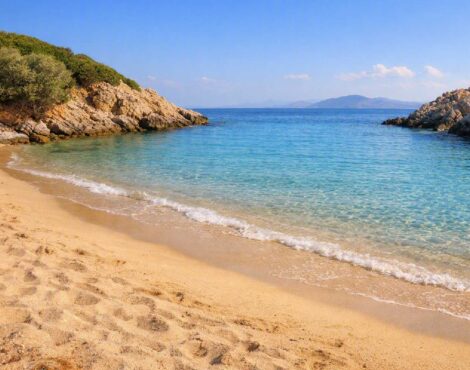
The beaches of Ksamil, located between Saranda and Butrint on a stretch of coast that includes several small islands close to shore, are among the most celebrated on the Albanian Riviera and justifiably so. The water at Ksamil is of an extraordinary clarity and colour, the small islands offshore accessible by swimming or by the short boat trips that operators on the beach provide, and the setting, enclosed by the low hills of the coastal landscape, has an intimacy that larger, more exposed beaches cannot offer.
In June, the Albanian Riviera beaches are operating at the beginning of their season, less crowded than later in the summer and with the particular freshness of a coastal landscape that has not yet been fully visited for the year. The combination of Ksamil’s beaches with the Butrint archaeological site makes for a day of exceptional variety, moving from the natural to the historical and back again within a landscape that is consistently and sometimes overwhelmingly beautiful.
Planning the Day Trip
A day trip from Villa Kapella to the Albanian coast requires an early start to make the most of what the destination offers. The morning ferry from Corfu Town, reaching Saranda in time for the drive south to Butrint for a morning visit, followed by lunch in Saranda and an afternoon at the Ksamil beaches before the return ferry, fills a long June day with enough variety and beauty to justify the logistics involved.
The practical requirements are straightforward: a valid passport, a check of current visa requirements for the relevant nationality, some Albanian lek for small purchases, and the advance booking of ferry tickets that June demand makes advisable. The Villa Kapella team can advise on the most current ferry schedules and assist with the planning of an Albanian day trip that makes the most of the extraordinary proximity of one of Europe’s most undervisited and most rewarding destinations.
Albania, from the northeast coast of Corfu, is not a foreign country in the psychological sense that distance creates. It is the other side of a narrow channel, a morning’s excursion from the villa, and one of the most genuinely surprising experiences that a Corfu holiday can produce.