The history of the Jews in Corfu is rich, ancient, and at the same time deeply intertwined with the cultural and political changes that the island has undergone. From their early presence in the 12th century to their near-complete extermination during World War II, and the very small but still noteworthy presence today, the Jewish community has played a significant role in the society of Corfu.
The first written reference to a Jew in Corfu dates back to the late 12th century, when Benjamin of Tudela encountered a solitary Jewish dyer named Joseph on the island. By the middle of the 13th century, hundreds of Romaniotes (Greek-speaking Jews) were living in Corfu. Although they initially lived scattered across the island, they occasionally faced violent attacks from the local Christian population. This led the royal authorities to issue protective decrees in 1267 and in the decades that followed, to ensure their safety.
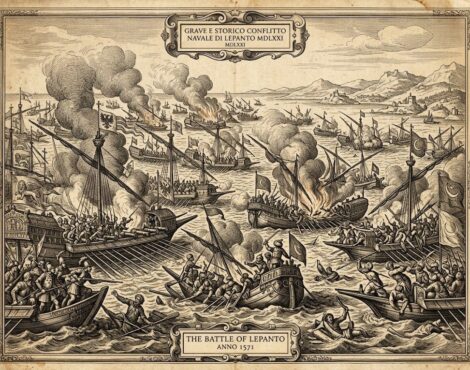
With the conquest of Corfu by Venice in 1387, the Jewish community entered a period of prosperity. During the expulsion of the Jews from Venice in 1571, Corfu was granted an exemption, as the Jews were seen as offering valuable services to the economic and social fabric of the Venetian administration. After the 1492 expulsion of the Sephardic Jews from Spain, many found refuge in Corfu, and later in 1494 and 1540, refugees from Apulia (southern Italy) and Portugal arrived and formed the Apulian community, with their own synagogue and cemetery. Thus, two parallel communities developed: the Romaniotes (Greek-speaking Jews) and the Apulians/Sephardic/Italian-speaking Jews.
During the 16th century, there were two synagogues and nearly 400–500 Jewish families living on the island, amounting to a population of around 1,200–1,600 individuals by the 18th century. By this time, the Jewish community had become firmly established on the island and was an integral part of its identity. During these years, the Jews of Corfu contributed to the construction of buildings and infrastructure. They also provided loans and were permitted to practice as lawyers, something which was forbidden to Jews in Venice. They also fought against Ottoman invasions, most notably during the siege of 1716.
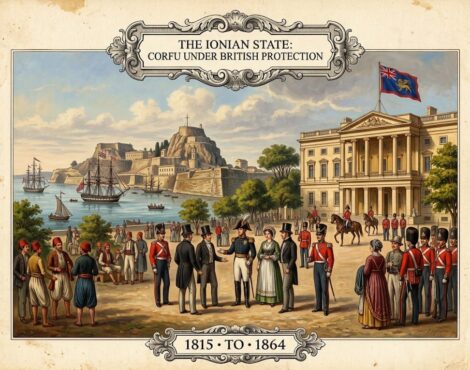
Under British rule, some of the Jewish community’s privileges were questioned. However, with the union of the Ionian Islands with Greece in 1864, Jews were granted full political and civil rights. They went on to found schools, rabbinical institutions, and charitable organizations. By the early 20th century, their population had reached about 5,000 people, with four synagogues (including the Romaniote and Apulian ones), printing presses, and various schools. The community was known to be wealthy and highly educated.
During the Italian occupation from 1941 to 1943, the Jews of Corfu experienced a period of relative calm. However, this peace was short-lived. On September 27, 1943, the Nazis took control of the island. In June 1944, mass arrests and roundups took place in the Lower Square of the city, after which the Jewish residents were transferred to the Old Fortress. Homes and synagogues were looted. Between June 8 and 10, approximately 1,900 Jews were sent to Athens and from there, via ships and trains, to Auschwitz. The atrocities that followed in the concentration camps led to the near-total annihilation of the Jewish population of Corfu. Nearly the entire community was lost, with only a few hundred surviving and eventually returning.
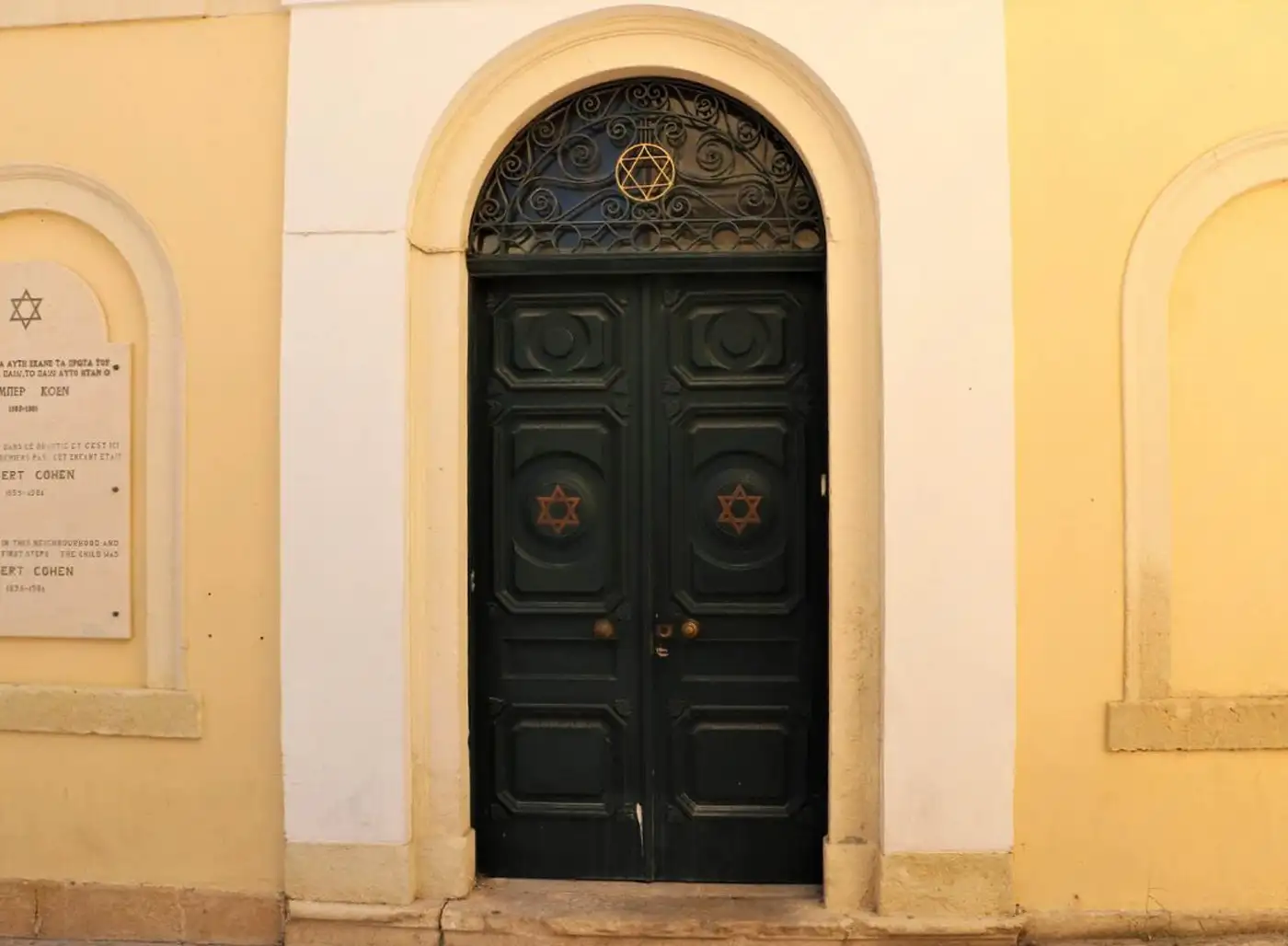
Today, the community numbers roughly between 60 and 120 members. The “Jewish Quarter” of the city is still in use, and the preserved Scuola Greca (Greek Synagogue) on Velissariou Street operates occasionally for religious services. A rich collection of archival material is kept at the Jewish Museum of Athens and is presented both online and in periodic exhibitions.
Despite the tragic losses, Corfu has maintained the essence of its Jewish core. The historic center, the Scuola Greca, and the Jewish Quarter serve as living monuments of remembrance and preservation of heritage. The celebration of major Jewish holidays allows both the older and younger generations to stay connected to the community’s long and complex past.