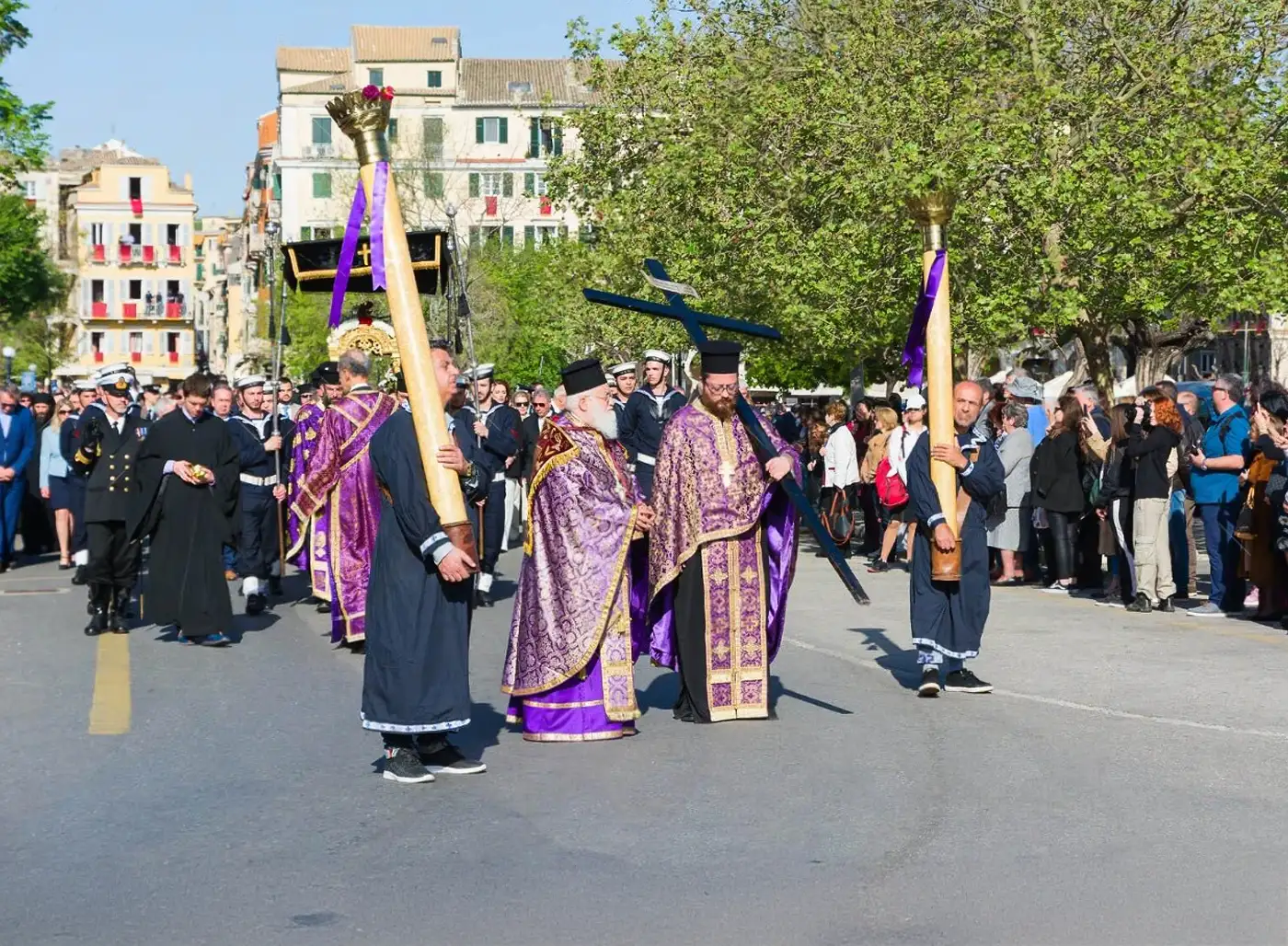
Saint Spyridon, the patron saint of Corfu, holds a special place in the hearts of the Corfiots, not only for his holiness but also for the miracles attributed to him, which have marked the history of the island. Three of these miracles are annually honored with grand processions, which are among the most important religious and cultural events in Corfu.
In 1629, Corfu was struck by a plague epidemic, which was spread by a ship arriving from Italy. Despite the authorities’ efforts, the disease spread rapidly. Desperate, the people turned to Saint Spyridon, asking for his help. According to tradition, the Saint appeared in visions, and through his miraculous intervention, the epidemic gradually subsided and finally ceased on Palm Sunday of 1630. In remembrance of this miracle, a procession of the Saint’s Holy Remains was established on Palm Sunday, which is the longest procession and covers the perimeter of the Old Town of Corfu.
In 1673, Corfu faced another plague epidemic. The people, with faith in Saint Spyridon, prayed for their salvation. The Saint responded, and the epidemic ended. In remembrance of this miracle, a procession of the Saint’s Holy Remains was established on the first Sunday of November, known as “Proto-Kyriako” (First Sunday). This procession is held with the participation of the clergy, military bands, and a large number of faithful.
In 1716, Corfu was besieged by the Ottoman fleet. The siege lasted for 22 days, with the people praying to Saint Spyridon for help. According to tradition, the Saint appeared as a monk holding a lit torch and frightened the Turks, who abandoned the siege. In remembrance of this miracle, a procession of the Saint’s Holy Remains was established on August 11, which is one of the most important religious events in Corfu.
These processions express the deep faith and gratitude of the people of Corfu to Saint Spyridon. They combine religious devotion with cultural tradition, attracting a large number of faithful and visitors from around the world. Through these events, Corfu keeps the memory of the Saint’s miracles alive and strengthens its spiritual identity.
Saint Spyridon has become one of the most important religious and cultural pillars of Corfu, with his influence being evident in the daily life of the locals and affecting the society and traditions of the island to this day. The presence of the Saint is seen in every aspect of Corfiot life, from major religious celebrations and processions to everyday practices and the beliefs of the people, who regard him as the protector and benefactor of the island.
The traditional worship of Saint Spyridon contributes to the preservation of Corfu’s religious and cultural heritage. The Saint’s presence in daily life, his veneration, and the processions create a sense of unity and continuity, while simultaneously strengthening the identity of the Corfiots and their spiritual connection to the island and its patron. The influence of the Saint is so great that it remains alive and lasting, linking the past to the present and highlighting the power of faith and tradition.
Saint Spyridon is not just a religious figure but has become a central symbol of Corfu and its spiritual life. His devotion to the faithful and his continued presence influence the daily lives and perceptions of the locals to this day. The worship and miracles of Saint Spyridon are not limited to religious events alone, but serve as a factor that unites the local community, strengthens the identity of the island, and maintains a vibrant connection between the people and their spirituality and traditions.