
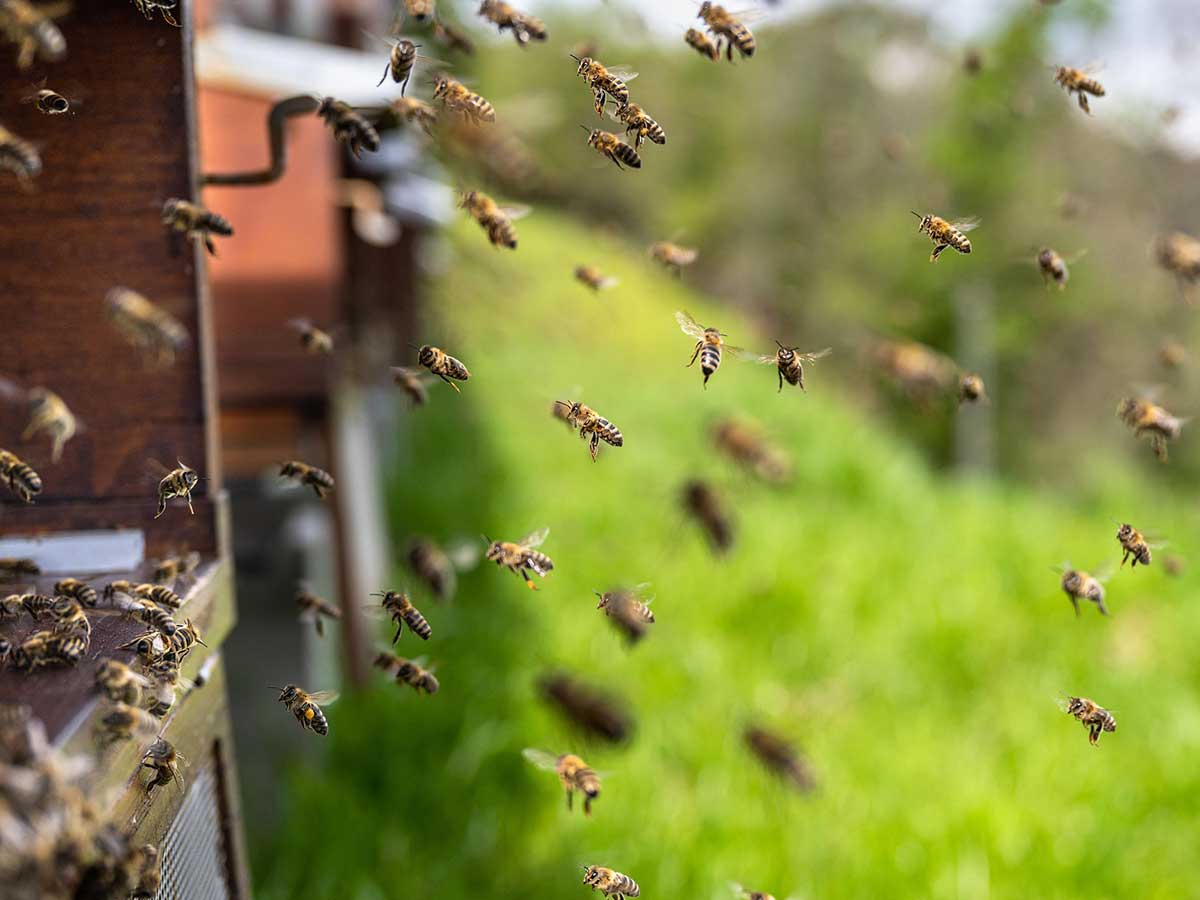
In mountain meadows fragrant with thyme and wild herbs, wooden hives stand sentinel among flowering plants. Inside, thousands of bees pursue their ancient work, transforming nectar into liquid gold that has sustained Mediterranean peoples for millennia. Corfu’s beekeeping tradition continues this timeless practice, small scale producers maintaining methods connecting present to past while creating honey of exceptional quality and character.
Corfu's Beekeeping Tradition: From Hive to Honey
Beekeeping ranks among humanity’s oldest agricultural pursuits. Evidence suggests honey collection predates agriculture, hunters gathering from wild colonies before cultivation began. The transition to managed hives, keeping bees rather than simply raiding nests, occurred in ancient Mediterranean including Greek lands. Classical texts reference Greek honey repeatedly. Homer mentions honey multiple times in the Odyssey. Hippocrates prescribed honey medicinally. Aristotle studied bee biology and behavior, his observations remarkably accurate given era’s limitations. This literary record demonstrates honey’s importance in ancient Greek culture and economy.
Archaeological evidence confirms textual accounts. Ancient hives, pottery vessels for collecting honey, and artistic representations of beekeeping appear throughout Greek world. Corfu, though lacking spectacular archaeological honey finds, surely participated in widespread Greek apicultural tradition. Medieval and Venetian periods maintained beekeeping continuity. Monasteries particularly cultivated bees, honey providing sweetening before sugar availability while beeswax supplied candles for religious observances. Monastic beekeeping preserved and refined techniques across centuries, contributing substantially to tradition’s survival.
Ottoman conflicts paradoxically may have supported beekeeping. Mountain refuges where populations retreated during raids offered ideal bee habitat. Dispersed settlement patterns and extensive uncultivated land created conditions favoring both wild and managed colonies.Modern beekeeping emerged gradually from traditional practices. Movable frame hives invented in 19th century allowed honey extraction without destroying combs, increasing productivity while reducing bee mortality. This innovation spread slowly to Corfu, traditional fixed comb hives persisting into 20th century in remote areas.
Corfu's Apicultural Landscape
The island’s geography creates ideal beekeeping conditions. Diverse topography from sea level to 900 meters generates varied microclimates and staggered blooming times. This elevation range extends productive season, different flowers peaking at different altitudes allowing bees extended foraging periods. Limestone geology supports rich botanical diversity. Many excellent nectar plants thrive on alkaline soils developed over limestone. Thyme, oregano, sage, and numerous other aromatic herbs characteristic of Mediterranean maquis flourish in these conditions, their concentrated nectars producing exceptional honey.
Traditional agriculture benefits bees substantially. Olive groves, while olives themselves provide minimal nectar, create open canopy allowing understory wildflowers to flourish. These flowers, undisturbed by plowing, provide abundant forage. Moderate grazing maintains open conditions preventing woody succession while avoiding intensive cultivation’s disruption.
Uncultivated areas remain extensive despite development. Steep mountainsides, rocky outcrops, and marginal lands unsuitable for agriculture support wild vegetation providing bee forage. This undisturbed habitat, increasingly scarce in intensively farmed regions, gives Corfu advantage in honey production. Climate suits bees well. Mild winters with minimal freezing allow colonies surviving with less stored honey than northern climates require. Long, warm growing seasons provide extended foraging opportunities. Rainfall patterns support plant growth through spring and early summer when bees most actively forage. Floral diversity creates complex honey profiles. Unlike monofloral honey from regions where single crop dominates, Corfu honey typically blends multiple nectar sources. This complexity produces nuanced flavors impossible to achieve in simplified agricultural landscapes.
Traditional Beekeeping Methods
Old fashioned beekeeping persisted in remote Corfu areas until recently, some elderly beekeepers remembering these methods from youth. Traditional hives used hollow logs, cork bark cylinders, or woven straw skeps. These fixed comb hives required destroying combs during harvest, limiting honey extraction while killing many bees.
Hive placement followed empirical knowledge developed across generations. Sites needed morning sun for early colony activation, afternoon shade preventing overheating, wind protection, and water access nearby. Good locations, identified through experience, might host hives continuously for generations.
Swarm capture provided traditional colony acquisition. Wild swarms, hanging from trees during reproductive swarming, could be collected and hived. Beekeepers monitored for swarms during peak season, their capture requiring skill and courage. This practice continues, wild genetics periodically refreshing managed populations.
Harvest timing required judgment balancing honey quantity against bee survival. Taking too much honey risked colony starvation during winter or extended poor weather. Conservative harvesting ensured colonies survived producing honey future years, sustainable management essential in pre modern beekeeping.
Extraction methods varied but all involved cutting combs from hives. Honey drained through cloth filters, wax separated for various uses. This crude processing preserved honey’s natural state but meant debris, pollen, and propolis mixing into final product. Modern sensibilities prefer clarified honey though traditional unfiltered product contains beneficial compounds removed by processing.
Smokers using dried herbs, pine needles, or burlap calmed bees during hive work. Smoke masks alarm pheromones preventing defensive response, making handling safer. Traditional beekeepers developed intimate understanding of bee behavior, their skills acquired through apprenticeship and sometimes painful experience.
Modern Practices and Adaptations
Contemporary Corfu beekeepers employ modern equipment while maintaining small scale traditional orientation. Langstroth hives with movable frames allow honey extraction without comb destruction. These standardized boxes facilitate management and increase productivity substantially over traditional methods. Protective equipment including veils, gloves, and coveralls reduces sting risk. While not eliminating danger, proper gear allows more thorough hive inspection and confident handling. Some experienced beekeepers work with minimal protection, their familiarity with colony temperament and bee behavior reducing defensive responses.
Disease and pest management presents ongoing challenges. Varroa mites, originally from Asia, devastate colonies worldwide. Corfu beekeepers employ various strategies from chemical treatments to integrated pest management approaches. Organic beekeepers use mechanical methods and selective breeding for mite resistant characteristics.
Feeding supplements colony stores during dearth periods. Sugar syrup provides carbohydrates when natural nectar unavailable. Protein supplements compensate for inadequate pollen. These interventions increase survival and productivity though debates continue regarding impacts on honey quality and authenticity. Queen replacement refreshes colonies and improves genetics. Purchasing queens from specialized breeders introduces selected traits including productivity, gentleness, and disease resistance. This practice contrasts with traditional reliance on natural queen replacement through swarming or supersedure.
Record keeping tracks colony performance and management interventions. Noting inspection findings, treatments applied, and harvest yields informs decisions and identifies problems early. This systematic approach, though more bureaucratic than traditional methods, improves outcomes through evidence based management. Transportation of hives to specific forage sources, though practiced in some regions, remains uncommon in Corfu. The island’s small size and floral diversity make migratory beekeeping less necessary than in areas with limited or temporally concentrated floral resources. Stationary apiaries suffice for most producers.
Honey Varieties and Characteristics
Thyme honey represents Corfu’s most prized variety. Wild thyme blooms prolifically in late spring and summer, its intense nectar producing honey of remarkable flavor and aroma. Thyme honey’s amber color, distinctive taste, and granular crystallization characterize authentic product. Traditional medicine attributes therapeutic properties to thyme honey exceeding ordinary varieties.
Wildflower honey blends multiple nectar sources creating complex flavor profiles varying by location and season. This polyfloral honey captures essence of Corfu’s botanical diversity. Colors range from pale gold to deep amber depending on specific flowers contributing. Tasting reveals layers of flavor impossible in single source honey.
Pine honey, technically honeydew rather than nectar honey, derives from sap sucking insects feeding on pine trees. Bees collect their sweet excretions producing dark, strongly flavored honey that resists crystallization. Pine honey’s mineral content and distinct taste appeal to some palates while others prefer floral varieties.
Citrus honey, from orange and lemon blossoms, offers delicate flavor and light color. Its subtle character suits those preferring mild honey while distinctive citrus notes provide identity. Limited citrus cultivation in Corfu makes this variety less common than in major citrus producing regions.
Heather honey, from autumn blooming heathers, develops thick, almost jelly like consistency. This thixotropic property, unique among honey types, requires special handling during extraction. Heather honey’s intense flavor and unusual texture create specialty product commanding premium prices. Varietal purity varies with production scale and beekeeper intentions. Small producers typically harvest mixed honeys reflecting diverse foraging. Achieving monofloral varieties requires timing harvest to specific bloom periods and locating hives near dominant single sources. Perfect varietal purity proves nearly impossible as bees forage opportunistically.
Harvesting and Processing
Harvest timing balances honey maturity against seasonal progression. Bees must cap cells, covering honey with wax seal indicating proper moisture content and preservation. Premature harvest yields thin honey prone to fermentation. Delayed harvest risks bees consuming stores or weather preventing extraction. Frame removal from hives requires care avoiding crushing bees or triggering defensive behavior. Beekeepers use fume boards or bee escapes clearing bees from honey supers before removal. Gentle handling minimizes disruption, allowing colonies recovering quickly and resuming foraging.
Uncapping removes wax seals covering cells using heated knife, uncapping fork, or mechanical devices. This messy process generates wax cappings used later for various purposes. Proper uncapping exposes honey for extraction while minimizing comb damage allowing reuse.
Extraction employs centrifugal force, frames spinning in extractor fling honey from combs. This mechanical method preserves combs intact for returning to hives, bees refilling them saving energy versus building replacement comb. Extraction generates significant honey volume from well filled frames.
Filtering removes wax particles, bee parts, and debris suspended in fresh extracted honey. Coarse straining through mesh eliminates large particles. Fine filtering clarifies further though removes pollen and other compounds contributing to flavor and nutritional value. Some producers minimize filtering preserving honey’s natural state.
Settling allows remaining particles floating to surface or sinking to bottom. After settling days or weeks, clear honey drawn from middle layers achieves clarity without aggressive filtering. Patient traditional approach produces clean honey retaining beneficial components. Bottling presents honey in consumer ready containers. Glass jars preserve quality and allow color appreciation. Proper filling techniques prevent air incorporation creating foam. Labeling provides legally required information and marketing messages communicating product’s origin and qualities.
Medicinal and Nutritional Properties
Honey’s medicinal use stretches back millennia. Ancient physicians prescribed honey for wounds, digestive issues, respiratory ailments, and general health maintenance. Modern research validates many traditional uses, demonstrating antibacterial, anti inflammatory, and antioxidant properties. Wound treatment represents well documented honey application. Honey’s antibacterial action derives from multiple mechanisms including high sugar content, low pH, and hydrogen peroxide generation. Medical grade honey treats burns and chronic wounds, its effectiveness proven through clinical trials.
Cough suppression studies show honey effectiveness matching or exceeding commercial cough suppressants. A spoonful before bed soothes throat irritation while mild sedative properties promote sleep. This simple remedy, long known traditionally, receives modern medical endorsement for children over one year.
Digestive benefits include prebiotic effects supporting beneficial gut bacteria. Honey’s complex sugars, though mostly glucose and fructose, include oligosaccharides feeding probiotic organisms. Some research suggests honey alleviating symptoms of gastric ulcers and inflammatory bowel conditions.
Allergy relief claims remain controversial. Theory suggests local honey containing pollen desensitizes allergy sufferers through gradual exposure. Scientific evidence provides limited support though anecdotal reports abound. Effectiveness likely varies individually and depends on honey containing relevant pollens.
Athletic performance enhancement research shows honey providing readily available energy for endurance activities. Its sugar profile delivers quick and sustained energy without extreme insulin spikes associated with pure glucose. Some athletes prefer honey over commercial sports gels for natural alternative. Nutritional content beyond sugars includes enzymes, amino acids, vitamins, and minerals in trace amounts. While not nutritionally significant sources of these compounds due to small consumption quantities, their presence contributes to honey’s complexity and potential health benefits beyond simple sweetening.
Economic and Cultural Dimensions
Beekeeping provides supplemental income for many Corfu families. Few depend exclusively on honey sales, most combining beekeeping with agriculture, tourism, or other employment. This part time character maintains tradition while acknowledging economic realities of small scale production. Honey sales occur through multiple channels. Direct sales to neighbors and friends, common historically, continue for many producers. Local markets provide venues reaching broader customer base. Some producers supply shops and tavernas. Internet sales expand markets beyond island though shipping costs challenge competitiveness.
Pricing reflects production costs, honey quality, and market positioning. Authentic local honey commands premiums over industrial imports though price sensitivity limits market size. Educating consumers about quality differences and production methods justifies higher prices to knowledgeable buyers.
Cultural significance exceeds economic value. Honey represents tradition, connection to land, and maintenance of rural skills. Families take pride in producing their own honey, sharing with relatives and friends strengthens social bonds. This cultural dimension sustains beekeeping despite modest financial returns.
Religious and ceremonial uses continue. Honey appears in certain Orthodox rituals and traditional celebrations. Wedding and baptism traditions incorporate honey symbolizing sweetness and prosperity. These cultural contexts maintain honey’s significance beyond commodity status.
Younger generation engagement determines tradition’s survival. Some young Corfiots embrace beekeeping, attracted by sustainable agriculture, artisan food production, and rural lifestyle. Others show no interest, viewing beekeeping as old fashioned and economically marginal. Future depends largely on successfully transmitting knowledge and enthusiasm to successor generation.
Challenges and Future Prospects
Climate change threatens beekeeping through altered weather patterns, shifted bloom times, and increased extreme events. Droughts reduce nectar production. Unusual temperatures disrupt bee and plant phenology. These changes demand adaptive management and potentially threaten traditional honey production patterns. Pesticide use, though less intensive in Corfu than industrial agricultural regions, still impacts bee health. Neonicotinoids and other systemic insecticides persist in environment affecting pollinators. Balancing agricultural productivity with pollinator protection requires ongoing attention and sometimes difficult compromises.
Diseases and pests continue challenging beekeepers. Varroa mite resistance to treatments complicates management. New diseases periodically emerge requiring novel approaches. Climate warming may introduce pests currently absent from island. Vigilance and adaptive management prove essential. Competition from cheap imported honey undermines local producers economically. Industrial honey, often adulterated or misrepresented, sells far below authentic local product prices. Consumers lacking knowledge cannot distinguish quality differences, choosing based primarily on price.
Habitat loss through development eliminates bee forage. Construction converts wild areas to buildings and pavement. Intensive agriculture replaces diverse vegetation with monocultures. These changes reduce available nectar and pollen, impacting colony health and honey production. Opportunities exist despite challenges. Growing interest in local, artisan foods creates markets for quality honey. Agritourism allows direct consumer contact and sales. Conservation programs protecting wild habitats benefit bees incidentally. Education raises awareness about pollinators and threats they face.
Corfu’s beekeeping tradition deserves preservation for practical and cultural reasons. Bees provide essential pollination services beyond honey production.
Traditional knowledge accumulated across generations represents irreplaceable heritage. The honey itself, product of place and practice, offers flavors and qualities unobtainable from industrial production. Supporting local beekeepers maintains landscapes, traditions, and livelihoods while ensuring future generations can taste Corfu’s sweetness embodied in amber drops flowing from traditional hives positioned where wildflowers bloom beneath ancient olives and mountain herbs perfume warm summer air.