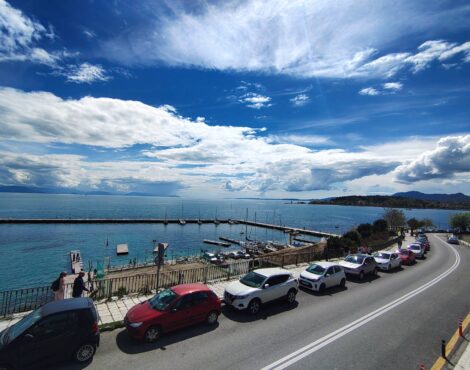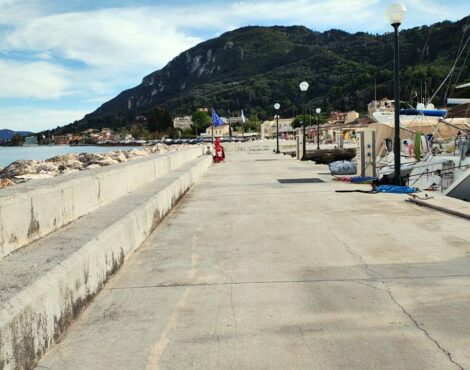
The Corfu that most visitors encounter is the coastal one. The beaches, the harbour towns, the seafront tavernas, the boat trips along the northwest cliffs: these are the experiences that the island’s reputation is built on and that its tourist infrastructure is designed to deliver. They are genuine and rewarding experiences, and no account of a Corfu holiday would be complete without them.
But there is another Corfu, present always just beyond the coastal road and the beach car park, that the majority of visitors never reach and that those who do reach consistently identify as among the most memorable experiences of the island. This is the interior Corfu: the olive country and the mountain villages, the Venetian-influenced architecture of the hill settlements, the tavernas where the food comes from the village itself and the owner has been cooking the same dishes since before the tourist season existed as a concept.
A day spent driving through this interior, without a fixed itinerary and with the willingness to stop wherever the road or the view or the smell of cooking suggests stopping, is one of the finest days a Corfu holiday can produce.
The Character of the Interior
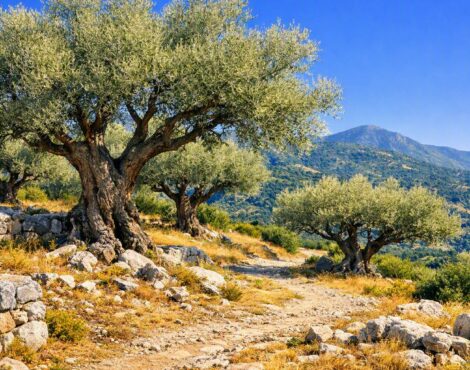
The landscape of Corfu’s interior is dominated, as the coastal landscape is not, by the olive. The groves that cover the hillsides and fill the valleys between the central ridge and the eastern and western coasts create a continuous canopy of silver and green that changes character with every shift of light and every change of season. In June, the olives are in full leaf, the new season’s fruit already visible as small hard spheres among the foliage, and the groves have the particular quality of enclosure and coolness that makes walking or driving through them feel like entering a different atmospheric register from the open brightness of the coast.
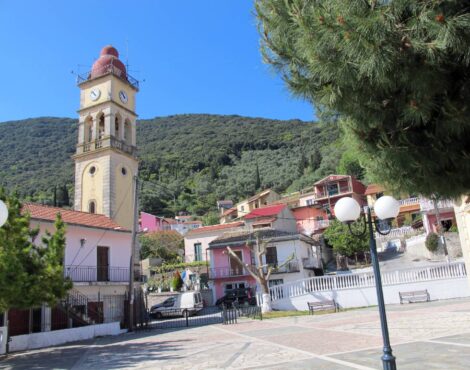
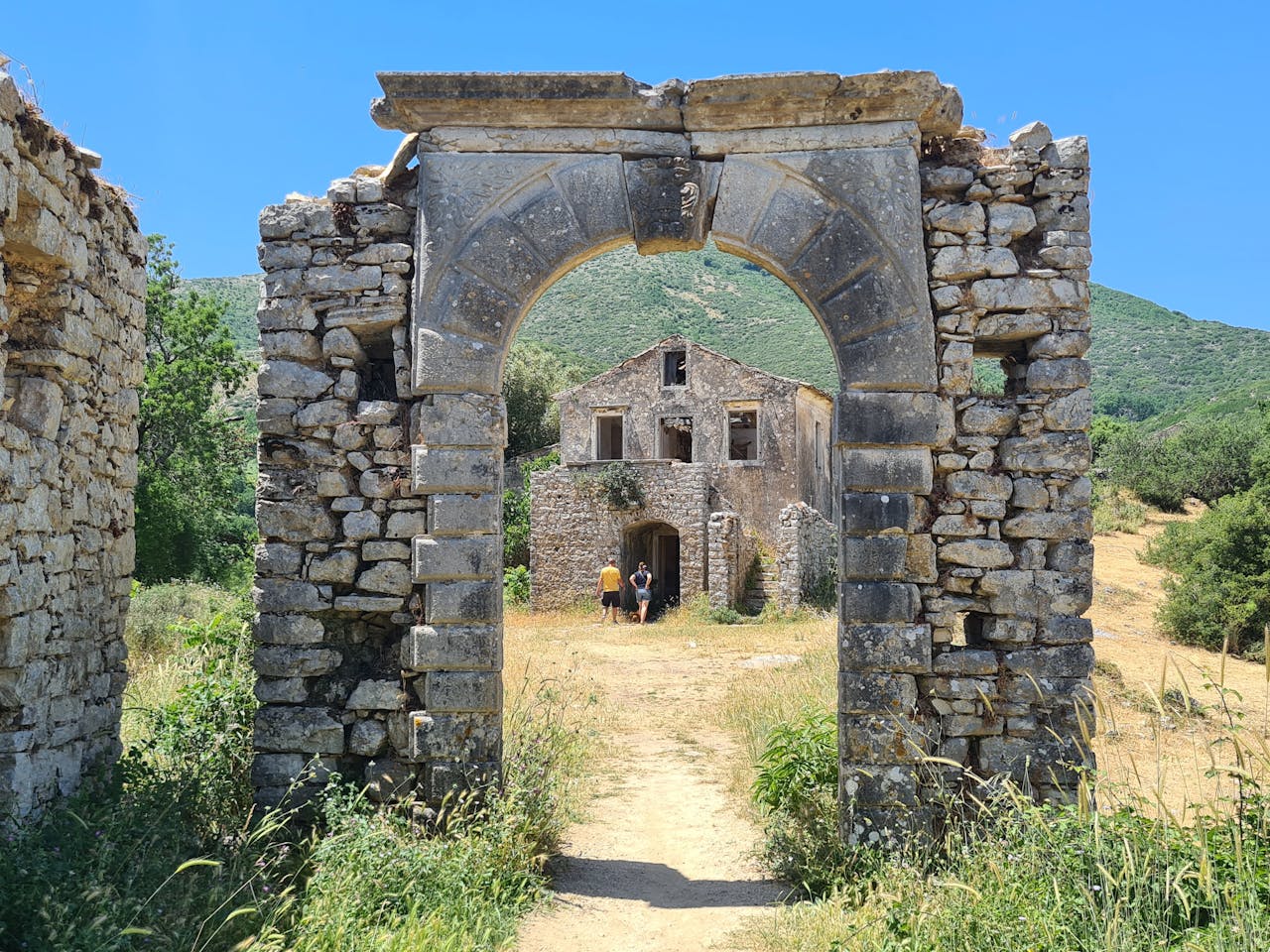
The villages that sit within and above this olive landscape reflect the same layered history that the coastal towns carry, but carry it more quietly and with less theatrical presentation. The Venetian period left its mark on the architecture of the hill villages: the proportions of the houses, the treatment of doorways and windows, the occasional campanile of a village church that looks more Venetian than Greek. The British period is visible in the layout of some of the village squares and in the occasional detail of public architecture that the colonial administration produced. And beneath both, the Greek Orthodox tradition that has organised village life for centuries is present in the churches that occupy the best position in every settlement and in the religious calendar that still structures the social year.
Ano Korakiana: The Finest Village
Of all the interior villages of Corfu, Ano Korakiana makes perhaps the strongest case for the title of finest. Situated on a hillside above the east coast, its narrow streets and Venetian-influenced architecture preserved with a completeness that many of the more accessible villages have not maintained, Ano Korakiana is the village that closest approaches the ideal of what a Corfiot hill settlement should be.
The streets of Ano Korakiana are too narrow for comfortable vehicle passage and are consequently best explored on foot, the car left at the village edge and the exploration conducted at the pace that the architecture and the atmosphere demand. The houses are built in the manner of the Venetian colonial period, their facades articulated with the pilasters and window treatments that the Republic’s architectural influence spread throughout its island territories. The village church, with its separate campanile and its interior of considerable richness, occupies the central space of the settlement with the authority of an institution that has been the focus of community life for several centuries.
The views from the upper streets of Ano Korakiana, across the olive groves of the valley below to the sea and the Albanian mountains beyond, are among the finest available from any point in the island’s interior, and the combination of the architectural quality of the village with the natural beauty of its setting makes the visit one of the most complete and satisfying experiences that the interior of Corfu provides.
Strinilas and the Pantokrator Road
The road that climbs from the east coast toward the summit of Mount Pantokrator passes through a succession of villages and landscapes that become progressively more dramatic and more beautiful as the altitude increases. Spartilas, Sokraki, and Strinilas mark the ascent through the mountain’s lower and middle slopes, each village offering its own character and its own relationship with the extraordinary landscape that surrounds it.
Strinilas, at approximately 600 metres, is the most celebrated of the Pantokrator villages and contains the mountain taverna that is among the most consistently recommended eating destinations on the entire island. The taverna occupies a position at the edge of the village with views that extend, on a clear day, from the Albanian coast in the northeast to the southern Ionian islands, and the food served at its tables, simple and honest and produced from ingredients that reflect the agricultural reality of the mountain village rather than the requirements of a tourist menu, is as good as the view.
The summit of Pantokrator, reached by continuing the road beyond Strinilas to the communications equipment and monastery that crown the island’s highest point, delivers a panorama of genuinely overwhelming scope. The entire island is visible below, its shape and the relationship between its coastal features and its interior landscape clarified by the elevation in a way that ground-level exploration never quite achieves. The Albanian mountains to the northeast, close enough on a clear day to appear almost touchable, and the faint outlines of the Greek mainland to the east complete a view that extends across several countries and several seas simultaneously.
Sgombou and the Central Villages
The central villages of Corfu’s interior, accessible from the main road that crosses the island between the east and west coasts, offer a different character from the northern highland villages of the Pantokrator slopes. Sgombou, Skripero, and the villages of the Troumbetas Pass area occupy a landscape of more rounded hills and broader valleys, the olive groves here interspersed with the agricultural land of smallholdings that still produce the vegetables, herbs, and dairy products that define the traditional Corfiot diet.
These central villages are less dramatic in their setting than the Pantokrator settlements but more intimate in their character, the scale of the settlements and the density of the surrounding agricultural landscape creating the sense of a living community engaged in a continuous relationship with the land rather than a preserved architectural specimen. The village squares, with their kafeneia and their old men occupying the same chairs that their predecessors occupied, and the small shops that stock the produce of the surrounding farms alongside the basic provisions of daily life, represent the ordinary infrastructure of Corfiot rural society in a form that the coastal resorts, however pleasant, have long since ceased to provide.
The Village Taverna
Any drive through the interior of Corfu produces, at some point and inevitably, a moment when a village square or a roadside terrace presents itself as the obvious location for lunch. The village taverna, in its simplest and most typical form, is a family establishment where the menu reflects what was available in the kitchen that morning, the olive oil is from the grove behind the building, and the wine is the kind that does not appear on any list because it does not need to.
Eating at a village taverna in the Corfiot interior in June, at a table in the shade of a plane tree or a vine-covered pergola with the village square visible and the sounds of the surrounding countryside providing the only soundtrack, is one of those experiences that the most sophisticated and expensive restaurant cannot improve upon. The food is simple because the ingredients are good enough not to need anything else, and the setting provides a context that transforms even a basic meal into something that feels significant.
The Return Journey
The finest mountain village drive from Villa Kapella follows a circular route that goes out through the interior and returns by a different road, ensuring that the afternoon light falls on a different landscape from the morning light and that the drive home delivers its own sequence of discoveries. The late afternoon in the Corfiot interior, when the sun is moving behind the western hills and the long shadows of the olive trees stretch across the road and the air carries the particular warmth of a June day stored in stone and soil over many hours, is among the most beautiful times to be moving through this landscape.
The return to Villa Kapella after a day in the villages carries the particular satisfaction of a day spent in genuine discovery rather than the managed experience of a tourist attraction. The interior of Corfu, with its olive groves and its hill villages and its tavernas that serve food as good as any on the island in settings that the coastal restaurants cannot approach, is one of the island’s most durable and most rewarding pleasures, and it belongs as completely to the Villa Kapella experience as the beach days and the boat trips that the summer season makes so naturally available.