The Corfu Trail: Walking the Length of the Island in Summer
The Corfu Trail exists because an island of this quality and this variety of landscape deserves to be walked through as well as driven across. Created by the author and naturalist Hilary Whitton Paipeti and first opened in 2001, the trail covers approximately 220 kilometres of the Corfiot landscape from the southern tip of the island at Kavos to the northern cape at Agios Spyridon, following routes that include ancient mule paths, mountain tracks, coastal clifftop paths, village lanes, and the kind of cross-country terrain that only a dedicated walking route can make consistently accessible.
The trail reveals a Corfu that the road network, however extensive, cannot reach: the interior landscape of olive groves and abandoned terraces, the mountain passages between villages that have been walked for centuries before the arrival of the motor vehicle, the coastal sections where the path follows the cliff edge with the sea directly below and no evidence of the tourist infrastructure that the road above carries within earshot. Walking sections of the Corfu Trail in July, with the appropriate attention to the heat that the peak summer month demands, is one of the most direct and most rewarding ways to engage with the island’s natural and cultural landscape.
The Trail and Its Landscape
The Corfu Trail traverses the full range of landscape types that the island contains, moving through each with the directness of a route designed by someone who knows the terrain intimately and has chosen the paths that reveal it most completely. The southern sections of the trail pass through the flat agricultural landscape of the Corfu plain, the path moving between olive groves and cultivated fields through a countryside that the coastal resorts of the south coast make easy to overlook but that the trail reveals as a landscape of genuine agricultural beauty.
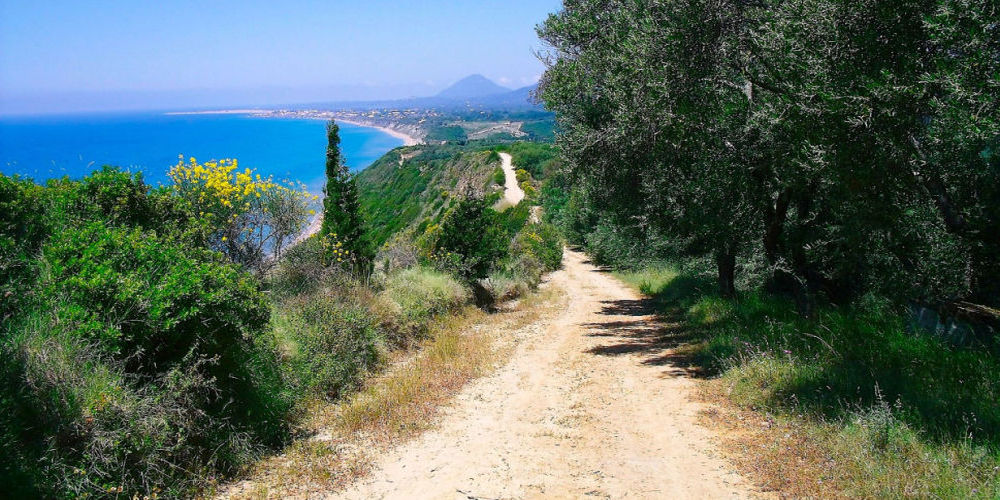
The central sections climb into the hills of the island’s interior, following the ancient paths between the villages that connected the agricultural communities of the Corfiot countryside before the road network made the traditional routes redundant. These sections pass through the olive groves and terraced hillsides that represent the core of the island’s agricultural heritage, the path descending into valleys and climbing out again through vegetation that in July carries the dry, aromatic character of the Mediterranean summer.
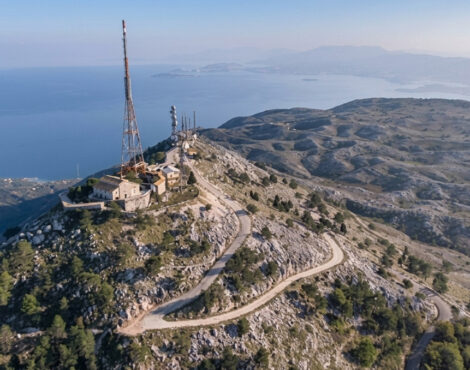
The northern sections, climbing toward and across the Pantokrator massif, provide the most dramatic walking on the trail. The paths through the Pantokrator area move through landscape that changes character with every hundred metres of altitude gained, from the olive groves of the lower slopes through the scrub and rock of the higher terrain to the open summit area where the views extend across the full geographical scope of the island and beyond. In July, this high-altitude walking is the most comfortable section of the trail, the elevation providing a relief from the coastal heat that makes the Pantokrator sections genuinely pleasant at hours when the lower trail sections require the early morning start to avoid the worst of the temperature.
Walking the Trail in July: The Heat Strategy
The fundamental challenge of walking the Corfu Trail in July is the heat, and addressing it successfully is the difference between a rewarding and a miserable experience of the island’s finest walking route. The July sun on the Corfiot landscape, at its most intense between eleven in the morning and four in the afternoon, makes walking the exposed sections of the trail during these hours a test of endurance rather than a pleasure, and the sensible July walker structures their day to avoid this window entirely.
The early start, by which is meant genuinely early rather than the approximate earliness of someone who considers seven o’clock a morning achievement, is the primary strategy. Setting out at six or six thirty, when the light is already good and the temperature still in the low twenties, captures the finest walking hours of the July day: the cool of the morning, the quality of the early light on the landscape, and the particular freshness of the Corfiot countryside before the heat has established itself for the day.
Walking three to four hours in the early morning, covering the day’s intended section of trail before the temperature climbs toward the midday peak, then resting through the hottest hours in a village taverna or in the shade of a substantial tree, then considering a further hour or two of walking in the late afternoon if the section and the fitness permit: this is the July walking strategy that the trail’s experienced users recommend and that the Corfiot climate makes not merely advisable but genuinely necessary for comfortable and safe summer walking.
The Best July Sections
The Pantokrator section of the Corfu Trail, covering the mountain area of the island’s north, is the finest July walking available on the route. The paths that traverse the Pantokrator massif, connecting the mountain villages of Spartilas, Sokraki, and Strinilas with the summit area and the northern descent toward the coast, pass through landscape of considerable beauty at altitudes that provide July temperatures ten to fifteen degrees cooler than the coastal areas below.
A day walk in the Pantokrator area, beginning at one of the mountain villages and following the trail through the higher terrain before descending to a different village for lunch and a return by taxi or arranged transport, provides a walking experience of genuine mountain character within an easy drive of Villa Kapella. The views from the higher sections of the Pantokrator trail, across the channel to the Albanian coast and south along the full length of the island, are among the finest available from any walking route in the Ionian islands.
The northwestern coastal sections of the trail, where the path follows the clifftop above the dramatic coastline between Paleokastritsa and the cape of Arillas, offer the most visually spectacular July walking on the lower sections of the route. The path above the cliff, with the Ionian directly below and the Albanian coast on the northeastern horizon, provides a walking experience of sustained visual quality that the road, which in this section of the island follows a route well inland, does not replicate. The early morning walk on this coastal section, with the light coming from the east across the island and falling on the western sea in the particular way of a July morning in the Ionian, is one of the finest walking experiences the island offers.
Logistics and Practicalities
Walking sections of the Corfu Trail as a day visitor from Villa Kapella requires some logistical thought that the experienced long-distance walker will find straightforward and the occasional walker will benefit from addressing in advance. The trail is a linear route, meaning that a day walk on any section of it involves either returning on the same path, which many walkers find less satisfying than the outward journey, or arranging transport back to the starting point from the end of the section walked.
The taxi network on Corfu is generally good, and a call to arrange collection from the endpoint of a trail section is the standard solution that local walkers use for the return logistics. Agreeing the pickup point and time with a local taxi driver before setting out removes the uncertainty from the return and allows the walk to conclude at its natural endpoint rather than at the point where the backtracking begins.
Water is the essential provision for July trail walking in quantities that exceed what most walkers habitually carry. A minimum of two litres per person for a four-hour morning walk, with additional provision if the section passes through areas without reliable water sources, is the starting point from which the specific requirements of a given section can be adjusted.
The Trail and the Villa Experience
For guests at Villa Kapella with an interest in walking as part of their July stay, the Corfu Trail provides a dimension of the island experience that the beach days and the boat trips and the town visits do not. The trail’s access to the interior landscape, to the mountain villages and the ancient paths and the views that only the higher terrain provides, adds a layer to the understanding of the island that purely coastal exploration cannot produce.
A day on the Corfu Trail, even a single morning’s walk on one of the finer sections of the route, returns the walker to the villa with a different relationship with the island than the one they departed with. The landscape that is visible from the garden and the terrace, the hillsides and the olive groves and the mountain outline on the horizon, becomes a landscape that has been walked through rather than merely looked at, and the difference between those two relationships with a place is, for the walker who has experienced both, the most significant thing the trail provides.