Traditional Corfiot Cheese and Dairy: From Mountain Pastures to the Table
The food culture of Corfu is built on layers, as everything on this island is built on layers: the Greek foundation overlaid with the Venetian contribution, the French influence brief but present, the British period leaving its mark in unexpected places, and beneath all of it the agricultural reality of an island whose pastures and olive groves and fishing grounds have been feeding its population for millennia. Of all the elements of this layered food culture, the dairy tradition is among the most directly connected to the agricultural landscape that produces it and among the most immediately rewarding for the visitor willing to go beyond the supermarket and find the cheese where it actually comes from.
Corfu’s cheeses are not famous in the way that the cheeses of some mainland Greek regions have become famous. They do not appear in the specialist delicatessens of northern Europe or command the premium prices of the most celebrated Greek dairy products. They are instead the cheeses of a specific place, produced in quantities that reflect the scale of the island’s pastoral economy rather than the ambitions of an export market, and consumed locally with a freshness and a contextual rightness that the distance of export destroys as completely as the distance destroys the flavour of a tomato picked before it is ripe.
The Pastoral Landscape
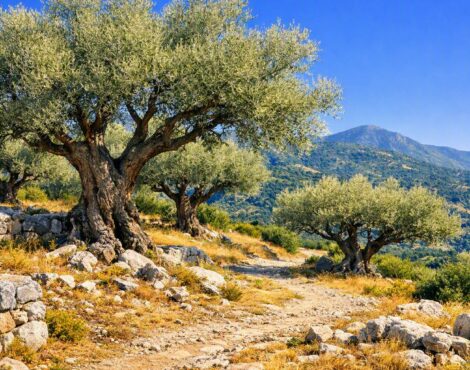
The cheeses of Corfu begin in the pastures of the island’s interior and mountain areas, where the combination of the Corfiot climate and the particular flora of the hillside grasslands produces milk of a character that the more intensively managed dairy operations of the lowland agricultural world cannot replicate. The sheep and goats that graze the hillsides of the Pantokrator slopes and the more sheltered valleys of the island’s interior move through a landscape of wild herbs and grasses, thyme and oregano and the various aromatic plants of the Corfiot garrigue, and the flavour of these plants passes through the milk in a way that is subtle but distinct and that gives the best Corfiot cheeses a complexity that their simple production methods would not otherwise produce.
The pastoral tradition of Corfu, maintained by a diminishing but still present community of small-scale herders whose relationship with the island’s landscape is intimate and generational, provides the raw material from which the dairy tradition is made. The herders who move their animals through the mountain villages of the Pantokrator area in July, when the lowland pastures have dried to the gold of the Mediterranean summer and the higher ground retains its green, are continuing a practice that has structured life in these villages for centuries and that produces, as its most immediately tangible output, milk of exceptional quality.
Graviera: The Island’s Finest Hard Cheese
Graviera is the cheese that most directly expresses the tradition of Corfiot dairy production in a form accessible to the visitor. A firm, pressed cheese with a golden to orange rind and an interior that ranges from pale yellow to the deeper gold of longer-aged examples, graviera is made from sheep’s milk or a mixture of sheep and goat milk, pressed and aged in the manner of the hard cheeses of the Italian tradition that the Venetian period introduced to the island’s dairy culture.
The flavour of a well-made Corfiot graviera is difficult to characterise without reference to tasting it: it is simultaneously sweet and savoury, with a nuttiness that develops as the cheese ages and a hint of the herbal complexity that comes from the milk of animals grazing the mixed pastures of the island’s interior. It melts with a richness that makes it excellent for cooking, grating over pasta dishes or using in the gratin preparations that the Venetian influence on Corfiot cooking makes a natural part of the island’s kitchen repertoire, and it eats equally well at room temperature on a cheese board, accompanied by the local honey that beekeepers throughout the island produce and that has a natural affinity with the sweetness of the cheese.
The covered market in Corfu Town stocks graviera from several island producers, and the comparison between the different examples available at a single market visit is instructive. The differences in flavour, texture, and aroma between a young graviera and a more mature example, between the production of a small artisan maker and the output of a slightly larger operation, are immediately apparent and reward the attention of the visitor willing to taste before buying.
Fresh Mizithra: The Cheese of the Moment
If graviera is the cheese that ages and travels, fresh mizithra is the cheese that exists entirely in the present tense. A soft, white, lightly salted whey cheese produced as a byproduct of the hard cheese making process, fresh mizithra has a shelf life measured in days rather than weeks and a delicacy of flavour that deteriorates almost as quickly as it develops. It is emphatically a local cheese, available where it is produced and consumed immediately, and the visitor who buys fresh mizithra from a market stall or a village shop in July and eats it the same day is eating it in the only conditions in which it fully expresses itself.
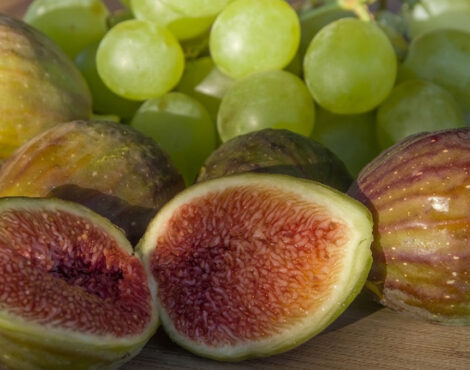
The flavour of fresh mizithra is mild, clean, and faintly sweet, with the particular lactic freshness that only cheese made from very recent milk achieves. It spreads easily on bread and is excellent with the local honey or with the fig preserves that appear in the village shops throughout the summer season. It works in salads in place of the more widely known fresh cheeses of the Greek tradition, its softer texture and milder flavour providing a different but equally rewarding contribution to the simple summer salads that the July vegetable harvest makes possible at the Villa Kapella kitchen.
Local Feta: The Variable Excellence
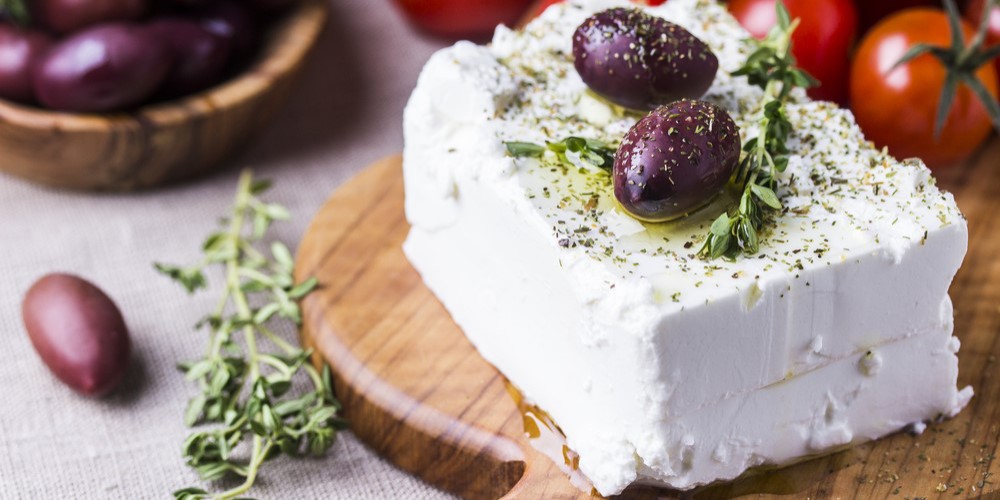
The feta produced on Corfu varies more than either the graviera or the mizithra between the best and the most ordinary examples, reflecting the range of production scales and methods that exist within the island’s dairy sector. At its finest, Corfiot feta, made from the milk of sheep and goats grazing the island’s herb-rich pastures and brined in the traditional manner, achieves a complexity and a depth of flavour that the industrial feta of the supermarket cannot approach. At its most ordinary, it is simply adequate, the milk’s potential unrealised by production methods more concerned with efficiency than character.
Finding the finest Corfiot feta requires the same approach as finding the finest of any locally produced food: asking the right people in the right places. The cheese vendors of the covered market in Corfu Town who know their producers personally, the village shop owner in the Pantokrator area who stocks the output of a neighbouring herder rather than the products of a distant dairy, the taverna owner who uses local feta in their kitchen and can say where it comes from: these are the sources that lead to feta of genuine quality and genuine provenance.
The Villa Kapella Kitchen and Corfiot Dairy
For guests at Villa Kapella who choose to cook during their stay, the cheeses of the Corfu market and the village shops provide some of the most directly rewarding ingredients available on the island. The combination of the morning market visit, with its fish and vegetables and the cheeses of the covered market’s dairy section, and the villa kitchen’s outdoor setting, where the cooking and the eating happen in the same warm July air and the dinner extends into the garden evening with the completeness of a meal that has been assembled and prepared with genuine pleasure, is one of the most satisfying expressions of what a private villa holiday makes possible.
A simple July dinner at Villa Kapella, built around a salad of local tomatoes and cucumber with Corfiot feta and the island’s olive oil, followed by grilled fish from the morning’s market and concluded with fresh mizithra and local honey, uses the island’s dairy tradition as naturally and as completely as the island’s kitchen has always used it: as the essential ingredient of a meal that requires nothing more elaborate than the quality of its components and the warmth of the evening in which it is eaten.
The Market Visit as Dairy Education
The covered market in Corfu Town in July is one of the finest places on the island to encounter the dairy tradition in its full variety. The cheese section, occupying its dedicated area within the market building, displays the range of local and regional production alongside the more widely distributed products that the market also stocks, and the contrast between the two, between the living, varied, locally specific cheeses of the island’s small producers and the standardised products of industrial dairy, is immediately apparent in both appearance and flavour.
Spending a July morning at the covered market specifically to explore the cheese section, tasting what the stallholders offer and asking the questions that the tasting produces, is a form of food education that no restaurant menu or cookbook can provide. The knowledge of what Corfiot cheese tastes like and where it comes from, gained at the market in the company of the people who produce and sell it, carries back to the villa kitchen and to every subsequent meal at the outdoor table with a directness that transforms the eating of those meals from the consumption of good ingredients into the continuation of a conversation with the island’s agricultural tradition.