
The Wines of the Ionian: Corfu and the Greek Island Wine Tradition
Corfu is not the destination most people think of first when the conversation turns to Greek wine, and yet the island has been making it since long before most of Europe’s famous wine regions existed. Homer mentions Corfiot wine in the Odyssey, a detail that hints at a viticultural history stretching back thousands of years. Today, that heritage survives in small pockets across the island, kept alive by a handful of dedicated producers working with grape varieties found almost nowhere else on earth.
An Island That Chose Olives Over Vines
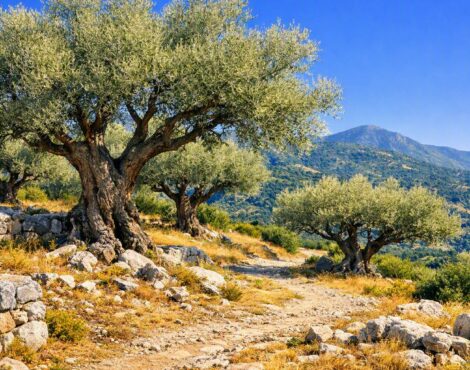
Before Venetian rule, vineyards covered much of Corfu. The Venetians changed that, encouraging farmers to plant olive trees instead, and the balance between the two crops never really recovered. Wine growing survived, but only in fragments, tended largely by families producing modest quantities for their own tables rather than for export. It is only in the past two decades that a genuine revival has taken hold, with vineyards covering roughly seven percent of the island’s agricultural land today and a new generation of winemakers determined to bring Corfu’s native grapes back from the edge of disappearance.
Kakotrygis, the Queen of Corfu’s Whites
If Corfu has a signature grape, it is Kakotrygis, an ancient white variety unique to the island and mentioned by the historian Thucydides as far back as around 400 BC. Its name refers to how difficult the small, densely packed grapes are to harvest, but the wine it produces is worth the effort, crisp and aromatic with citrus notes and a herbal edge that pairs naturally with fresh seafood. Alongside it grows Petrokoritho, a rarer white variety with a gentler, more delicate character, and Moschato Aspro, which produces a light, fragrant sweet wine.
The Island’s Overlooked Reds
Corfu’s reputation rests mostly on its whites, but its red grapes are quietly becoming one of its more interesting stories. Skopelitiko, a dark-skinned variety said to have arrived with monks from the island of Skopelos, produces light, fruity reds with soft tannins and modest alcohol, ideal for warm evenings rather than heavy winter drinking. Petrokoritho, in addition to its white incarnation, is also used by some producers to make delicate rosé, and Mavrodafni appears in small quantities as well, adding depth to an otherwise light-bodied red wine tradition.
Where the Vineyards Grow
Most of Corfu’s wineries cluster in the Ropa Valley, a broad, fertile stretch of land in the centre of the island between Corfu Town and Ermones, along with smaller pockets around Sinarades and Lefkimmi in the south. The island’s limestone soils are thin, but pockets rich in clay retain enough winter moisture to carry the vines through the dry heat of summer, while hillside plantings make the most of the sun exposure and drainage the terrain allows. Estates such as Theotoky in the Ropa Valley, Grammenos near Sinarades, and smaller family operations including Pontiglio and Goulis have each taken on the task of reviving old vines or replanting abandoned plots with native varieties.
Visiting a Corfiot Winery
Several of the island’s small wineries welcome visitors for tours and tastings, usually by arrangement rather than casual walk-in, given how modest their production tends to be. A typical visit includes a walk through the vines, a look at the cellar, and a tasting that often runs alongside local snacks, cheese or olives grown on the same land. Because Corfu has no official Protected Designation of Origin zones, producers lean instead on the story of the grape itself, the history behind it, and the character of the specific patch of ground it grows on, which makes every tasting feel closer to a conversation than a formal wine list.
An Evening of Local Wine at the Villa
A bottle of Kakotrygis or a Skopelitiko rosé, picked up from a small producer or a good local shop, makes an easy addition to a summer evening at Villa Kapella, chilled and poured out on the terrace as the day cools down. It is a quiet way to taste something genuinely of the island, a wine tradition that very nearly disappeared and that a small number of Corfiot families have spent the last twenty years bringing back.