Greek Easter in Corfu: The Most Spectacular Orthodox Celebration in Greece
Greece celebrates Easter with a depth of feeling and a richness of tradition that sets it apart from any other religious festival in the Orthodox world. Across the country, Holy Week is a time of solemn ceremony, communal gathering, and the kind of collective emotional experience that secular life rarely produces. But within Greece, one island has earned a reputation that stands entirely apart. Corfu at Easter is not simply the best place in Greece to experience the Orthodox Resurrection. For many who have witnessed it, it is one of the most extraordinary cultural events in Europe.
A Tradition Built Over Centuries
Corfu’s Easter traditions reflect the island’s singular history. Unlike the rest of Greece, Corfu spent nearly four centuries under Venetian rule before passing briefly to French and then British administration. This layered cultural inheritance shaped everything from the island’s architecture to its music to its approach to public ceremony. Nowhere is that shaping more visible than in the Easter celebrations that fill Holy Week with sound, colour, and an atmosphere that belongs to Corfu alone.
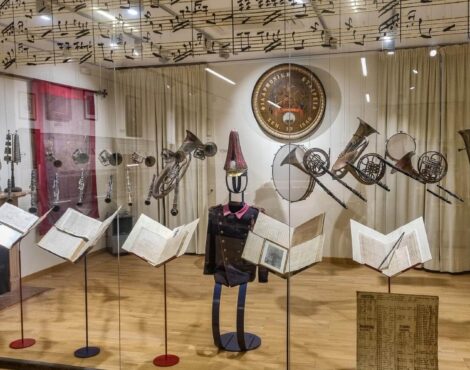
The island’s philharmonic orchestras are central to this distinction. Corfu has more philharmonic bands per capita than anywhere else in Greece, a legacy of the Venetian and British periods when formal musical education became embedded in the culture of the town. During Holy Week, these orchestras take to the streets with a commitment and a skill that transforms the processions from religious observance into something closer to civic theatre of the highest order.
Good Friday: The Epitafios Processions
The emotional heart of Holy Week in Corfu is the Good Friday Epitafios procession. In most Greek towns, a single parish processes through the streets with the decorated bier representing the burial of Christ. In Corfu Town, multiple parishes process simultaneously, each accompanied by its own philharmonic orchestra playing funeral marches with a solemnity and precision that silences the watching crowds.
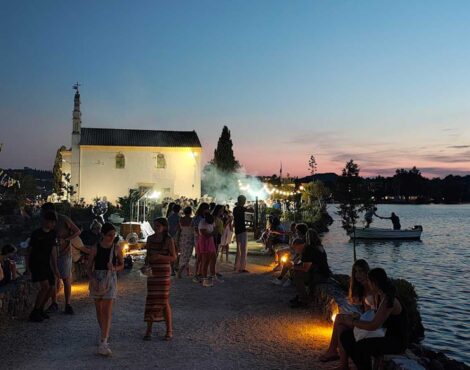
The processions wind through the narrow streets of the old town, the music rising and overlapping as different orchestras pass within earshot of each other, the candlelight of thousands of attendees flickering against the Venetian facades of the buildings that line every route. The atmosphere is one of genuine collective mourning, then gradual, quiet consolation. Visitors who arrive in Corfu expecting a picturesque religious ceremony often find themselves unexpectedly moved by what they witness.
Holy Saturday Morning: The Pot Throwing
If the Epitafios is the soul of Corfu’s Easter, the pot throwing of Holy Saturday morning is its singular distinction. No other place in Greece, and no other place in the world, marks the approach of the Resurrection in quite this way.
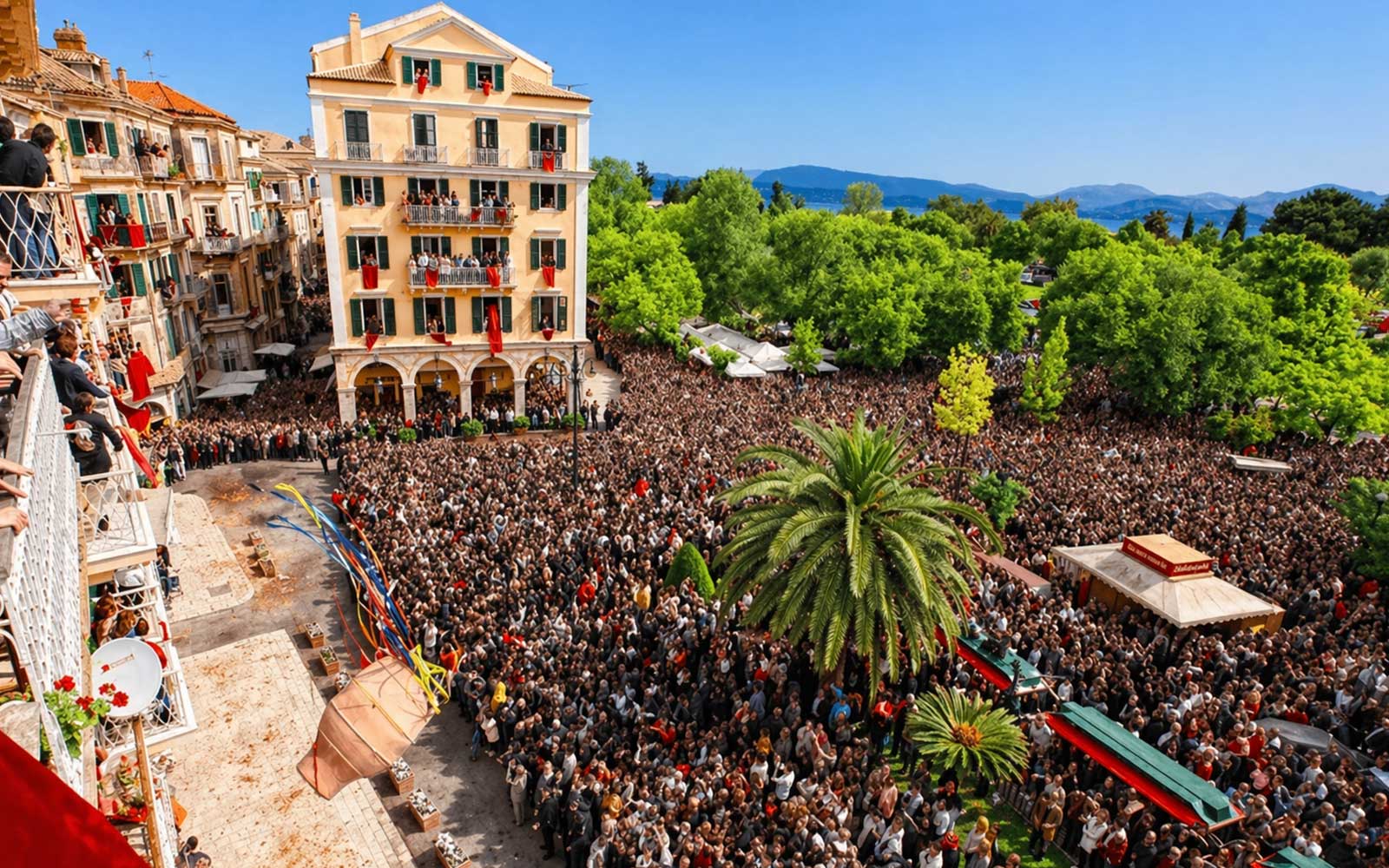
At eleven o’clock on Holy Saturday morning, residents of Corfu Town throw large clay pots, jugs, and vessels from their windows and balconies into the streets below. The pots shatter on the stones with an extraordinary crash, filling the Spianada and the surrounding streets with the sound of breaking ceramic repeated hundreds of times over. The tradition is ancient, and its precise origins are debated, though the most widely accepted interpretation connects it to the renewal of the new year and the casting out of the old.
Whatever its origins, the effect is unforgettable. The streets fill with spectators who crane upward in anticipation. The crash of the first pot triggers a cascade that continues for several minutes. Philharmonic bands play. The crowd cheers. And then, as suddenly as it began, the noise subsides and the streets are covered in fragments of clay that crunch underfoot for the rest of the day.
The Midnight Resurrection Service
The climax of Holy Week arrives at midnight on Holy Saturday with the Anastasi, the Resurrection service. Across Corfu, the churches fill to capacity as the hour approaches. Candles are distributed. The lights are extinguished. The priest emerges bearing the Holy Light, and the flame passes from candle to candle through the congregation until the church and the streets surrounding it are brilliant with the warm light of thousands of small flames.
The proclamation of Christ is Risen is followed by an eruption of celebration that sweeps through the town. Fireworks fill the sky above the Old Fortress. Church bells ring simultaneously across the island. And the long fast of Lent is broken with magiritsa, the traditional lamb offal soup that Orthodox Greeks eat immediately after the midnight service before retiring to sleep for a few hours before the great Easter Sunday feast.
Easter Sunday: The Feast
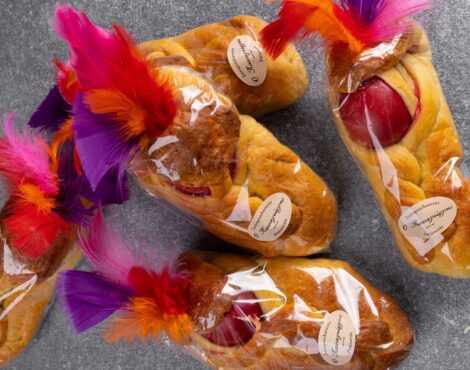
Easter Sunday in Corfu, as across Greece, is devoted to the lamb. Families gather in courtyards, gardens, and hillside clearings from early morning to tend the spit, turning the lamb slowly over charcoal through the heat of the day, the aroma drifting through entire neighbourhoods and drawing everyone gradually toward the table. The meal that follows is generous, unhurried, and deeply communal. Wine is opened, red eggs are cracked in the traditional game of mutual testing, and the conversation continues long into the afternoon.
For visitors in Corfu during Easter Sunday, the invitation to join a family or local gathering is one of the most genuine experiences the island can offer. Corfiot hospitality at Easter is legendary, and the warmth with which the day is shared with guests and strangers alike reflects something essential about the island’s character.
Planning an Easter Visit to Corfu
Easter week in Corfu draws visitors from across Greece and Europe, and accommodation in Corfu Town fills quickly once the dates are confirmed. For 2026, with Orthodox Easter falling on April 12th, anyone wishing to experience the Holy Saturday pot throwing or the Good Friday Epitafios processions should secure their arrangements well in advance.
The days surrounding Easter also offer some of the finest spring weather of the Corfiot calendar. The island is green and fragrant, the crowds of high summer are still months away, and the combination of extraordinary cultural spectacle with beautiful spring conditions makes Easter week one of the most rewarding times of the year to visit.
Corfu at Easter is not simply a travel experience. It is a reminder that some traditions, maintained with conviction and skill over many generations, retain the power to stop a person entirely and ask them to pay full attention. On the streets of Corfu during Holy Week, full attention is the only appropriate response.