
Local Festivals and Celebrations in Corfu: Traditional Celebrations Year-Round
Corfu’s calendar punctuates throughout the year with festivals blending religious devotion, cultural expression, and communal celebration. These events, from elaborate Easter processions to intimate village panigiri, reveal island soul beyond tourist attractions. Orthodox traditions shape religious celebrations while historical influences from Venetian, French, and British periods add unique elements found nowhere else in Greece. Understanding festival calendar and participating respectfully allows visitors witnessing authentic cultural expressions where community comes together honoring traditions spanning centuries. The festivals transform ordinary days into extraordinary occasions where past and present merge through ritual, music, feasting, and collective joy.
Easter: The Ultimate Celebration
Greek Orthodox Easter surpasses Christmas as the year’s most important religious celebration. Corfu’s Easter traditions blend standard Orthodox practices with unique local customs creating week-long spectacle of faith, music, and community.
Holy Week begins with Palm Sunday when processions carry Saint Spyridon’s relics. Philharmonic bands accompany religious icons through packed streets. The ceremony launches intensive religious observances culminating Saturday night.
Holy Thursday evening brings first major procession. Churches throughout Corfu conduct Passion services then process with epitaphios (Christ’s funeral bier) through neighborhoods. Each church maintains distinct route ensuring processions don’t conflict. Multiple simultaneous processions create city-wide sacred atmosphere.
Good Friday morning features second procession, larger and more elaborate. Corfu Town’s major churches participate with philharmonic bands providing solemn musical accompaniment. The atmosphere intensely mournful reflecting Christ’s crucifixion. Black-clad participants and somber marches create powerful emotional impact.
The famous pot-throwing tradition occurs Saturday morning. At 11 AM precisely, residents throw clay pots from balconies, the crashing symbolizing earthquake at Christ’s resurrection and rejection of evil. Thousands gather watching pots smash on streets creating remarkable spectacle. Origins disputed though tradition firmly established.
Saturday midnight Resurrection service represents week’s spiritual climax. Churches overflow with faithful holding unlit candles. At midnight, priest announces “Christos Anesti” (Christ is Risen), congregation responds “Alithos Anesti” (Truly Risen), and Holy Light passes from candle to candle until darkness transforms to sea of flames. Fireworks, bells, and joyous celebration erupt. Families carry flame home lighting candles and making cross over doorways with candle smoke ensuring blessing.
Easter Sunday features outdoor spit-roasting of lamb. Families and neighborhoods gather for daylong feasting. The meal breaks Lenten fast with gusto. Traditional dishes include magiritsa (organ meat soup), tsoureki (sweet bread), and kokoretsi (offal delicacy). Music, dancing, and celebration continue afternoon and evening.
Red-dyed eggs symbolize Christ’s blood and resurrection. Traditional egg-cracking game determines whose egg survives intact bringing good luck. These seemingly simple customs carry deep theological symbolism and cultural significance.
Village Easter celebrations maintain more intimate character than town spectacle. Smaller scale enables greater personal participation and community cohesion. However, less elaborate presentations create different appeal.
Saint Spyridon Festivals
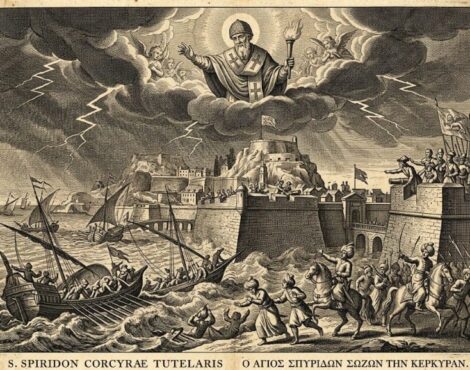
Saint Spyridon, Corfu’s patron saint, is honored four times annually. His relics, preserved in silver casket at church bearing his name, process through town on these occasions. Corfiots attribute island’s protection from various calamities to saint’s miraculous interventions.
December 12 commemorates saint’s death and most important feast. Elaborate processions with multiple philharmonic bands, church officials, civic authorities, and faithful throng streets. The ceremony combines religious solemnity with civic pride. Visitors filling hotels and restaurants indicate festival’s significance.
Palm Sunday procession coincides with Holy Week but maintains distinct focus on Saint Spyridon. The dual religious significance creates particularly elaborate celebration.
August 11 marks miraculous salvation from Ottoman siege. Summer timing means maximum tourist presence. The celebration blends gratitude for historical deliverance with contemporary tourist season reality.
First Sunday November remembers another miraculous intervention. Though least elaborate of four festivals, it maintains religious significance and community participation.
Church of Saint Spyridon becomes pilgrimage destination during festivals. Faithful venerate relics, light candles, and pray for intercession. The church’s richly decorated interior and palpable devotion create powerful spiritual atmosphere regardless of personal faith.
Philharmonic bands’ participation showcases Corfu’s unique musical tradition. Multiple bands performing simultaneously creates polyphonic effect characteristic of Corfiot celebrations. Competition for best performance adds enthusiasm while cooperation for event success demonstrates community unity.
Carnival: Pre-Lenten Revelry
Carnival provides final celebration before Lenten austerity. Corfu’s carnival, though less famous than Patras, maintains distinct local character with traditions dating to Venetian period.
Festivities span approximately three weeks though intensity increases toward final weekend. Costume parties, masquerade balls, and street celebrations occur throughout period. Children’s events, satirical performances, and traditional dances provide varied entertainment.
The main parade occurs final Sunday featuring elaborate floats, costume groups, and marching bands. Themes satirizing politics, current events, and social issues provide humor and social commentary. Preparation requires months of work by participating groups demonstrating serious commitment despite festive spirit.
Masked figures called “bouloi” appear throughout carnival. Traditional costumes with elaborate masks create mysterious characters. Origins traced to Venetian carnevale though local evolution created distinct Corfiot expressions.
Saturday evening before Clean Monday, the burning of carnival king marks festivities’ end. Symbolic figure, often resembling unpopular politician or representing year’s troubles, burns in public ceremony. This ritual cleansing prepares community for Lenten period.
Clean Monday officially ends carnival and begins Lent. While not festive, the day sees families flying kites and eating fasting foods. Countryside outings and outdoor activities take advantage of typically pleasant late winter weather.
Village carnivals maintain traditional character with less elaborate but more authentic celebrations. Participation rates higher relative to population. Traditional music, dancing, and customs preserved more faithfully than commercialized town events.
Village Panigiri
Every village celebrates its patron saint’s feast day with panigiri. These local festivals represent grassroots cultural expression where community honors tradition while enjoying collective celebration.
Religious service opens festivities, often attended by entire village. Following liturgy, procession carries saint’s icon through village streets. Philharmonic band or smaller musical group provides accompaniment. Religious devotion genuine though festive atmosphere prevails.
Communal meal traditionally follows religious observances. Historically, whole animals roasted on spits with food shared freely. Modern celebrations sometimes modify traditions though communal eating remains central. Visitors welcomed to join demonstrating Greek hospitality.
Live music and dancing continue into evening and night. Traditional Greek music played by local musicians encourages participation. Circle dances invite joining regardless of skill level. The inclusive nature breaks down barriers between villagers and visitors.
Local products often sold at panigiri. Wine, olive oil, honey, and crafts provide income for families while offering authentic souvenirs. Prices typically reasonable reflecting local rather than tourist-oriented market.
Gambling games, carnival booths, and children’s activities create festival atmosphere. These secular elements blend with religious foundations creating holistic community celebration addressing spiritual and social needs.
Dating aspects of panigiri shouldn’t be ignored. Traditional courtship occurred at such gatherings with young people meeting under community supervision. While modernity changes dynamics, social matchmaking aspect persists.
Finding panigiri requires local knowledge or research. Festival dates follow liturgical calendar with some flexibility. Tourist offices, local contacts, or online resources help identifying upcoming celebrations. Spontaneous discovery adds serendipity to planned attendance.
Wine Festivals
Harvest season brings wine festivals celebrating year’s vintage. These relatively recent additions to festival calendar reflect growing wine tourism and viticultural renaissance.
Organized wine festivals in Ropa Valley and other wine regions feature tastings from multiple producers. Educational seminars, food pairings, and music create comprehensive programs. Entry fees typically modest with some tastings included.
Individual winery celebrations mark harvest completion or bottling milestones. These intimate events offer deeper engagement with specific producers. Advance planning and reservations usually required though spontaneous invitation possible through established relationships.
Traditional wine-related customs including grape crushing and barrel toasting maintain symbolic rather than practical function. However, their performance connects contemporary celebrations to agricultural heritage.
Wine blessing ceremonies at some festivals add religious dimension. Priest blesses new wine thanking God for harvest. This acknowledgment of divine providence in agricultural success reflects ongoing faith role in rural life.
Cultural and Arts Festivals
Summer cultural festivals present music, theater, and dance performances. These events, while less traditional than religious celebrations, provide artistic expression and entertainment.
Medieval Festival in Old Town recreates historical period through costumes, demonstrations, and performances. While historical accuracy varies, event introduces visitors to island’s Venetian heritage entertainingly.
Music festivals showcase various genres from classical to traditional Greek music. Outdoor venues including fortresses and amphitheaters provide atmospheric settings. International and local artists participate creating diverse programming.
Film festivals, though small-scale compared to major international events, screen works and host discussions. These cultural offerings appeal to cinephiles and provide industry networking opportunities.
Dance performances during summer include traditional Greek dance companies and contemporary choreography. These programs maintain folk traditions while exploring modern artistic expression.
Food Festivals
Seasonal food festivals celebrate local products and culinary traditions. These events, growing in popularity, combine eating with cultural education.
Olive oil festivals during harvest season offer tastings, demonstrations, and education about production. Given olive oil’s importance to Corfiot agriculture and cuisine, these celebrations honor fundamental local product.
Fish festivals in coastal villages feature fresh catches prepared traditionally. These events highlight maritime heritage and seafood culinary excellence. Sustainable fishing practices sometimes emphasized connecting tradition with conservation.
Kumquat festivals celebrate Corfu’s distinctive citrus. Liqueur tastings, dessert sampling, and product sales showcase this unique Corfiot specialty. Educational components explain cultivation and processing.
Participating Respectfully
Understanding festival context enhances participation. Religious events require reverence regardless of personal faith. Cultural celebrations welcome enthusiasm though appropriateness varies by event type.
Dress codes matter particularly at religious celebrations. Modest clothing covering shoulders and knees shows respect. Removing hats during religious services demonstrates awareness of Orthodox customs.
Photography etiquette includes asking permission for close-up portraits, avoiding flash during church services, and not obstructing processions or ceremonies. Capturing memories shouldn’t interfere with participants’ experiences.
Behavior standards require quiet conversation during religious portions, following crowd flow without pushing, and refraining from intoxication at sacred events. Festival aspects appropriate for revelry differ from religious observances deserving sobriety.
Gift bringing to village panigiri, though not required, appreciated. Wine, sweets, or simple offerings demonstrate appreciation for hospitality extended to outsiders joining community celebration.
Language barriers overcome through smiles, gestures, and basic Greek phrases. Effort communicating, however imperfect, receives warm reception. Phrasebooks or translation apps bridge gaps.
Festival Impact and Evolution
Tourism affects festival character. Some evolve toward entertainment spectacle while others maintain authentic religious and community focus. This tension between tradition and commercial potential creates ongoing negotiation.
Younger generation engagement determines festival futures. When youth participate actively, traditions continue vibrantly. Disinterest or emigration threatens continuity requiring conscious transmission efforts.
Commercialization dangers include authentic elements replaced by tourist-oriented performance, sacred aspects diminished for entertainment value, and community participation displaced by passive spectatorship. Resisting these pressures requires commitment to tradition over short-term profit.
Documentation through video, photography, and written records preserves practices for future study and potential revival. Academic and amateur efforts both contribute to cultural preservation.
Government support through funding, organizational assistance, and promotion helps sustain festivals. However, maintaining community control prevents bureaucratic distortion of grassroots traditions.
Corfu’s festivals offer windows into cultural soul where faith, tradition, music, and community converge creating experiences beyond ordinary tourism. Whether witnessing elaborate Easter processions, joining village panigiri dances, or observing saint’s day devotion, festival participation provides authentic cultural encounter impossible through conventional sightseeing. These celebrations, passed through generations and continuing despite modern pressures, demonstrate cultural vitality ensuring Corfu’s identity transcends postcard beauty encompassing living traditions connecting past to present while extending hopefully toward future where such celebrations continue marking time’s passage through sacred and joyous communal observance.