The fishing boat leaving the harbour in the small hours of the morning, its running lights diminishing across the dark water as the engine settles into its working rhythm, is one of the oldest images in the human relationship with the sea. On Corfu, where people have been fishing these waters for as long as people have lived on the island, that image is not a romantic abstraction. It is an ordinary event, repeated every night by working fishermen whose relationship with the Ionian Sea is practical, specific, and inherited across generations.
For visitors to the island, the fishing tradition manifests most directly at the market and the taverna table. But for those willing to rise early enough to be at the harbour when the boats return, or to arrive at the covered market in Corfu Town before the morning is too advanced, the fishing culture of the island reveals itself with a directness and authenticity that connects the food on the plate to the sea that produced it in a way that no amount of menu description can replicate.
The Ionian Sea and Its Harvest
The waters surrounding Corfu are among the most productive in the Greek maritime environment. The Ionian Sea, deeper and cooler than the Aegean and fed by the freshwater inflows of the Adriatic, supports a diversity of species that reflects the richness of its underwater terrain. Rocky reefs, sandy bottoms, sea grass beds, and the deeper water channels between the island and the mainland all provide habitat for different communities of fish, and the Corfiot fisherman’s knowledge of these habitats, accumulated over generations and refined by daily experience, is one of the less visible but more significant forms of expertise on the island.
The species available in the Corfiot market and on the taverna menus of June reflect the natural cycle of the sea at this point in the year. Sea bream and sea bass, the two species most consistently associated with Greek seafood dining, are available throughout the season and at their finest when caught from the rocky inshore grounds that the northeast coast provides. Red mullet, with its particular sweet flavour and the delicacy of its flesh, is excellent in June and worth seeking out specifically at market and taverna. Scorpionfish, essential for the island’s bourdeto stew, are fished from the rocky reefs and the deeper channels.
The small oily fish that form the foundation of the Mediterranean diet in its most traditional form, sardines and anchovies in particular, are excellent throughout the summer months and represent some of the finest eating available at the simplest and least expensive tavernas on the island. Grilled fresh sardines, dressed with nothing more than olive oil, lemon, and coarse salt, eaten at a table beside the sea with bread to mop the juices and wine cold enough to bead the glass, is one of the most elemental and satisfying meals that the Corfiot summer provides.
The Covered Market: The Heart of the Food Culture
The covered market of Corfu Town, occupying its historic building a short distance from the Spianada, is the most concentrated expression of the island’s food culture available to the visitor. The fish section, occupying one end of the market building, receives its deliveries in the early morning hours and is at its best before noon, when the selection is broadest and the fish most recently arrived.
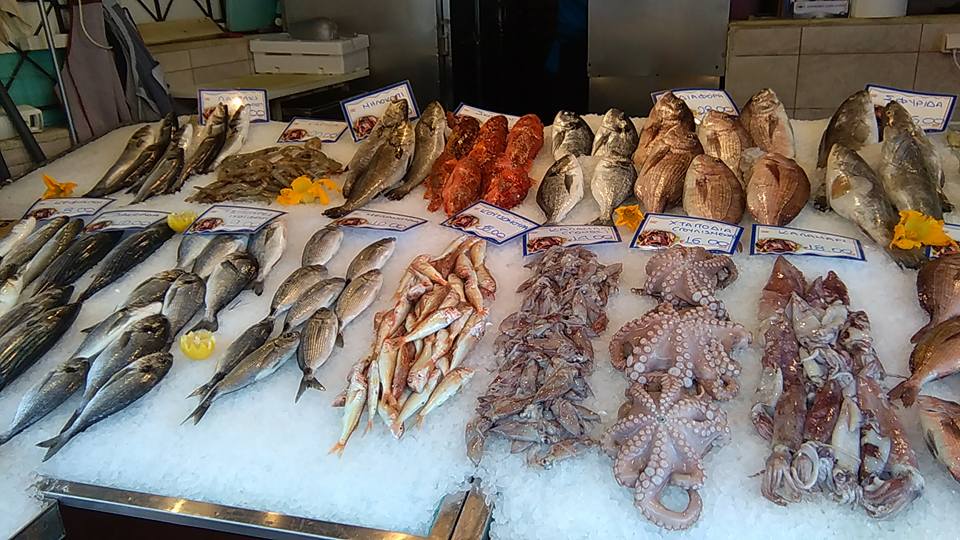
Arriving at the fish market in the early morning is an experience that rewards the early rising it requires. The stalls are laid with the morning’s catch on beds of crushed ice, the silvery bodies of the various species arranged with the particular care that good fish market presentation requires: not for mere aesthetics but because the display of the fish allows the buyer to assess its freshness by eye in the way that experienced market shoppers have always done. Clear eyes, bright skin, the smell of the sea rather than anything more insistent, these are the indicators of fish worth buying, and the fish market in Corfu Town in June, supplied by boats whose grounds are close and whose practices are those of small-scale traditional fishing rather than industrial methods, consistently provides them.
The stallholders are knowledgeable and, to the visitor who approaches with genuine interest rather than tourist detachment, communicative in the way of people who take pride in what they sell. Questions about the origin of a particular fish, the best method of preparation, the relative merits of the species available that morning, are answered with the directness and the occasional opinionatedness that the Corfiot market character produces. This communication, even conducted in the sign language of two people who share no common language, is part of the pleasure of the market visit.
The Fishing Villages of the Northeast Coast
The northeast coast of Corfu, where the island faces the Albanian mountains across the narrow channel of the Corfu Strait, contains the highest concentration of working fishing villages remaining on the island. Kassiopi, Agios Stefanos, and the smaller settlements between them have maintained their fishing traditions alongside their development as tourist destinations, and the presence of working boats in their harbours gives these villages a dual character that the purely touristic resorts of the more developed coastlines lack.
In the early morning, before the tourist day has begun, the harbours of these villages belong to the fishermen returning from the night’s work. The boats come in with the dawn, their catch unloaded with the efficient economy of people who have done this many times and for whom the theatrical qualities of the operation, which are considerable, are entirely incidental to its purpose. The fish are sorted, packed, and despatched to market or restaurant with a speed that reflects the urgency of freshness and the value of time that the fishing life imposes.
For visitors staying at Villa Kapella and willing to make the early morning drive to one of these harbours, the experience of watching the boats return and the catch unloaded is one of those quiet, unmediated encounters with the working life of the island that no organised excursion provides and that remain in the memory long after the more spectacular sights of the holiday have blurred with time.
Cooking the Catch
The most direct engagement with Corfu’s fishing culture available to guests at Villa Kapella is the combination of market visit and villa cooking that transforms the morning’s fish purchase into the evening’s dinner. The covered market fish section provides all that is needed: the fish itself, already cleaned and prepared on request by the stallholder, and the local olive oil, lemons, and herbs that complete the preparation.
Grilling fish over charcoal in the villa garden, the simplest and most traditional method of preparation in the Corfiot kitchen, requires no elaborate technique and produces results that the complexity and ambition of more sophisticated cooking rarely improves upon. The fish, dressed with olive oil and seasoned with salt before going on the grill, needs only the lemon and perhaps some fresh herbs at the point of serving. The garden setting, the warmth of the June evening, and the particular satisfaction of eating food that was in the sea the same morning complete an experience of the island’s food culture that is as genuine and as rewarding as anything that the best restaurants on the island can offer.
The Taverna and the Sea
For those who prefer their fish prepared by someone else, the seafront tavernas of the northeast coast provide the ideal alternative. The connection between these restaurants and the fishing tradition that supplies them is direct and visible: the boats in the harbour, the fish on the ice, the grill over the charcoal, the table beside the water. The chain from sea to plate is short enough that the freshness of the fish is not a marketing claim but a simple statement of fact, and the cooking, which at the best of these establishments is exactly as simple and skilled as fresh fish of this quality deserves, delivers the kind of eating that people travel to the Mediterranean specifically to find.
In June, these tavernas are operating at their most rewarding, the season fully underway, the produce at its best, and the atmosphere of the northeast coast villages in the long June evenings, warm and unhurried and lit by the particular quality of light that the Ionian produces at the end of a clear summer day, providing the setting that makes even a simple meal feel like the finest dining the island has to offer.