The Olive Harvest Countdown, How August Prepares Corfu’s Ancient Groves
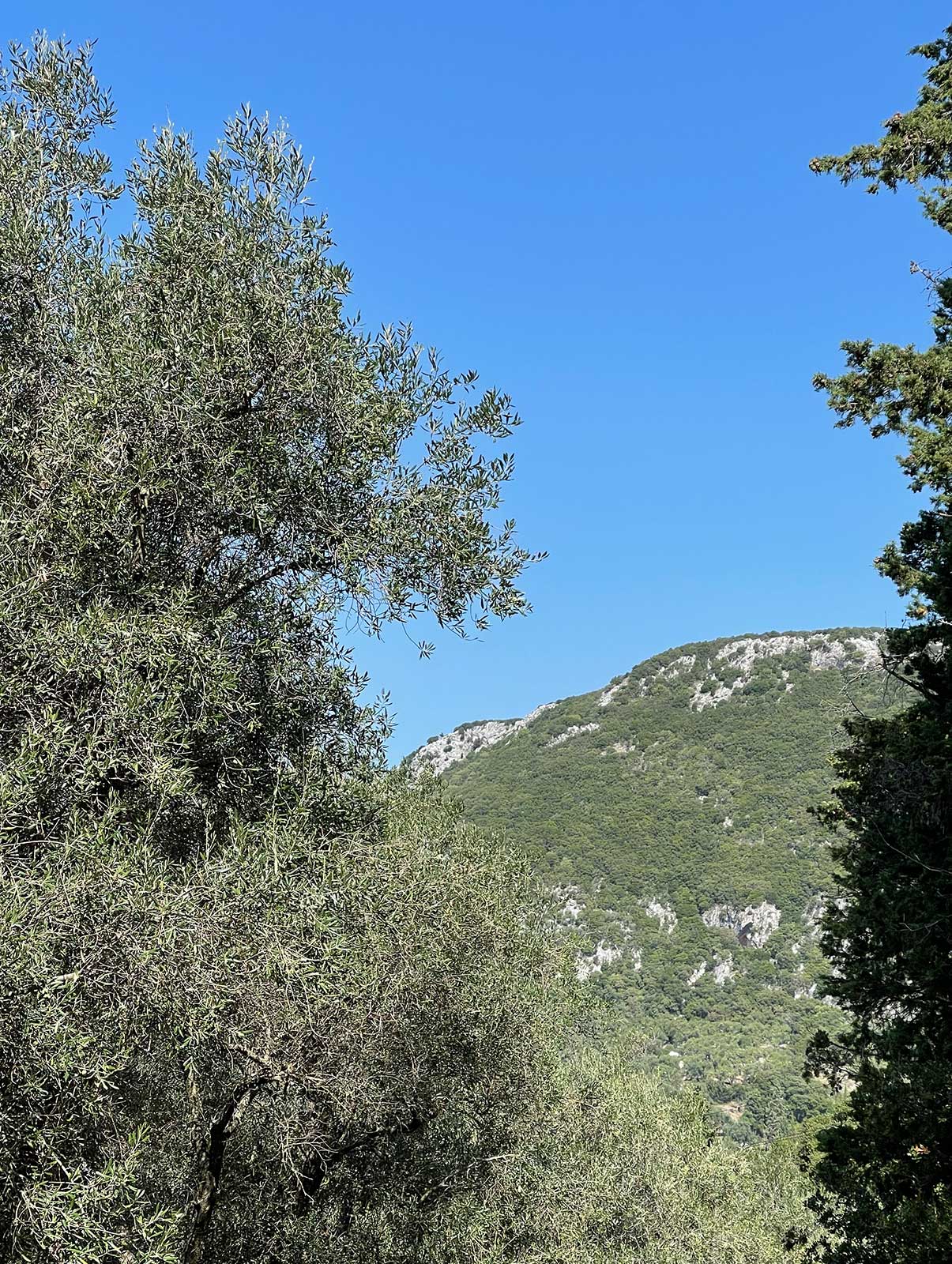
Walking through the olive groves that surround Kapella Apartments on an August morning, the heat of the day already building and the light coming through the canopy of the ancient trees in the shifting, dappled way that old olive groves produce, the fruit is visible among the leaves: small, hard, green, and entirely unprepossessing at this stage of its development. The olives of August look nothing like the finished product. They are months from maturity, months from the harvest that will take them from the tree to the mill, months from becoming the oil that will dress the salads and finish the dishes of the Corfiot kitchen throughout the following year.
But they are there, doing the invisible work of the season, accumulating through the August heat the oil content that the winter harvest will extract, and their presence on the trees in August is the most direct visible expression of the agricultural calendar that has governed life on this island for as long as the island has been inhabited.
The Olive and the Island
The relationship between Corfu and the olive is the most fundamental agricultural fact of the island’s existence. Four million trees, covering approximately a third of the total surface area of the island, define the landscape in a way that no other single element approaches. The silver-green shimmer of the olive canopy, visible from every elevated point on the island and from the air as the aircraft descends toward the runway, is the visual signature of Corfu that distinguishes it immediately from every other Greek island and from almost every other landscape in the Mediterranean.
This relationship did not develop spontaneously. It was created deliberately, by the Venetian administration that governed Corfu from 1386 to 1797 and that understood, with the commercial intelligence that made Venice the greatest trading power of its era, the value of a reliable agricultural surplus on an island whose strategic position at the entrance to the Adriatic made it one of the most important possessions in the Republic’s maritime empire.
The Venetian bounty system, which paid Corfiot farmers a fixed sum for every olive tree successfully established, transformed the island’s agricultural landscape over two centuries of incentivised planting. The trees planted during this period are still there, their massive, gnarled trunks and their extraordinary canopy spreads bearing witness to five centuries of continuous productive life. Walking through the older groves of the island’s interior in August, with the fruit already forming on the branches above, is to walk through a landscape created by a specific human decision made five hundred years ago and maintained, with varying degrees of deliberate care and simple continuity, ever since.
The August Olive: Development and Growth
The olive fruit that the August visitor to Corfu’s groves observes on the trees is the product of the spring flowering, the small, fragrant white blossoms that covered the trees in May and that have been developing since their pollination into the fruit that will not reach maturity until December or later. By August, the olives have reached a size that makes them clearly visible among the leaves, their surface hard and their colour the deep, slightly waxy green that the developing fruit maintains through the summer months before the first hints of colour change begin in October and November.
The oil content that makes the olive agriculturally valuable is accumulating through the August heat, the fruit drawing on the resources of the tree and the subsoil to synthesise the complex mixture of fatty acids and polyphenols that will define the character of the eventual oil. The deep roots of the ancient Corfiot trees, reaching into subsoil moisture reserves that the summer drought on the surface conceals, sustain this process through the months when rainfall is minimal and the surface ground is bone dry.
The Lianolia variety, the small-fruited olive that is endemic to the Ionian islands and that produces almost all of Corfu’s oil, is notable for the lateness of its harvest relative to other Greek and Mediterranean olive varieties. Where the Koroneiki of the Peloponnese and the Manaki of the Aegean islands are typically harvested in October and November, the Lianolia reaches peak ripeness only in December, January, and February, and the Corfiot growers’ preference for waiting until full maturity rather than harvesting early for maximum oil volume extends the season further into the winter than any other significant olive producing area in Greece.
The Groves in August Light
The aesthetic qualities of Corfu’s olive groves in August are as significant as their agricultural ones, and for the visitor to Kapella Apartments they are more immediately accessible. The groves that surround the property and cover the hillsides of the surrounding landscape are at the height of their summer expression in August: the canopy fully developed, the silver-green of the leaves catching the strong summer light in the constantly shifting, shimmering way that has made the Corfiot olive landscape one of the most celebrated natural visual environments in the Mediterranean.
The light in the groves at different hours of the August day is a study in the variety that a single species of tree can produce through the changing angle and quality of the sun. In the early morning, the low angle of the light creates long shadows between the trunks and catches the undersides of the leaves with a luminosity that makes the grove feel lit from within. At midday, the overhead sun reduces the shadows and the grove enters the deep, cool shade that its dense canopy produces, the filtered light creating an almost underwater quality of illumination that the August heat outside the grove makes particularly welcome. In the evening, the low western light turns the silver leaves to gold and the ancient trunks cast shadows of extraordinary length across the dry ground between them.
Walking through the groves at any of these hours produces its own specific sensory experience, and the guest at Kapella Apartments who takes the early morning walk through the surrounding olive country before the beach departure of the day gains access to the island’s most characteristic landscape in its finest August condition.
The Oil of August
The olive oil available to guests at Kapella Apartments during an August stay is the product of the previous winter’s harvest, the December, January, and February work of the island’s growers and mills that produced the oil now sitting in the bottles of the Corfu Town market and the village shops of the interior. By August, this oil has had several months to settle and develop from the intense, often peppery freshness of the newly pressed product into the more rounded, more complex oil that the months of bottle aging produce.
Buying Corfiot olive oil in August, from the market stallholder or the village shop owner who knows the producer and can tell you which grove the oil comes from, is buying the product of the trees that are visible from the property and from every road that leads through the surrounding countryside. The connection between the developing fruit on the August trees and the oil on the breakfast table is direct and specific, and the quality of that oil, at its best among the finest available anywhere in Greece, reflects the same ancient agricultural tradition that the groves themselves embody.
The Harvest Ahead
The August olive, small and green and months from maturity, is also the beginning of an anticipation. The harvest that the Corfiot agricultural calendar will produce in December, January, and February is already present in potential on the August trees, and the scale of that harvest, across four million trees covering a third of the island’s surface, gives the August groves a productive weight that the tourist season surrounding them does not diminish.
For guests at Kapella Apartments whose August stay is followed by the plan of a return in a different season, the knowledge of what the olive groves will be doing in December, the nets spread beneath the ancient trees, the families working through the winter days to collect the harvest that the August fruit will have become, adds a dimension to the August grove walk that the purely aesthetic appreciation of the light and the silver leaves does not exhaust.
The olive harvest of Corfu is not visible in August. But it is present in every tree that lines the roads from the property to the coast, in every grove that covers the hillsides visible from the garden, and in the oil that dresses every meal eaten at the outdoor table in the August warmth. The harvest is already happening, invisibly and slowly, in the fruit that the August light falls on every morning and that will be ready, in its own time and at the pace that the Lianolia variety has always set, when the winter comes to collect it.