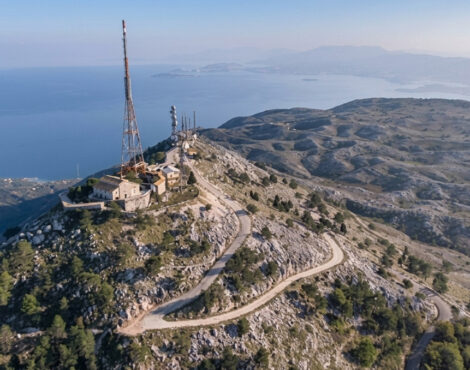
The Corfu coastline looks one way from the road above and an entirely different way from the water below. From the road, even from the best positioned viewpoints, the cliffs and coves of the northwest coast are beautiful in the manner of a landscape painting: composed, complete, viewed from a respectful distance that preserves their grandeur while keeping them at arm’s length. From a sea kayak, moving at water level through the same coastal terrain, the relationship between the observer and the landscape changes completely. The cliffs are no longer a backdrop but a presence, their scale and texture and the sound of the water against their base immediately and physically apparent. The coves that appear as small indentations in the coastline from above reveal themselves from the water as substantial spaces, their entrances wide enough for a kayak to pass, their interiors opening into chambers of limestone and light that no road-based exploration could locate or access.
Sea kayaking in Corfu is not simply a water sport. It is a method of seeing the island that the alternatives, the boat trip and the clifftop viewpoint and the beach visit, cannot replicate and that produces an experience of the coastline as intimate and specific as anything available on or near the water.
Why June
The conditions that sea kayaking requires, calm surface water, good visibility beneath the surface, manageable wind, and sufficient warmth for comfortable paddling, converge in June with a reliability that the earlier spring months cannot guarantee and that the height of summer occasionally compromises with the afternoon winds that build along the northwest coast in July and August.
June mornings on the Ionian are typically calm, the sea surface in the sheltered bays and coastal inlets as still as a lake, the water clarity sufficient to see the bottom at depths that make the experience of paddling over it genuinely vertiginous. The northwest coast, the finest kayaking terrain on the island, is at its most accessible in June, the sea conditions predictable and the coastal features visible in the crystalline early summer light with a definition that the haze of high summer sometimes reduces.
The boat traffic that affects the conditions around the most popular coastal sections in July and August is manageable in June, and the relative quiet of the water around the less visited sections of the northwest cliff means that the experience of paddling into a sea cave or rounding a headland to find a deserted cove is genuinely available rather than compromised by the presence of other vessels making the same discovery.
The Northwest Coast: The Premier Kayaking Terrain
The limestone coastline of northwest Corfu, between Paleokastritsa and the cape of Arillas to the north, provides the finest sea kayaking terrain on the island and some of the most rewarding in the entire Ionian region. The combination of dramatic cliff scenery, numerous sea caves and rock arches accessible only from the water, secluded beaches visible from the kayak but unreachable from the land, and water of extraordinary clarity creates conditions for coastal exploration that experienced kayakers consistently rate among the best they have encountered in the Mediterranean.
The sea caves of the northwest coast are the headline attraction for kayakers, and justifiably so. The limestone geology of the coast has produced, over millennia of wave action and chemical dissolution, a series of caverns and chambers in the cliff faces that range from shallow indentations a few metres deep to extended passages that penetrate the rock for significant distances and that open, in the most dramatic cases, into cathedral-like interior spaces where the light enters from above through collapsed sections of the cave ceiling and falls on water of a colour that the enclosing rock and the filtering of the light through the water column transforms into something entirely unlike the open sea outside.
Entering a sea cave by kayak, the craft low enough to pass beneath the cave entrance and the paddler close enough to the cave walls to read the texture of the limestone, is one of those experiences that the appropriate scale and speed of the kayak makes possible and that larger vessels, even small motorboats, cannot provide. The intimacy of the encounter, the cave walls close on both sides and the sound of the water amplified and transformed by the enclosing rock, is part of what makes kayaking the finest way to engage with this particular feature of the Corfiot coastline.
Guided Tours and Independent Exploration
The sea kayaking operators established on Corfu offer a range of experiences suited to different levels of experience and different approaches to coastal exploration. Guided tours, led by instructors who know the coastline in detail and can navigate safely to the most rewarding locations, are the recommended option for those without previous sea kayaking experience and for those whose priority is access to the finest locations rather than the development of independent paddling skills.
A typical guided half-day tour from a base near Paleokastritsa covers the sea caves and coves of the immediately surrounding coastline, providing an introduction to the techniques of sea kayaking alongside access to coastal features of considerable beauty. The full-day tours extend the range significantly, covering sections of coastline that require more paddling time to reach but that reward the additional effort with locations of exceptional remoteness and natural quality.
For experienced kayakers, independent hire provides the freedom to set their own itinerary and pace, exploring the coastline at the speed that proper investigation of each cave and cove requires rather than the pace that a guided group necessarily imposes. The operators who offer independent hire can advise on the sections of coastline most suited to the conditions on a given day and provide the safety information that responsible independent paddling in unfamiliar waters requires.
The Experience at Water Level
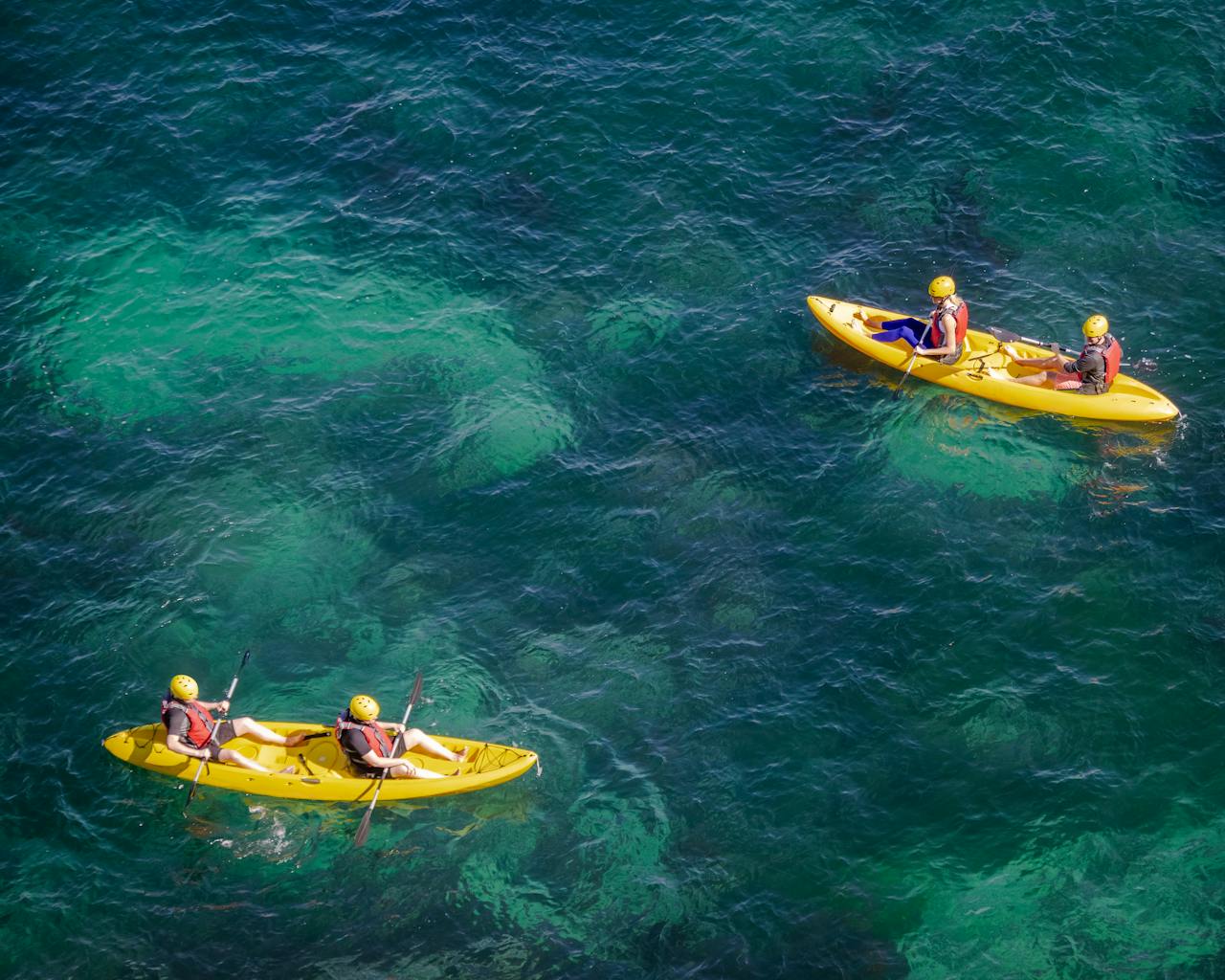
The most consistent and most specific pleasure of sea kayaking along the Corfiot coast in June is the experience of the water itself. Paddling over the clear Ionian in the early morning, the surface still and the bottom visible at depths that make the kayak appear to be floating in air rather than water, produces a quality of sensory experience that no other activity available on or near the island replicates.
The underwater world visible through the water column from the kayak is the rocky, varied terrain of the northwest coast’s inshore zone. Sea grass beds alternate with areas of bare rock and sand. Fish move through the water column in the unhurried manner of creatures that have no reason to regard a slow-moving kayak as a threat. Octopus occupy the rocky crevices along the cliff base. Sea urchins dot the shallower sections of the underwater terrain with a regularity that makes them one of the most immediately identifiable features of the Mediterranean inshore environment.
Stopping to swim from the kayak in one of the secluded coves, the craft pulled up on the beach or anchored in the shallows while the paddler enters the water, adds a dimension to the kayaking day that the pure paddling experience does not provide. Swimming in water that has been visible from the kayak for the duration of the approach, its colour and clarity evident before the first stroke, is swimming with a particular foreknowledge of what the water will feel like that land-based beach access cannot produce.
Practical Considerations for June
A June sea kayaking day on Corfu rewards some straightforward practical preparation. Sunscreen applied before launching and reapplied at the midday rest stop is essential: the reflected light from the water surface significantly increases UV exposure compared to land-based activities in the same conditions, and the June sun is considerably stronger than northern European visitors typically expect.
Water is the other essential. The physical effort of paddling, even at the leisurely pace of coastal exploration rather than competitive kayaking, produces perspiration that the cooling effect of the sea breeze may mask until dehydration is already beginning. Carrying sufficient water for the duration of the tour, replenished at the base if a guided tour includes a return to the launch point at midday, is the single most important practical preparation for a safe and comfortable day on the water.
The operators on the northwest coast can advise on current sea conditions and the sections of coastline most suited to June paddling, and their local knowledge, specific to the particular geography and the current weather patterns, is worth engaging before any independent kayaking excursion along the more exposed sections of the Corfiot coast.
Sea Kayaking and the Villa Kapella Experience
For guests at Villa Kapella, a sea kayaking day on the northwest coast represents one of the most distinctive and most specifically Ionian experiences available during a summer stay on the island. The combination of physical engagement with the natural environment, access to coastal features unavailable from the land, and the quality of the June conditions on the Ionian creates an experience that complements the beach days, the village drives, and the historical explorations that constitute the other layers of a complete Corfu holiday.
Returning to Villa Kapella after a full day on the water, salt-dried and pleasantly tired in the manner of a day spent entirely outdoors in good conditions, with the afternoon light on the garden and the evening meal still to come, is one of those simple accumulations of physical experience and natural beauty that the Ionian summer at its finest reliably provides.