Springtime Tavernas: Where Locals Actually Eat in March Corfu
March reveals Corfu’s authentic dining culture as locals reclaim restaurants dominated by tourists during summer months. The tavernas operating year-round serving neighborhood populations rather than seasonal visitors offer experiences fundamentally different from establishments existing purely for tourism. These family-run operations, often multi-generational businesses occupying same locations for decades, provide windows into genuine Greek food culture where cooking follows traditional methods, menus reflect seasonal availability, and atmosphere prioritizes comfort over Instagram aesthetics. Understanding where locals eat, what they order, and how dining culture operates during off-season enables accessing authentic experiences impossible during summer when tourist presence overwhelms local character even at traditionally authentic establishments.
Identifying Authentic Local Establishments
Distinguishing genuine local tavernas from tourist-oriented restaurants requires observing certain telling characteristics even before entering.
Location away from main tourist zones and waterfront promenades immediately suggests local orientation. Tavernas embedded in residential neighborhoods or village squares rather than prime tourist locations serve populations living nearby year-round. These placements sacrifice tourist foot traffic for local loyalty.
Greek-language signage and menus indicate primary clientele. Establishments catering mainly to foreigners feature multilingual signs and English menus prominently. Places serving locals often have Greek-only signage and menus, or English translations added almost as afterthought.
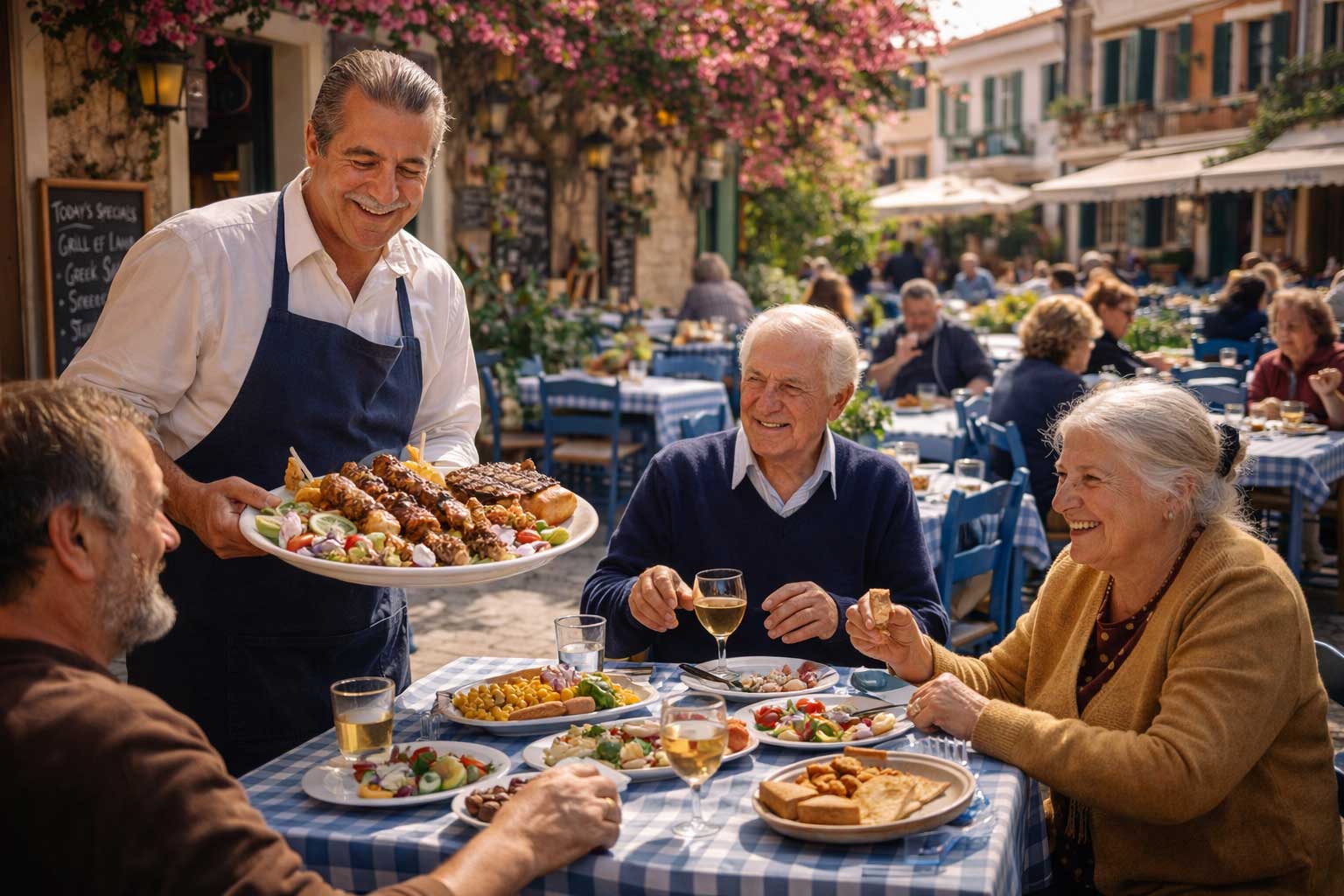
Clientele observation reveals taverna character unmistakably. Tables occupied predominantly by Greek speakers, including families with children and elderly residents, signal authentic local establishment. Tourist restaurants show opposite demographic with international visitors forming clear majority.
Opening hours following Greek rather than tourist patterns provide another indicator. Local tavernas might close Sunday entirely or Monday lunch, operate limited winter schedules, and serve dinner starting later (8-9 PM) matching Greek dining habits. Tourist places maintain continuous service accommodating foreign schedules.
Pricing, though requiring menu examination, reveals orientation. Local establishments price for Greek incomes while tourist restaurants charge what foreign markets bear. Comparing prices between establishments quickly reveals which category each occupies.
Simplicity in decor and presentation characterizes local tavernas. These prioritize food over ambiance, often appearing somewhat plain or dated. Tourist restaurants invest heavily in attractive decor, careful plating, and photogenic presentation understanding aesthetic expectations.
Seasonal closure patterns differ, with tourist restaurants shutting November through April while local tavernas operate year-round or close only January-February. March operation strongly suggests local rather than purely tourist orientation.
Seasonal March Menus
Local tavernas’ March menus reflect seasonal availability and traditional spring preparations differing from standardized tourist restaurant offerings.
Fresh artichokes feature prominently in multiple preparations. A la polita (Constantinople style) with potatoes, carrots, dill and lemon creates classic spring dish. Fried artichokes, braised versions, and artichoke salads all appear depending on taverna specialties. The abundance and variety reflect seasonal peak availability.
Broad beans (koukia) both fresh and dried appear in various forms. Fresh beans braised with tomatoes and herbs represent quintessential spring preparation. Puréed broad bean dips, broad bean salads, and beans combined with other spring vegetables all demonstrate traditional cooking adapting to seasonal abundance.
Wild greens (horta) gathered from fields appear boiled and dressed simply with lemon and olive oil. Different tavernas serve different greens depending on what’s locally available. The bitter, earthy flavors appeal particularly to Greeks though foreign palates sometimes require adjustment.
Lamb dishes increase as spring lamb becomes available approaching Easter. While year-round tavernas serve lamb continuously, quality and availability peak during spring. Various preparations from simple grilled chops to elaborate stews showcase this premium seasonal protein.
Fresh fish availability varies by weather and fishing success but generally good during March. Smaller local fish rather than expensive premium species appear on local taverna menus. These humbler fish, cooked simply, offer excellent eating at reasonable prices.
Seasonal vegetables including lettuce, radishes, spring onions, and fresh herbs create salads showcasing spring’s tender produce. These salads, simpler than elaborate composed salads in tourist restaurants, highlight ingredient quality through minimal preparation.
Traditional preparations including pastitsada, sofrito, and bourdeto maintain menu presence year-round but improve during March as cooks’ attention returns after winter quiet and ingredient quality peaks with spring produce.
Lenten menu modifications appear at tavernas serving observant clientele. Fasting dishes eliminating meat and dairy accommodate Orthodox traditions particularly as Easter approaches. These preparations, though religiously motivated, offer delicious vegetable and seafood options.
Taverna Culture and Dining Etiquette
Understanding how local tavernas operate socially and practically enables comfortable authentic experiences avoiding misunderstandings or awkwardness.
Seating yourself versus waiting to be seated varies by establishment. Many local tavernas expect customers choosing own tables particularly in outdoor areas. Observing what others do or asking “boroume?” (can we?) while gesturing toward table clarifies.
Menu presentation, when written menus exist, may be Greek only. However, many traditional tavernas operate without printed menus, the proprietor or server reciting available dishes. This oral menu tradition, though challenging for non-Greek speakers, represents authentic practice worth experiencing.
Ordering assistance from staff typically available and appreciated. Asking “Ti sinistáte?” (What do you recommend?) invites suggestions. Staff generally honest about specialties and daily highlights rather than upselling expensive items.
Bread arrives automatically and is charged per person regardless of consumption. This practice, standard in Greek tavernas, means bread charge appears on bill even if untouched. The bread, fresh and often excellent, worth eating regardless.
Shared dining represents Greek norm with multiple dishes ordered for table and everyone sampling everything. This communal approach works perfectly with Greek meze and main dish portions designed for sharing rather than individual consumption.
Wine service, particularly house wine, comes in bulk carafes or bottles without extensive wine list presentation. House wine, typically local and quite drinkable, offers excellent value. Ordered by volume (half kilo/kilo) or simply “krasi” with quantity indicated.
Pacing differs from tourist restaurant expectations. Meals proceed leisurely without rush. Courses arrive as ready rather than strict sequence. Lingering over food and conversation represents normal behavior rather than occupying needed tables.
Bill presentation requires requesting unlike tourist restaurants bringing check promptly. Signaling server and saying “To logariasmo, parakalo” (The bill, please) initiates payment. Bill typically presented in small tray or folder.
Tipping practices at local tavernas more modest than tourist establishments. Rounding up or leaving 5-10% considered adequate versus 10-15% common at tourist restaurants. Service charge rarely included, but generous tipping not expected like American standards.
Notable Local Tavernas by Region
Specific establishments exemplifying authentic local dining character appear throughout Corfu, though identifying them requires local knowledge or exploration.
Corfu Town neighborhoods outside Old Town tourist zone contain numerous local tavernas. Areas around New Port, toward Garitsa, and in residential districts host establishments where workers, residents, and local families dine regularly.
The small tavernas near San Rocco Square and municipal market attract market workers, shoppers, and neighborhood residents. These simple operations, open primarily lunch, serve fresh ingredients sourced directly from adjacent market creating exceptional quality at minimal prices.
North coast villages including Kassiopi, Agios Stefanos, and Roda each contain local tavernas operating year-round distinguishable from summer tourist restaurants. Village squares’ simple tavernas often represent best options.
West coast mountain villages particularly Pelekas, Sinarades, and Vatos maintain traditional tavernas where local families dine Sunday lunches and celebrate occasions. These establishments, though welcoming visitors, retain authentic character through primarily local clientele.
Interior agricultural villages throughout central Corfu host tavernas serving farming communities. These humble establishments, rarely mentioned in guides, often provide most authentic and economical dining experiences for those making effort reaching them.
Southern region including Lefkimmi town contains local tavernas serving permanent population rather than beach tourists. The agricultural economy supporting year-round community sustains dining establishments maintaining traditional character.
Specific recommendations risk becoming tourist draws destroying authentic character being recommended. However, general principle holds: tavernas away from beach areas, in working neighborhoods or villages, with primarily Greek clientele offer most authentic experiences.
What Locals Order
Observing what Greeks actually eat versus what tourists order reveals interesting patterns and guides more authentic menu selections.
Appetizers (mezes) in multiple small portions rather than single large starter represents common Greek approach. Ordering several mezes for sharing enables sampling variety while matching Greek dining patterns.
Simple grilled fish or meat rather than elaborate preparations appeals to local tastes. Greeks generally prefer ingredients speaking for themselves through quality and freshness rather than complex sauces masking flavors.
Seasonal vegetables featured prominently in local orders reflect both tradition and economy. Greeks eat vegetables enthusiastically, often ordering multiple vegetable dishes rather than treating them as mere accompaniment to protein.
House wine rather than expensive bottles represents overwhelmingly common choice. Greeks drink wine as everyday beverage rather than special occasion item, preferring drinkable local wines at reasonable prices over premium labels.
Traditional preparations including stews, braised dishes, and classic Greek recipes get ordered more frequently by locals than tourists seeking “authentic” dishes actually uncommon in everyday eating. The real authentic eating involves humble traditional dishes rather than exotic rarities.
Bread consumption notably higher among Greeks who use it mopping up sauces, oils, and juices rather than leaving untouched as many tourists do. Wasting delicious olive oil or tomato sauce strikes Greeks as odd when bread perfectly captures these flavors.
Fruit for dessert rather than elaborate sweets represents common conclusion to meal. Greeks often skip heavy desserts entirely or share single portion while finishing with seasonal fruit.
Coffee, specifically Greek coffee or espresso, invariably follows meal. The coffee service, leisurely and social, extends dining experience rather than hurrying departure. This post-meal coffee ritual represents important cultural practice.
Economic and Social Benefits
Dining at local tavernas rather than tourist restaurants creates beneficial impacts beyond personal experience quality and cost savings.
Economic support flows directly to local families rather than international restaurant corporations or absentee owners. Small family tavernas represent genuine local businesses whose success benefits community directly.
Employment practices at family tavernas often involve actual family members rather than minimum-wage seasonal workers. Supporting these establishments maintains family livelihoods and traditional business models.
Ingredient sourcing from local producers rather than international food service suppliers creates multiplier effects supporting Corfu agriculture and food production. Local tavernas buying from nearby farms and fishermen strengthen local food systems.
Cultural preservation through maintaining traditional cooking methods, recipes, and dining practices depends partly on economic viability. Customers appreciating and supporting traditional tavernas enable their continuation versus closure or conversion to generic tourist restaurants.
Social integration opportunities arise through dining among Greeks rather than exclusively with other tourists. These cross-cultural encounters, however brief, create mutual understanding impossible in tourist bubbles.
Authentic experience quality for visitors seeking genuine cultural understanding rather than sanitized tourist versions creates satisfaction money cannot buy at any price in tourist establishments.
Price fairness benefiting budget-conscious travelers enables extending stays or allocating resources to other experiences. The cost savings from local taverna dining versus tourist restaurant prices prove substantial over multiple meals.
Challenges and Considerations
Honestly addressing challenges dining at local tavernas prevents unrealistic expectations while enabling informed decisions about when accepting these challenges worthwhile.
Language barriers create real difficulties when neither party speaks other’s language. While usually manageable through pointing, gestures, and patience, some visitors find this stressful rather than charming. Translation apps help though don’t eliminate all communication challenges.
Menu limitations compared to tourist restaurants’ extensive offerings sometimes disappoint those expecting unlimited choice. Local tavernas typically offer smaller menus focusing on what they do well rather than attempting comprehensive international cuisine.
Service style differences including less attentive table service than tourist-oriented establishments sometimes interpreted as rudeness or indifference. Understanding this reflects different service culture rather than poor service prevents taking offense at normal Greek taverna operations.
Ambiance simplicity occasionally disappoints those expecting romantic or Instagram-worthy settings. Local tavernas prioritize food over decor meaning plain, functional spaces rather than carefully designed atmospheres.
Cleanliness standards, while generally acceptable, may not meet obsessive hygiene expectations some travelers maintain. Greek health standards differ somewhat from other countries though serious issues rare at established reputable tavernas.
Payment flexibility limited as many local tavernas accept cash only. Carrying adequate euros prevents awkward situations though most larger establishments now accept cards.
Hours of operation following Greek schedules means early dinner (before 7 PM) proves difficult as kitchens not yet operating. Adjusting to later Greek dining times necessary for full experience.
March dining at local Corfu tavernas provides authentic cultural experiences impossible during tourist season when even traditionally local establishments adapt to international clientele demands and expectations. These humble family operations, serving neighborhood populations year-round, maintain cooking traditions, seasonal menus, and social atmospheres reflecting genuine Greek food culture rather than commercial tourism adaptation. The experiences, though sometimes challenging through language barriers or limited menus, reward those making effort with superior food, dramatically lower prices, and authentic cultural engagement impossible in sanitized tourist versions. Those seeking genuine Corfu rather than performative Greek restaurant theater find answers in simple tavernas where locals gather, traditional dishes appear fresh from kitchen, and dining represents daily cultural practice rather than exotic tourist attraction, understanding that authenticity sometimes arrives through plastic tablecloths and handwritten Greek menus rather than carefully curated aesthetic experiences designed for social media rather than actual eating, and that best food often comes from grandmothers cooking methods learned from their grandmothers rather than chefs trained in technique without tradition, served in spaces designed for community gathering rather than tourist performance, priced for neighbors rather than visitors, creating experiences valuable precisely because they’re genuine rather than because they’re picturesque.