The French rule in Corfu constitutes one of the most significant and transitional periods in the island’s history. Although French domination lasted only a few years (1797-1799 and 1807-1814), the changes it brought left an indelible mark on the political, social, and economic structure of Corfu. The abolition of Venetian rule, the burning of the Libro d’Oro, the introduction of new institutions, and the development of the island under French influence shaped Corfu’s identity during its transition from the feudal era to modern administration.
For more than four centuries (1386-1797), Corfu was part of the Most Serene Republic of Venice. The Venetians had imposed an aristocratic system of governance based on a strict hierarchy, where the local aristocracy held the privileges of power. The lower classes had no real political participation, while the economy was controlled by a few powerful families.
However, in 1797, Venice was dissolved by Napoleon Bonaparte, who signed the Treaty of Campo Formio, handing over the territories of the Venetian Republic to the French. Thus, Corfu and the rest of the Ionian Islands came under the control of the French Republic. The arrival of the French in Corfu was met with enthusiasm, particularly from the lower classes, who saw the French as liberators. The French, as bearers of the ideals of the French Revolution (Liberty, Equality, Fraternity), sought to overturn the old feudal regime and establish a new, democratic administration.
One of the most emblematic moments of the first French occupation was the burning of the Libro d’Oro on July 8, 1797. The Libro d’Oro was the register in which the aristocratic families of Corfu and the other Ionian Islands were recorded. Only those listed in it had the right to participate in governance and hold the most important offices. In an effort to abolish the aristocracy and implement the principles of equality, the French burned it, symbolizing the end of the old feudal system. This act was welcomed enthusiastically by the lower social classes, who saw the fall of the Venetian aristocracy as an opportunity for social mobility. However, it caused discontent among the nobles, who felt they were losing their privileges and began to resist French policies.
During the first French occupation, the French introduced significant reforms: they implemented a new democratic system of governance in which, theoretically, all citizens had equal rights. They abolished feudal privileges and imposed new taxes. They attempted to modernize administration and education by introducing new ideas and establishing schools.
However, the French presence was also accompanied by excessive taxation and compulsory contributions, which provoked reactions. Additionally, the pro-Western stance of the French brought them into conflict with the Orthodox Church and the conservative population of Corfu.
In 1799, Russia and the Ottoman Empire took advantage of the discontent among the Corfiots and expelled the French. In their place, they established the Septinsular Republic, a semi-autonomous Greek state under Russo-Turkish protection.
In 1807, with the Treaty of Tilsit, Corfu once again came under French control, this time under Napoleon. Unlike the first French period, the second was more organized and effective: the French strengthened the island’s fortifications, recognizing its strategic importance. They promoted infrastructure projects, improved education, and modernized administration. They established new public services and developed trade. Corfu became a significant military center of the French Empire, as Napoleon considered it “the strongest fortress in the Mediterranean.”
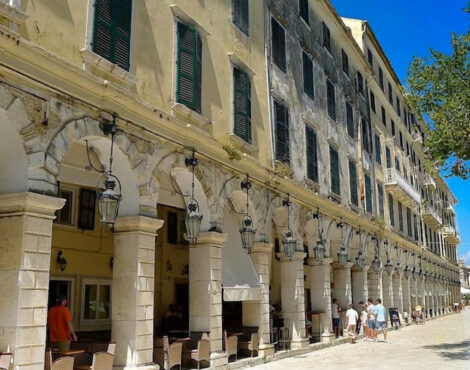
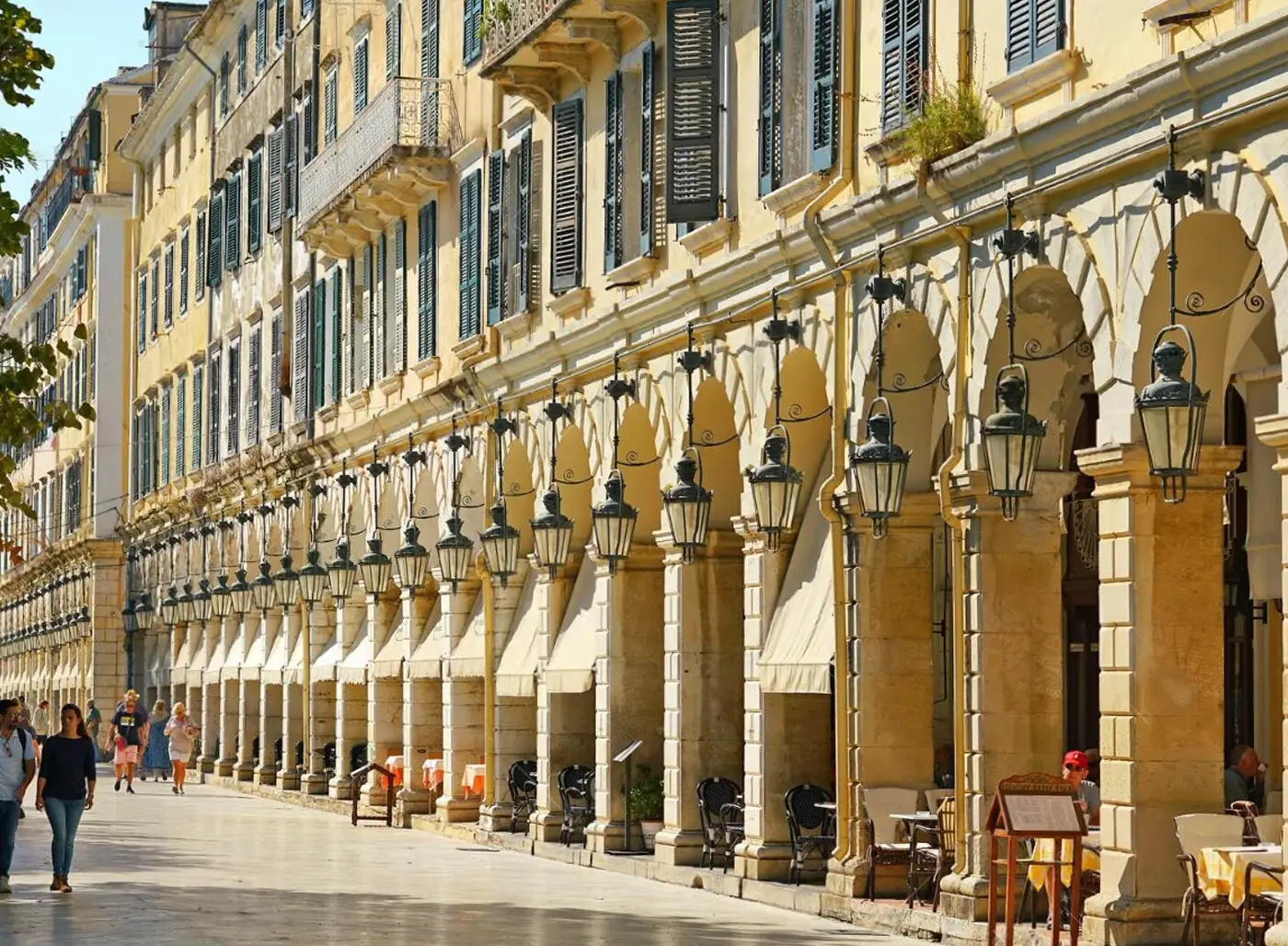
The French rule in Corfu was a period of great changes and reforms. The French brought with them the ideas of the Enlightenment and the French Revolution, overturning the Venetian feudal system and promoting a more modern way of governance. Although French rule was brief, it left a profound influence on the island, shaping its subsequent course. Corfu, with its rich history, continues to bear the marks of the French presence, both in its architecture and in the mentality of its inhabitants.