
Today, while commercial almond production has declined, many elderly Corfiots maintain ancestral trees out of respect for tradition. These groves stand as living monuments to an agricultural heritage that shaped the island’s landscape and sustained its communities for generations.
When and where to find almond blossoms across Corfu in February
Almond trees begin their spectacular display across Corfu from late January through mid-March, with February representing the peak blooming period. The exact timing depends on winter temperatures and microclimates, but visitors can typically expect the most abundant blossoms during the first three weeks of February.
The island’s central and southern regions offer the most accessible viewing locations. The rolling countryside around Agios Mattheos showcases extensive almond groves interspersed with olive trees, creating stunning pink and white canopies against silvery-green foliage. The area near Kavos, despite its reputation as a summer resort, transforms into a tranquil landscape dotted with flowering almonds during winter months.
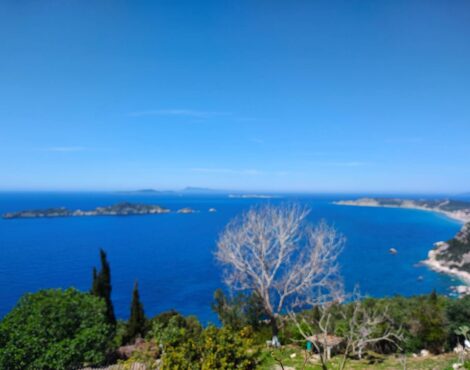
Northern Corfu presents equally impressive displays, particularly around the villages of Sidari and Acharavi. The coastal roads between these settlements wind through agricultural land where almond orchards thrive in the fertile soil. Traditional villages like Peritheia, nestled in the mountain slopes, offer dramatic backdrops where blossoms contrast against stone architecture and distant sea views.
For the most rewarding experience, explore the minor roads connecting inland villages. The routes between Liapades and Doukades, or the countryside surrounding Temploni, reveal hidden groves where almond trees grow semi-wild along field boundaries and hillsides. Early morning light provides optimal conditions for photography, when dew enhances the delicate petals and soft Mediterranean sunlight illuminates the landscape.
Understanding the blooming cycle and ideal viewing conditions
The almond blooming cycle in Corfu typically begins in mid to late January and reaches its peak during the first two weeks of February. This timing can shift slightly depending on winter temperatures and rainfall patterns. The trees require a period of winter dormancy, followed by warmer days that trigger the flowering process. Once conditions align, the delicate pink and white blossoms emerge rapidly, transforming the landscape within days.
Optimal viewing conditions occur on clear, sunny mornings when the soft light enhances the petals’ subtle colors. The blossoms appear most vibrant between 9 AM and noon, before the midday heat intensifies. Cloudy days can also offer excellent viewing opportunities, as diffused light reduces harsh shadows and creates an ethereal quality around the blooming trees.
Temperature plays a crucial role in the duration of the bloom. Mild February weather, with daytime temperatures between 12 and 16 degrees Celsius, allows blossoms to remain on the trees for up to three weeks. However, heavy rain or strong winds can shorten this window significantly, stripping petals prematurely. For this reason, visitors should plan their trips for early February to maximize their chances of witnessing the full spectacle.
The most concentrated displays appear in rural areas where almond groves remain undisturbed, particularly in the island’s northwestern and central regions where traditional cultivation practices continue.
Other early spring flowers that accompany almond blossoms
While almond trees steal the spotlight in February, they share the stage with several other resilient flowers that brave Corfu’s early spring weather. These botanical companions create a tapestry of color across the island’s countryside, signaling nature’s gradual awakening.
Cyclamen are among the first to appear, their delicate pink and white petals emerging from rocky crevices and shaded woodland floors. These hardy perennials thrive in Corfu’s mild winter climate, often blooming as early as January and continuing through March. Their distinctive swept-back petals and marbled leaves add subtle elegance to the underbrush.
Narcissus and wild crocus species dot meadows and hillsides with splashes of yellow and purple. The indigenous Crocus olivieri, endemic to the Ionian region, produces striking lilac blooms that naturalize across grassy areas. Meanwhile, clusters of narcissus release their sweet fragrance near streams and in dampened valleys.
Anemones bring vibrant reds, purples, and whites to roadside verges and olive groves. These cheerful flowers open their petals wide on sunny February days, closing protectively when clouds gather. Oxalis species, with their clover-like leaves and bright yellow flowers, carpet ground beneath the almond trees, creating a golden understory that complements the white and pink blossoms above.
Photography tips for capturing Corfu’s almond blossom season
Photographing almond blossoms requires attention to timing and light. Visit orchards during the golden hours, shortly after sunrise or before sunset, when soft, diffused light enhances the delicate pink and white petals. Overcast days also work beautifully, providing even illumination that prevents harsh shadows and brings out subtle color variations.
Use a macro lens or your camera’s macro mode to capture intricate details of individual flowers. Focus on the stamens and petals to reveal the blossoms’ architectural beauty. A shallow depth of field, achieved with a wide aperture like f/2.8 or f/4, creates a dreamy background blur that isolates your subject from distracting elements.
For wider landscape compositions, include contextual elements that tell Corfu’s story. Frame almond trees against weathered stone walls, traditional villages, or the azure Ionian Sea in the distance. These environmental shots convey the island’s character beyond simple flower portraits.
Wind can challenge blossom photography, so increase your shutter speed to at least 1/250th of a second to freeze movement. Alternatively, embrace motion by using slower speeds around 1/30th of a second for artistic blur effects.
Consider the background carefully. Position yourself to shoot against clean skies or softly blurred vegetation. Dark backgrounds, such as shadowed hillsides, make pale blossoms stand out dramatically. Always check for distracting branches or cluttered elements before pressing the shutter.
Traditional festivals and customs celebrating the almond harvest
The almond harvest in Corfu has long been intertwined with local customs and celebrations that mark the transition from winter to spring. While the island does not host large-scale festivals dedicated exclusively to almonds like some mainland regions, the flowering and harvesting periods are acknowledged through smaller community gatherings and religious observances.
In rural villages, families traditionally gather to collect fallen almonds and prune trees after the harvest, activities that often become social occasions with shared meals featuring almond-based sweets. Koufeta, sugar-coated almonds, hold particular significance in Corfiot celebrations and are prepared in homes during this season for upcoming spring weddings and baptisms.
The timing of almond blossoms coincides with pre-Lenten festivities, and their appearance is seen as nature’s confirmation that Carnival season has arrived. Local churches may incorporate almond branches into decorations for services celebrating the Presentation of Christ, which falls on February 2nd and traditionally marks the point when winter’s grip begins to loosen.
In some villages, the first almond blossoms are still regarded with quiet reverence, as older generations remember when the successful flowering predicted the year’s agricultural fortune. This connection between almond trees and seasonal turning points remains embedded in Corfiot agricultural consciousness, even as modern farming practices have evolved.