March Markets: Seasonal Produce and the Return of Local Vendors
March transforms Corfu’s markets as winter’s limited selection gives way to spring abundance and vendors who scaled back during quiet months return with renewed energy and expanding inventories. The produce displays shift from storage crops to fresh spring vegetables, from citrus to early berries, from greenhouse-forced items to genuine seasonal abundance. Shopping these markets, whether in Corfu Town’s permanent facilities or village squares hosting weekly gatherings, connects directly to island’s agricultural rhythms and cultural practices that shaped Greek life for millennia. Understanding what March brings, how markets operate, and what seasonal treasures appear enables experiences far richer than supermarket convenience while supporting small-scale agriculture and maintaining economic and social traditions deserving preservation.
The Market Calendar and Locations
Corfu Town’s main municipal market operates year-round providing consistent access to fresh produce, meat, fish, and other provisions. The covered market building near San Rocco Square hosts permanent vendors whose stalls represent multi-generational businesses. March sees this market expanding beyond core winter operations as seasonal variety increases.
Morning hours, particularly 7-11 AM, see peak activity and best selection. Arriving early ensures freshest items and full choice before popular items sell out. The market atmosphere during these hours, busy with housewives, restaurant buyers, and local shoppers, provides authentic cultural immersion.
Saturday morning market at New Port area represents larger weekly event attracting vendors from across island. This open-air market, weather permitting, offers extensive produce, clothing, household goods, and miscellaneous items. The scale and variety exceed daily market creating event atmosphere beyond simple shopping.
Village markets occur on rotating schedules throughout island. These smaller gatherings, typically weekly or bi-weekly, serve local populations while attracting vendors selling specific products. Finding these requires local knowledge or asking at tourist information, but they reward discovery with authentic rural market experiences.
Seasonal vendor return becomes noticeable in March as producers who limited operations during winter quiet resume fuller participation. Fresh vegetable growers, flower vendors, and specialty producers reappear creating expanded market variety signaling tourism season’s approach.
Afternoon markets, though less common, occasionally operate selling specific products or in particular locations. These tend toward prepared foods, flowers, or specialty items rather than full produce markets.
Spring’s Seasonal Abundance
March produce reflects spring’s genuine arrival with vegetables and fruits impossible during winter or summer demonstrating Mediterranean agriculture’s seasonal rhythms.
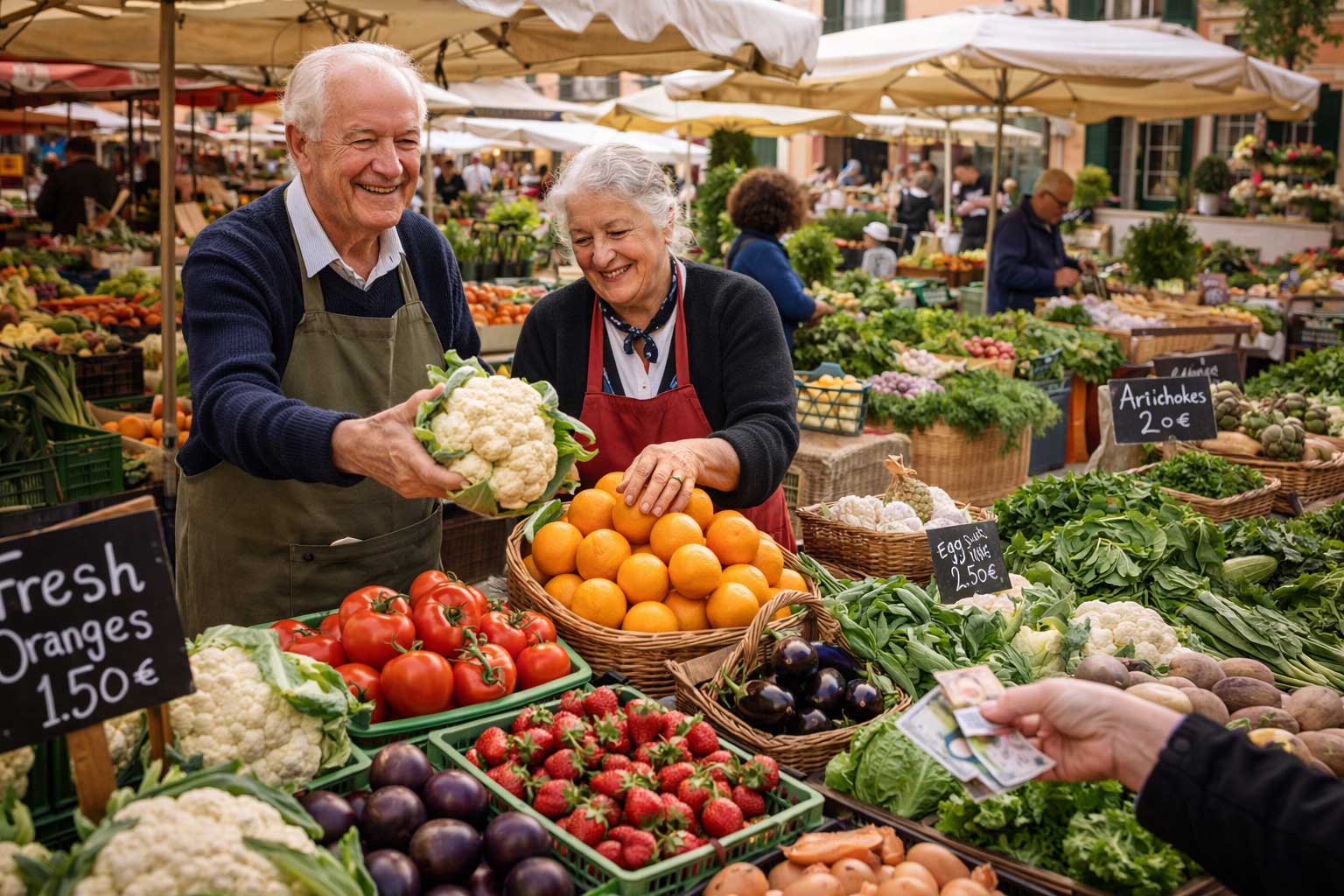
Artichokes reach peak season, the tender spring hearts prized for eating raw, braised, or fried. Corfu’s artichokes, grown traditionally without excessive chemical inputs, develop concentrated flavor and tenderness superior to industrial production. Vendors display them with stems and leaves intact, the full vegetable conveying freshness impossible with trimmed supermarket versions.
Preparation advice from vendors helps unfamiliar shoppers learning traditional cooking methods. Most vendors, passionate about their products, happily explain selection, storage, and cooking techniques. This knowledge transmission, informal yet valuable, connects shoppers to culinary traditions.
Broad beans (koukia) appear fresh in pods, the young beans eaten raw with salt or cooked in various preparations. These spring legumes, completely different from dried versions available year-round, represent seasonal treat unavailable outside narrow window.
Fresh peas, both garden variety and sugar snap types, arrive in markets as local production begins. The sweetness of just-picked peas vastly exceeds frozen or stored equivalents. Vendors often let children sampling raw peas, the natural sweetness making vegetables appealing even to reluctant young eaters.
Wild greens (horta) gathered from fields and hillsides appear in bundles at market. These foraged vegetables, including multiple species most foreigners cannot identify, represent traditional food source still valued for superior nutrition and flavor. Knowledgeable vendors explain cooking methods for unfamiliar varieties.
Wild asparagus, significantly different from cultivated varieties, commands premium prices reflecting labor-intensive gathering. The thin, intensely flavored stalks require knowledge locating in wild, making them expensive but highly prized delicacy.
Lettuce and salad greens reach prime quality as spring conditions create tender, flavorful leaves. Multiple varieties including romaine, butterhead, and local types offer diversity beyond supermarket iceberg lettuce monotony.
Radishes, spring onions, and other quick-maturing vegetables appear abundantly. These crops, grown easily in small plots, represent accessible agriculture for small-scale producers supplementing income through market sales.
Citrus fruits continue abundance though season wanes. Late oranges, lemons, and remaining kumquats offer last opportunities before summer’s citrus absence. Prices often drop as growers clear inventory before season ends.
Strawberries begin appearing, initially expensive as supply limited but prices dropping as season progresses. Corfu’s strawberries, though smaller than giant industrial varieties, deliver superior flavor and fragrance.
Fresh herbs including parsley, dill, cilantro, and others reach peak quality. The bundles, far larger and fresher than supermarket packages, sell cheaply while providing superior flavor and keeping quality.
The Social Theater of Market Shopping
Greek markets operate as social spaces beyond mere commercial transactions, understanding these social dimensions enhances shopping experience while demonstrating cultural competence.
Vendor-customer relationships, particularly with regular customers, involve conversation, catching up on news, and social bonding beyond simple buying and selling. New customers building rapport through repeated purchases gradually join these relationships, the vendors remembering preferences and offering special selections.
Bargaining customs vary by market and vendor. Tourist-oriented areas expect fixed prices while wholesale markets or large-quantity purchases may involve negotiation. Reading social cues determines appropriateness. When bargaining acceptable, it proceeds good-naturedly without aggressive confrontation.
Product sampling, particularly produce, generally permitted within reason. Vendors expect customers wanting to assess quality before purchasing. However, excessive sampling without purchase intention considered rude. Tasting one or two items before buying acceptable; treating market as free buffet is not.
Competitive vendor comparison while respectful requires discretion. Openly comparing prices or quality between adjacent vendors can offend. Moving between stalls examining options without announcing comparisons maintains social harmony.
Children’s presence and participation in shopping teaches next generation market culture. Vendors typically friendly toward children, offering samples or small gifts creating positive associations. These intergenerational experiences transmit cultural knowledge practically.
Language challenges require patience and creativity. Pointing, using fingers indicating quantity, and calculator displays showing prices enable transactions without shared language. Many vendors appreciate attempts at Greek, however basic, showing respect for local culture.
Payment customs typically involve cash transactions with vendors making change. Card payment rare except permanent established stalls. Having appropriate denominations prevents change-making difficulties and speeds transactions.
Quality Assessment and Selection
Learning to assess produce quality like experienced Greek shoppers develops through observation and practice, these skills improving shopping outcomes substantially.
Visual inspection examines color, size uniformity, and absence of blemishes. However, some cosmetic imperfection acceptable and often indicates minimal chemical treatment. Obsession with perfect appearance reflects industrial agriculture standards rather than traditional quality markers.
Physical examination through gentle squeezing assesses firmness and ripeness. Tomatoes should yield slightly, onions feel solid, greens show no wilting. Vendors expect reasonable handling though excessive roughness or damaging products brings reproach.
Fragrance, particularly for herbs, strawberries, and certain vegetables, indicates freshness and quality. Lack of scent suggests age or inferior storage. Fresh products smell intensely of themselves rather than neutrally.
Asking vendors about harvest timing and origin provides information. Most produce picked within 24-48 hours for market, ensuring freshness supermarkets rarely match. Local production guarantees seasonal appropriateness and minimal transportation impact.
Seasonal alignment means March shoppers avoid greenhouse tomatoes, imported asparagus, and other out-of-season items. Buying what’s naturally abundant ensures quality, value, and environmental responsibility.
Quantity purchasing reflects Greek shopping patterns of frequent smaller purchases rather than weekly mega-shopping. Buying only what needed for day or two ensures consuming at peak freshness rather than refrigerated storage degrading quality.
Economic and Agricultural Context
Understanding markets’ economic role reveals their importance beyond mere shopping convenience, connecting to small-scale agriculture preservation and rural livelihoods.
Small producer access to markets provides essential sales channel impossible otherwise. Farmers cultivating few acres cannot access wholesale markets or negotiate with supermarket chains. Direct selling at markets enables economic viability for operations too small for conventional commercial channels.
Price premiums for quality and freshness allow small producers competing despite lacking industrial agriculture’s economies of scale. Consumers willing paying more for superior products support sustainable small-scale agriculture preserving landscapes and practices industrial farming eliminates.
Local economic circulation keeps money within community rather than extracting to corporate headquarters. Purchasing from local vendors supports Corfu families and businesses rather than international food corporations.
Seasonal employment for vendors and support workers provides income supplementing agricultural production or other irregular work. Market operations, though not generating wealth, contribute to household economies particularly in rural areas.
Agricultural diversity maintenance results from market demand for variety. Small producers growing diverse crops rather than monoculture find markets for specialized or unusual items impossible in wholesale systems demanding uniformity and volume.
Genetic diversity preservation occurs incidentally as small farmers maintain traditional varieties and heirloom seeds. Markets accepting varied appearances and sizes enable growing diverse genetics impossible under standardized commercial requirements.
Urban-rural connections maintained through direct producer-consumer interactions preserve relationships and understanding between city and countryside. These connections, though economically motivated, create social and cultural bonds beyond pure commerce.
Cultural Preservation and Transmission
Markets serve cultural functions extending beyond economic transactions into knowledge transmission and tradition maintenance.
Culinary knowledge sharing as vendors explain unfamiliar items, preparation methods, and traditional recipes. These informal cooking lessons, embedded in purchasing decisions, transmit traditional cuisine more effectively than cookbooks.
Seasonal awareness developing through market shopping connects consumers to agricultural cycles and natural rhythms. Modern supermarkets’ year-round everything erases seasonal consciousness; markets restore it through availability patterns reflecting actual growing seasons.
Product diversity exposure introduces consumers to vegetables, fruits, and preparations unknown in standardized commercial food systems. This diversity, both gustatory and cultural, enriches diet and experience beyond industrial food’s monotony.
Language practice for non-Greek speakers attempting market transactions develops practical vocabulary and cultural understanding. These real-world communication needs motivate language learning more effectively than classroom study.
Intergenerational mixing as elders, middle-aged, and young shoppers interact creates community across age differences increasingly rare in segregated modern society. Markets’ cross-generational character maintains social cohesion.
Traditional measurement and transaction methods including use of metric weights, Greek numerical conventions, and cash-based commerce maintain practices modernization elsewhere eliminated. These continuities, though seemingly trivial, preserve cultural distinctiveness.
Food system understanding develops through seeing whole vegetables with roots and leaves, meeting actual producers, and learning growing seasons. This agricultural literacy, lost in supermarket shopping, proves valuable for informed consumption choices and environmental awareness.
Practical Shopping Guidance
Successfully navigating Corfu markets requires understanding certain practical considerations improving experience and outcomes.
Timing arrival for optimal selection versus best prices creates decision. Early arrival ensures full selection and freshest items. Late morning or afternoon brings price reductions as vendors prefer selling inventory versus transporting home. Choice depends on priorities.
Bringing appropriate shopping equipment including sturdy reusable bags, possibly wheeled cart for large purchases, and adequate cash ensures smooth shopping. Forgetting bags or lacking cash creates problems vendors cannot easily solve.
Starting with reconnaissance lap before purchasing allows surveying full market, comparing prices and quality, and planning purchases strategically. Buying first items seen often leads to regret discovering better options later.
Building vendor relationships through regular purchases creates advantages including selection of best items, occasional generous weighting, and special offerings. Loyalty and courtesy bring tangible benefits beyond single transactions.
Learning basic Greek market vocabulary including numbers, produce names, and phrases like “how much?” and “very good” facilitates shopping while showing cultural respect. Even limited Greek attempts appreciated.
Expecting different standards than antiseptic supermarkets prevents culture shock. Markets bustle, display varying cleanliness standards, and operate informally. Accepting this as authentic character rather than deficiency enables appreciation.
March markets in Corfu reveal agriculture awakening from winter’s limited production into spring’s expanding abundance. The seasonal shift, visible through changing displays and returning vendors, demonstrates Mediterranean growing patterns and traditional food culture resisting supermarket homogenization. Shopping these markets connects directly to Corfu’s agricultural landscape and people working it, creating experiences and knowledge impossible through conventional retail channels while supporting economies and practices deserving preservation. Those willing engaging with markets’ social complexity, seasonal constraints, and occasional communication challenges discover authentic cultural immersion and food quality rewards compensating inconveniences many times over, understanding that best way knowing place involves shopping where locals shop, eating what seasons provide, and participating however imperfectly in cultural practices maintaining continuity with past while hopefully extending into future where markets still gather, vendors still sell, and seasonal abundance still determines what appears on tables across island revealing what March means in Corfu through asparagus bundles, artichoke pyramids, and wild greens nobody cultivated yet everybody values.