The question that October visitors to Corfu most frequently ask before their departure is the same question that their friends and family ask on their behalf with varying degrees of concern: is it not too late in the year? Is the weather not finished? Will it not simply rain? The question reflects a reasonable generalisation from northern European experience of the autumn, where October typically brings the combination of cooling temperatures, shortening days, and increasing rainfall that makes it the first month of the year in which outdoor living ceases to be a natural default and becomes a deliberate choice made against the prevailing conditions.
Corfu in October is not this. It is, in the specific and entirely honest terms of what it actually delivers to the visitor who arrives there, a month of considerable warmth, predominantly pleasant conditions, extraordinary light, and the occasional dramatic rainfall that the island’s exceptional precipitation record introduces into the early autumn calendar without dominating it. Understanding what October in Corfu actually is requires setting aside the northern European October that most visitors are implicitly comparing it to and engaging with the specific Mediterranean reality that the island’s position and climate produce in the tenth month of the year.
The First Half of October: The Continuation of Summer
The first two weeks of October in Corfu are, in their essential character, a continuation of the September warmth that preceded them rather than the beginning of the autumn that follows them. Average daytime temperatures of 24 to 26 degrees Celsius, predominantly sunny skies, and sea temperatures that have barely moved from their September peak combine to produce conditions that the northern European visitor, arriving with the expectation of autumn, finds consistently and pleasantly surprising.
The outdoor life that Kapella Apartments has been organising since May continues in the first October weeks without significant modification. The morning coffee in the garden, the beach day at one of the quiet October beaches, the afternoon drive through the olive country, and the evening dinner at the outdoor table: all of these are as naturally available in the first two weeks of October as at any point in the summer season. The light that falls on these activities is the light of the October sun at its most dramatic angle, the low illumination of the advancing season producing the golden quality that the summer months build toward and that October delivers in the form that makes this month, for the experienced observer of the Corfiot seasonal cycle, the finest light of the year.
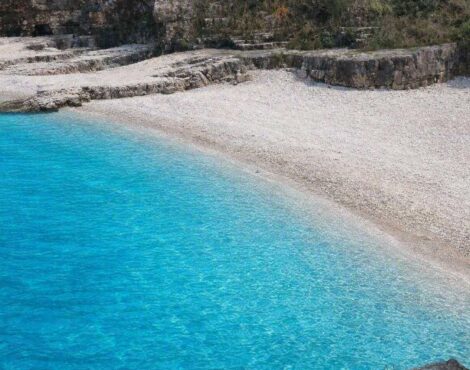
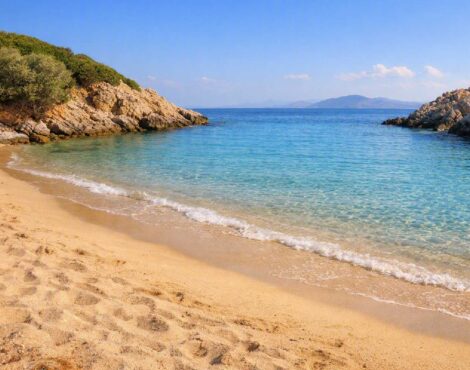
The sea in the first half of October maintains the summer’s accumulated warmth with the thermal persistence of a large water mass that has been heating since April and that releases its thermal content slowly and reluctantly in the advancing season. Sea temperatures of 23 to 25 degrees in the open water, warmer in the sheltered bays of the east and northeast coast, provide the conditions for comfortable daily swimming through the first two weeks of the month. The October beach visit, to a stretch of sand that the end of the tourist season has returned to its natural state and from which the summer infrastructure of sunbeds and umbrellas and beach bars has been removed, is the beach visit in its most naturally and most completely genuine form: the sand and the sea and the sky, and very little else.
The Transition: Mid-October
The middle weeks of October bring the first significant transition in the Corfiot weather from the summer pattern to the autumn one. The change is not abrupt: Corfu does not shift from summer to autumn in a single day or a single event. It advances gradually, the sunny days of the early month beginning to alternate with cloudy periods of increasing frequency and the first meaningful rainfall of the year appearing as part of the pattern rather than as an exceptional interruption to it.
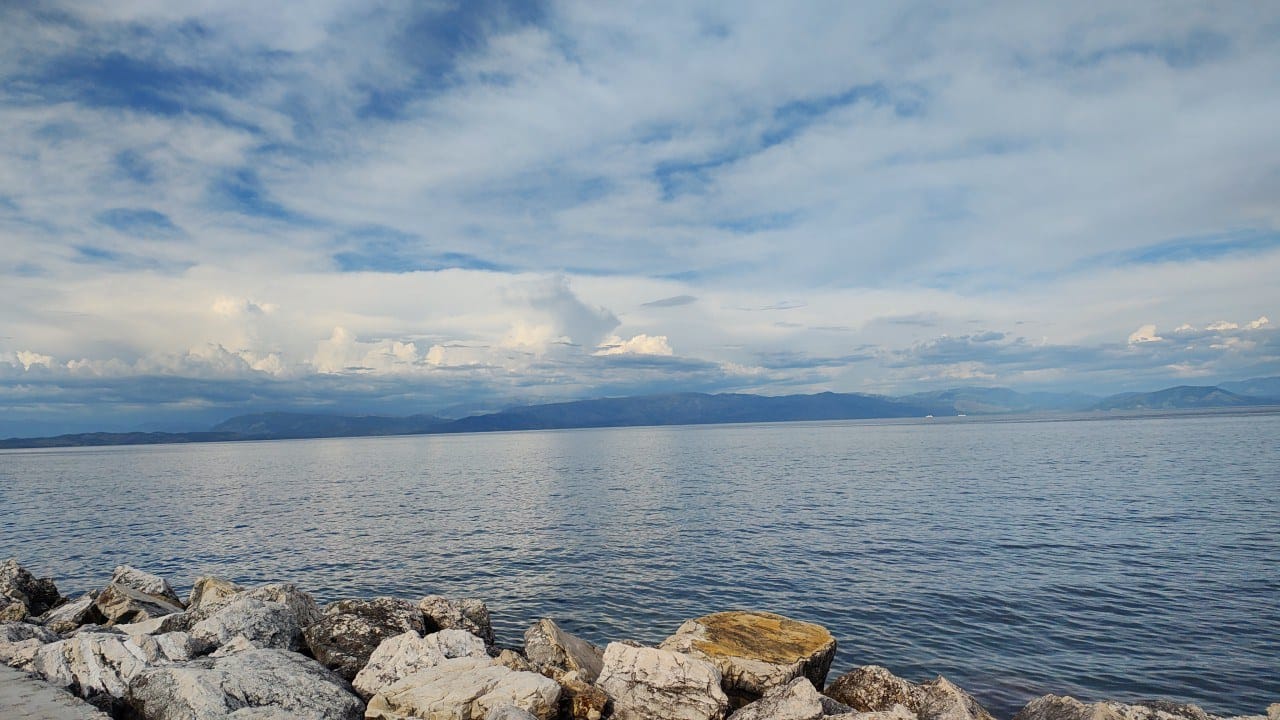
The rainfall that arrives in mid-October in Corfu has the character of the Ionian wet season at its most dramatic and its most visually extraordinary. The storms that move in from the Adriatic and the Ionian, carrying the moisture that has accumulated over the open sea and that the mountains of the island’s interior force upward and condense into the exceptional rainfall that gives Corfu its reputation as the wettest island in Greece, are not the grey and persistent drizzle of the northern European autumn. They are intense, dramatic events: the sky darkening rapidly from the west, the wind building ahead of the rain front, the first heavy drops announcing an intensity of rainfall that lasts for an hour or two before passing and leaving the island freshly washed and more fragrant than before.
These October storms are, in their own terms, one of the most spectacular natural experiences that the island offers through the open season. The quality of the light in the period immediately after an October storm, the air cleared of the last traces of the summer haze and the landscape vivid with the first thorough wetting of the year, is the Corfu landscape in a form that the dry summer months specifically cannot produce. The olive groves after the first October rain, their silvery canopy damp and brilliant in the post-storm sunlight and the ground beneath them carrying the fragrance of wet earth for the first time since the previous spring, are the olive groves in a form of beauty that the summer visitor never encounters and that the October visitor discovers as one of the season’s most specifically rewarding experiences.
The Second Half of October: The Autumn Proper
The final two weeks of October bring the autumn more fully into the Corfiot weather pattern, the sunny periods of the earlier month still present but now sharing the calendar more equally with the cloudy days and the rainfall events that will dominate the November and December weather. Average temperatures drop gradually toward the 20 to 22 degrees range, the evenings cooling more noticeably than in the first half of the month and the outdoor dining at Kapella Apartments moving from the naturally and effortlessly outdoor of the early season to the deliberately and pleasurably outdoor of a guest who has added a warm layer to the evening and chosen to remain outside for the dinner that the October evening, cooler than August but entirely comfortable in the right clothing, still makes possible and still rewards.
The beaches in the final weeks of October are at the most solitary of the entire open season. The tourist infrastructure has been removed or closed, the summer visitor numbers are absent, and the beaches return to their natural state with a completeness that no other period of the open season achieves. The October beach in the final weeks of the month is the beach in its most stripped and most honestly natural condition: the sand unmarked by the previous day’s footprints by the time the morning tide has passed across it, the water clear and still at the warmth of 22 degrees in the sheltered bays, and the October sky above providing the particular drama of the Ionian autumn in its various forms, from the brilliant clarity of the post-storm morning to the developing cloud formations of the approaching afternoon front.
Dressing for October in Corfu
The practical preparation for October weather in Corfu follows the logic of a month of considerable variety, and the guest who arrives with the flexibility to adapt to the day’s specific conditions will find the month consistently more rewarding than the guest who arrives expecting either the full summer warmth or the full autumn chill that the two halves of October produce in combination.
Light summer clothing remains appropriate for the warmest days of the first half of the month, when the temperature and the sunshine are as close to the September equivalent as the advancing season allows. A mid-weight layer, a light jumper or a long-sleeved shirt, becomes necessary for the evenings throughout the month and for the cooler days of the second half. A waterproof jacket, compact enough to carry on the beach day or the village walk and reliable enough to deal with the occasional October storm, is the most practically important item of the October wardrobe and the one most likely to be needed on at least one occasion during any stay of meaningful length in this month.
Walking footwear with grip and some water resistance is advisable for the village explorations and the countryside walks of October, when the first autumn rains have dampened the stone lanes of the old town and the paths of the olive groves and the mountain routes in ways that dry summer footwear navigates less confidently than the season requires.
The October Weather and the Kapella Apartments Experience
The weather of October, with its combination of warm sunny days and dramatic storm episodes and the extraordinary golden light that the low October sun produces between the weather events, is the weather that gives the Kapella Apartments October stay its specific and most distinctive character. The property’s outdoor spaces, designed for the outdoor living of the Mediterranean season, accommodate the October weather’s variety with the flexibility of a space that has been well made for its environment: the shaded terrace providing shelter during the rain and the open garden receiving the post-storm sunlight with the freshness and the fragrance that the first wetting of the dry season produces.
The October rainy day at Kapella Apartments, spent in the covered terrace watching an Ionian storm move across the landscape from west to east, with the olive groves bending in the wind and the rain arriving in the heavy sheets that the Ionian wet season characteristically produces, is one of the most specifically and most unexpectedly rewarding experiences of the early autumn stay. The drama of the storm, seen from the comfort of the covered outdoor space with the warmth of the property behind and the spectacle of the weather ahead, is the Corfu landscape in a form of power and visual intensity that the uniform blue skies of the summer months do not provide and that the October visitor who encounters it remembers, with the particular vividness of a genuinely surprising beauty, long after the stay has concluded.