The city of Corfu is full of historic neighborhoods, each with its own unique identity, architecture, and history. Three of the most characteristic districts of the Old Town are Campiello, Porta Remunda, and Spilia. These neighborhoods are living monuments of Corfu’s history and the Venetian influence that has shaped the city.
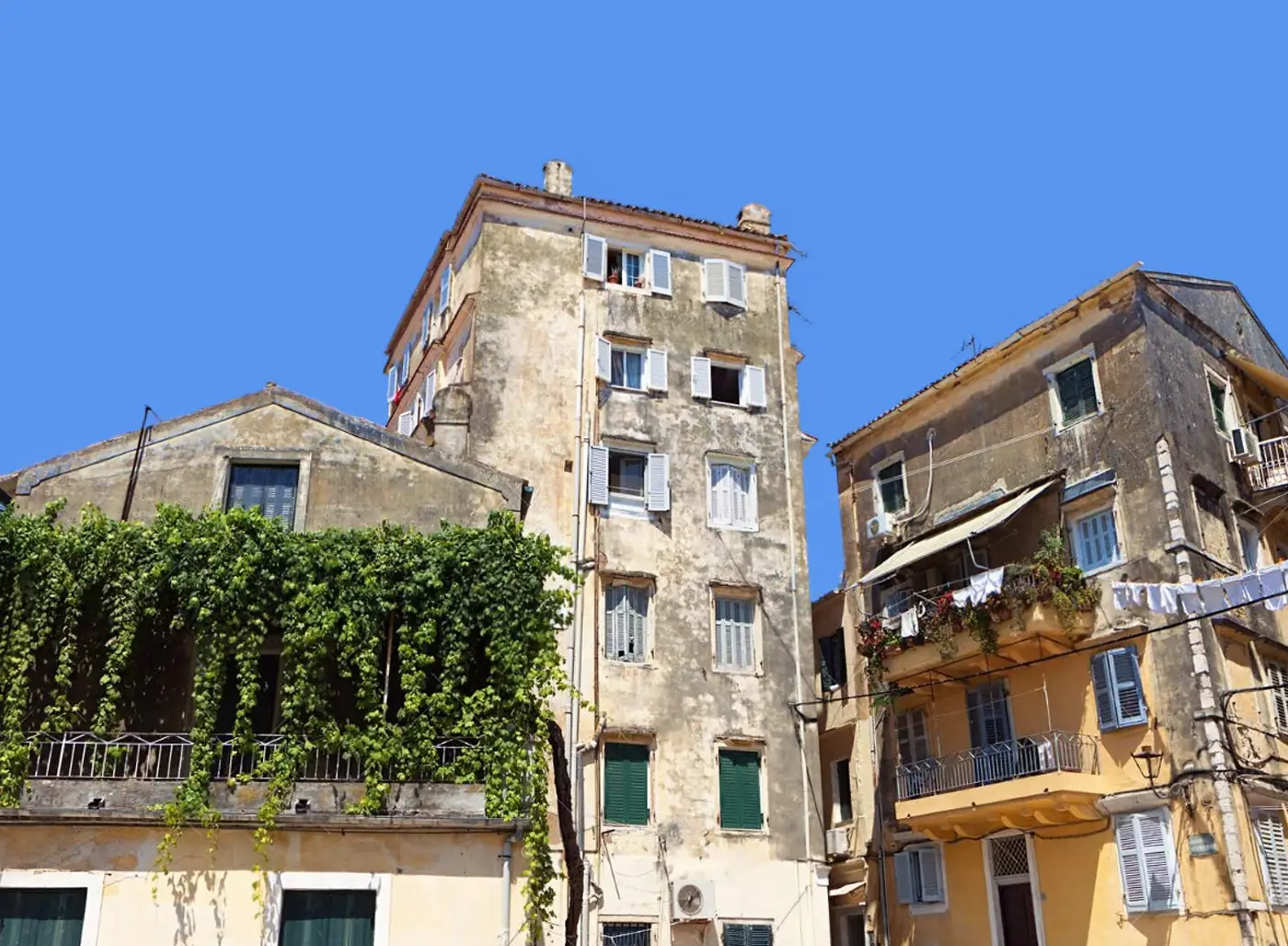
Campiello is the oldest and most charming district of Corfu Town. Located in the northwestern part of the Old Town, it is characterized by its narrow, cobbled alleyways (kantounia), small balconies with hanging laundry, and Venetian buildings that create a labyrinth of picturesque streets. This neighborhood strongly resembles old Italian towns and bears the unmistakable mark of Venetian rule. The name “Campiello” comes from the Italian word “campiello,” meaning “small square,” reflecting the neighborhood’s layout, where the narrow streets occasionally open into small plazas, offering residents a communal space for gatherings and socializing. Campiello retains an authentic and romantic atmosphere, having remained almost untouched by time.
One of the most distinctive spots in Campiello is the square of Kremasti, at the center of which stands a characteristic Venetian well that served the Corfiot people’s needs for many years. The neighborhood also features old mansions, hidden courtyards, and impressive Venetian staircases. During the Venetian period, Campiello was the heart of the city, and today, it remains one of the most popular destinations for those looking to explore traditional Corfu.
On the other side of the city lies another well-known district. Porta Remunda was named after “Porta Raimonda,” the gate that once stood slightly south of today’s Ionian Academy, connecting the Old Town with the outskirts and the village of Kastrades, which is present-day Garitsa. Porta Remunda served as the passage from the fortified walls to the city’s interior and played a crucial role in the island’s defense during the Venetian era.
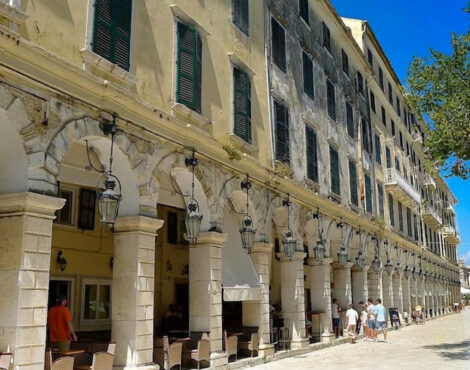
The area is famous for its impressive architecture, featuring tall buildings with characteristic balconies and arched arcades. Adjacent to Porta Remunda is the renowned Spianada Square, the largest square in the Balkans, as well as the Ionian Parliament, the building that once housed the Ionian State, the first Greek state after the fall of Constantinople.
Today, Porta Remunda is a vibrant district filled with cafes and shops. The area is particularly popular among visitors, as it seamlessly blends history with modern life. Its central location and proximity to Corfu’s most important landmarks make it one of the busiest and most charming areas in the city.
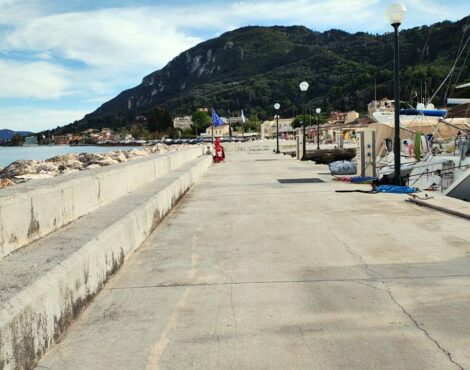
Spilia is one of Corfu’s oldest and most distinctive neighborhoods. Located on the northwestern side of the town, near the old port, it was historically the center of the island’s maritime activity. The neighborhood’s name derives from the natural caves that once existed on the hill of Agios Markos, where the New Fortress now stands. These caves were used as shelters for ships and fishermen centuries ago.
Spilia has preserved the authentic, working-class atmosphere of Corfu, as it was traditionally the neighborhood of sailors and laborers. Its narrow alleyways, small squares, and historic buildings give the area a distinctive character. One of Spilia’s most famous landmarks is the Metropolitan Church of Corfu, an important religious center for the island’s residents. The neighborhood is also linked to significant historical events, such as the Ottoman siege of 1716, during which the locals played a crucial role in defending Corfu.
Today, Spilia is one of the most charming districts, filled with traditional tavernas, small cafes, and an authentic Corfiot lifestyle.
The neighborhoods of Corfu are not just places on a map; they are living testimonies of the island’s history, culture, and daily life. Campiello, with its narrow, romantic alleyways, Porta Remunda, with its historical significance and vibrant atmosphere, and Spilia, with its maritime heritage, are all unique parts of Corfu’s cultural heritage. Anyone visiting the city cannot help but wander through these neighborhoods, feel Corfu’s authentic atmosphere, and discover its history and charm through its hidden corners and secrets.