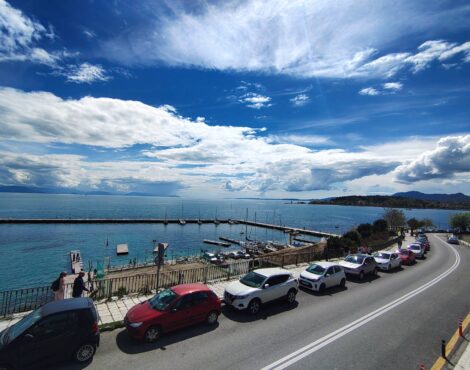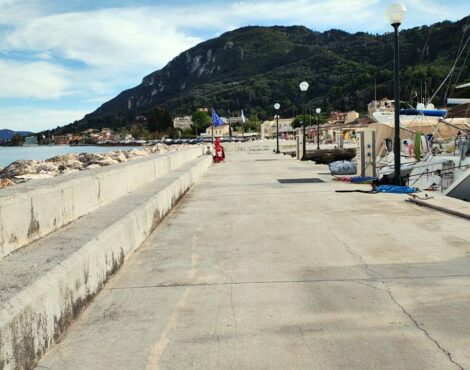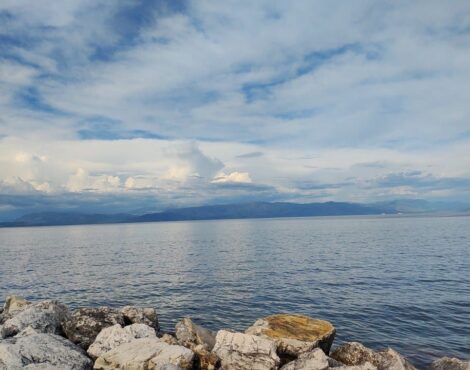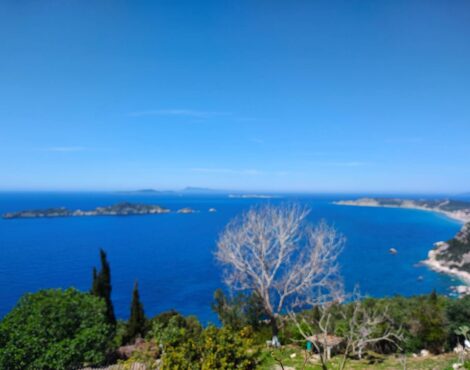

An excursion to the southern part of Corfu offers visitors the chance to discover a different side of the island, one that is less touristy yet deeply authentic, brimming with natural beauty, traditional villages, and historical landmarks. Unlike the more densely populated central and northern parts of Corfu, the south retains a peaceful, rural character, harmoniously combined with unspoiled landscapes and stunning coastlines. Starting from the village of Agios Matthaios and ending in the cosmopolitan resort of Kavos, this journey seamlessly weaves together nature, tradition, culture, and the sea.
The first stop is the village of Agios Matthaios, built amphitheatrically at the foot of the mountain bearing the same name. It is one of the most authentic and picturesque villages of Corfu, with narrow alleyways, old stone houses, and a strong Venetian architectural influence. The locals preserve traditional customs unchanged, and daily life flows at a peaceful pace reminiscent of earlier times. From the village, one can hike up to the Pantokrator Monastery, located at the top of the mountain. On a clear day, the view from there is breathtaking, stretching out to the islands of Paxos and Lefkada. Not far from the village stands the Gardiki Castle, one of Corfu’s lesser-known yet highly significant Byzantine monuments. Built in the 13th century, the castle is a rare example of Byzantine defensive architecture on the island. Exploring its interior is a unique experience, as it remains in fairly good condition and allows visitors to imagine life in the Middle Ages.
Descending towards the western coastline of southern Corfu, travelers arrive at Halikounas Beach, one of the island’s most pristine and striking natural destinations. This beach stretches over three kilometers and consists of a narrow strip of sand separating the Ionian Sea from Korission Lagoon. Halikounas is ideal for those who seek tranquility, water sports, especially kite surfing and nature exploration. The lagoon is a protected Natura 2000 site and hosts dozens of bird species, such as flamingos, herons, and cormorants. The area is perfect for walking among sand dunes and reed beds, in a setting of rare ecological value and breathtaking beauty. A few kilometers further south lies Issos Beach, another remarkable location with golden sand that gives the impression of a desert landscape. The sand dunes of Issos are unique in the Ionian Islands and combine beautifully with the blue waters and the vegetation of the nearby lagoon. It is the ideal spot for romantic sunset walks or quiet relaxation away from crowded places. Leaving the coastline and heading back inland, the next point of interest is the village of Chlomos. Built on a hilltop, Chlomos offers panoramic views of the sea and Korission Lagoon. It is one of the oldest villages in Corfu, with distinctive architecture and houses painted in pastel shades. Walking through its narrow streets feels like stepping back in time. The village also features several traditional tavernas and cafes where visitors can enjoy local flavors and warm hospitality.
Further southwest lies the traditional village of Argyrades, also known for its architecture and cultural heritage. Argyrades has preserved its traditional character, with stone-built houses, quaint churches, and charming squares. The village also played a notable role in historical events such as the revolution, adding to its significance. During the summer, cultural and musical events bring the village to life, maintaining its vibrant local identity. In the heart of the village stands one of the oldest olive trees not only on the island but in all of Greece, with an estimated age of several thousand years.
Continuing further south, we reach Lefkimmi, the second-largest town in Corfu. Unlike the cosmopolitan Old Town of Corfu, Lefkimmi retains a more laid-back and earthy character. A river runs through the town center, adding a distinctive charm, while old stone bridges and tiled-roof houses maintain a traditional appearance. Lefkimmi is an important administrative and commercial center for southern Corfu and has a port connecting the island with mainland Greece. Visitors here can enjoy traditional Corfiot cuisine, explore the folklore museum, and take leisurely walks along the riverside. Finally, the route concludes in Kavos, the most famous and cosmopolitan destination in southern Corfu, especially popular among young travelers and international tourists. Kavos is known for its vibrant nightlife, beach bars, clubs, and well-organized beaches with crystal-clear waters. Despite its reputation as a party hotspot, Kavos also offers quieter corners for those seeking relaxation by the sea. Moreover, from Kavos, boat trips to Paxos, Antipaxos, and other small islands are available, offering opportunities for exciting short getaways.
In summary, southern Corfu provides a complete exploration experience, from cultural heritage and Byzantine history, to peaceful traditional villages and unspoiled beaches, all the way to the lively atmosphere of Kavos. The route through Agios Matthaios, Gardiki Castle, Halikounas, Korission, Issos, Chlomos, Argyrades, Lefkimmi, and Kavos creates a mosaic of experiences that blends nature, tradition, and entertainment in perfect harmony. It’s an excursion that satisfies every traveler, leaving behind vivid images and lasting memories of a lesser-known yet incredibly charming side of Corfu.