
The island of Corfu, its history, culture, and unique beauty, have played a significant role in the development of tourism in Greece and beyond. During the period when Greece was undergoing a major reconstruction after the Second World War, an event occurred that, according to many, changed the history of the island and tourism, both in Greece and in the rest of Europe.
In the summer of 1954, for the first time, Queen Frederica, wife of King Paul, organized a royal cruise of considerable dimensions and demands. The journey began on August 24 from Katakolon and Olympia, ending in Corfu on September 2nd. The reasons for this unexpected cruise were never fully revealed. Many believe that it was an attempt by the royal family to strengthen its ties with other European monarchies. Others think the journey aimed not only at the royal family’s vacation but also at boosting tourism, as many parts of Greece would be showcased in international newspapers and beyond.
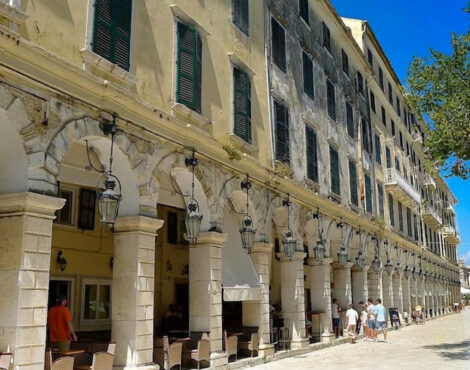
The ship “Agamemnon,” which hosted over 100 royals from all over Europe, arrived in Corfu on September 2. There, those guests who remained chose to swim in the crystal-clear waters of Mon Repos. Queen Juliana of the Netherlands, along with her husband Prince Bernhard and their children, stayed on the island and lodged at the Mon Repos Hotel. Shipping magnate Stavros Niarchos, who had personal, friendly ties with King Paul, also arrived in Corfu. Additionally, the royals took strolls through the narrow alleys of the old town, greeting the common people who were eager to meet them up close.
The cruise organized by Frederica managed to captivate the attention of ordinary citizens, who wanted to explore the landscapes, people, and history that made the European royals so amazed. Gradually, it became clear that the idea of tourism had great potential, as it appeared to combine the modern needs of the world with the increasing trend of consumerism—an intersection that could bring substantial profit.
Around this time, the idea of Club Mediterranee emerged. It opened its doors on the island in the late 1950s, becoming one of the first and most important tourist destinations of its kind in Greece, marking the transition of the island into an internationally recognized tourist destination. The creation of Club Med in Corfu was a strategic move by the French company Club Méditerranée, which aimed to develop tourist resorts in various exotic locations worldwide, offering visitors a complete holiday experience, combining relaxation, entertainment, and sports activities.
Corfu, with its natural beauty, Mediterranean climate, and rich cultural heritage, proved to be the ideal location for such a tourist complex. The Club Med in Corfu was the first of its kind to open in Greece, and it quickly gained fame for its high-quality services and innovative approach to the tourism industry. The resort offered its guests an all-inclusive vacation package that covered accommodation, food, drinks, and numerous activities, from sports to entertainment and excursions.
Club Med became a gathering point for many international tourists, primarily from France, Britain, and other European countries, as well as the United States, who wished to enjoy their vacations in a luxurious yet relaxing destination. The resort in Corfu offered unique experiences such as water sports, fitness activities, musical and dance performances, and excellent local cuisine.
The presence of Club Med in Corfu had a significant impact on the island’s tourism development, contributing to its promotion as a top tourist destination and attracting more visitors and investments in the tourism sector. However, with the passage of time and the changing trends in tourism, Club Med in Corfu closed its doors in 1994, leaving behind a legacy that influenced the island’s tourism industry.