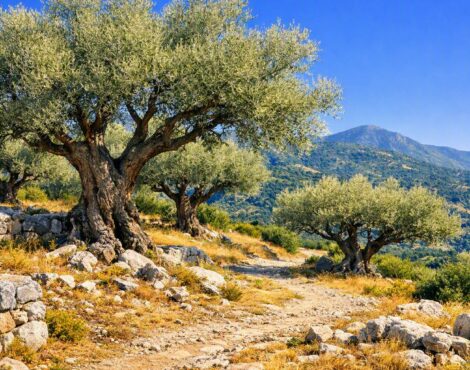
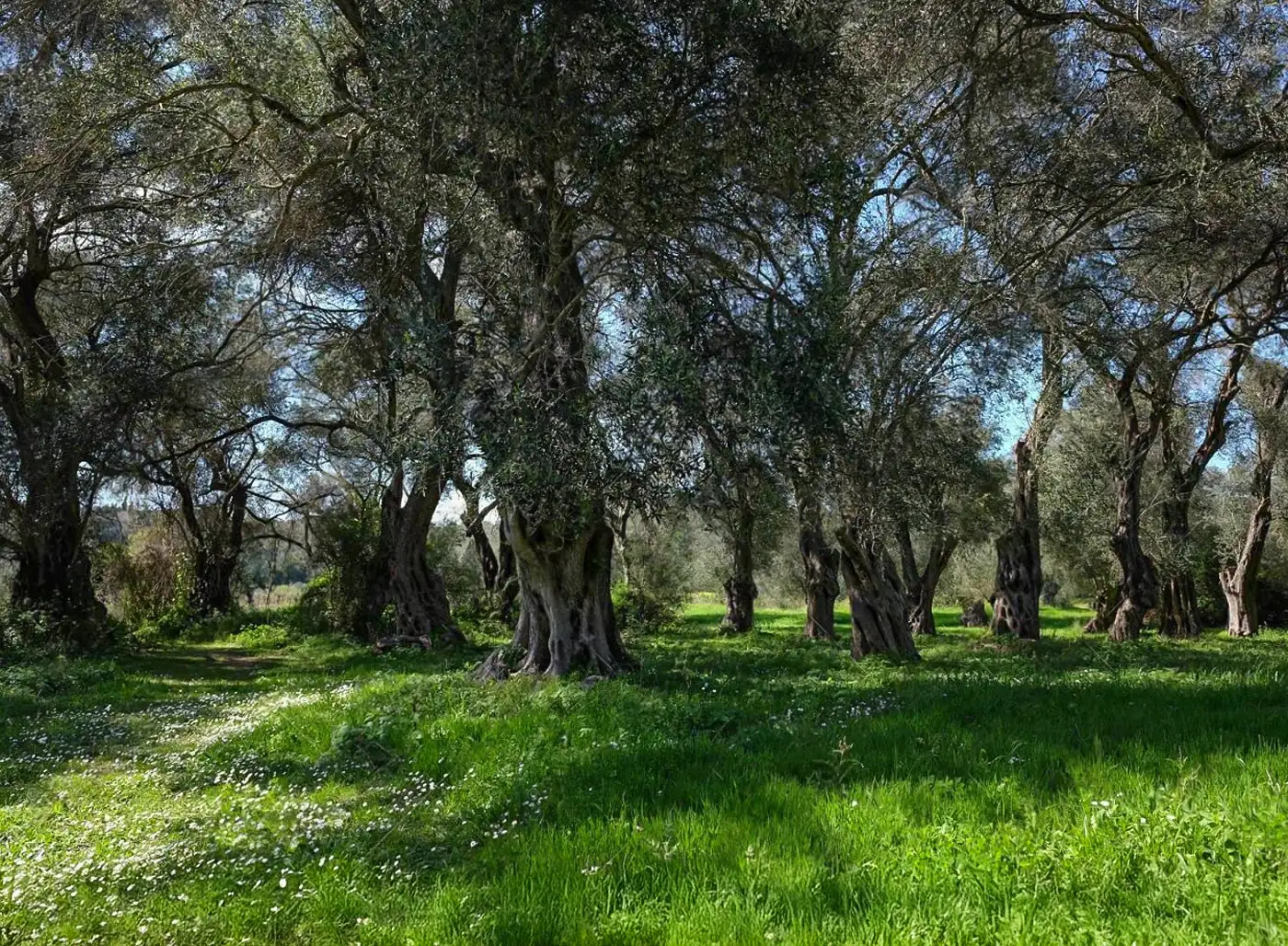
The Corfiot olive grove has a long and fascinating history that is closely connected to the development of the island from ancient times to the modern era. The presence of the olive grove in Corfu, as well as the production of olive oil, has been a significant element of the local economy and cultural heritage. From the period of Venetian rule to the present day, the olive groves of Corfu have remained a pillar of agricultural production, with the variety of “Lianolia” standing out for its exceptional quality.
The history of the Corfiot olive grove is intimately tied to the island’s historical journey. In antiquity, Corfu was known for its agriculture, with the cultivation of olives already established. However, the expansion of olive cultivation and its rise as a key economic pillar are most strongly associated with the period of Venetian rule (1386-1797). During this period, the Venetians, who controlled the island for almost 400 years, introduced new agricultural systems and improved farming techniques, including the cultivation of olive groves.
The Venetians were well aware of the importance of olives and the utility of olive oil in daily life. As such, they established olive oil as one of the island’s most important commodities. The olive groves expanded significantly during this period, with olive trees covering vast areas of the island, and the Venetians introduced cultivation and harvesting techniques that improved the quality of olive oil and increased production.
At the same time, the Venetians strengthened Corfu’s commercial ties with other regions of the Mediterranean, making it one of the primary exporters of olive oil. The production and export of olive oil became crucial to the island’s economy, and the local community began to depend on the cultivation of olive groves.
One of the most distinctive and recognized varieties of olives grown in Corfu is the Lianolia. Lianolia is a variety characterized by small, round fruits, with a dark green color that gradually ripens to black during the harvest. The Lianolia olive is considered the best variety for producing high-quality olive oil in Corfu.
The Lianolia variety has a distinctive taste that sets it apart from other varieties, with the oil produced from it having a strong fruity flavor and a slight bitter aftertaste. This characteristic has made Lianolia oil particularly popular in the domestic market as well as internationally, as it is recognized for its quality. The Lianolia variety is not only exceptional for its taste, but it also plays a significant role in the olive oil production of Corfu, which remains one of the island’s most important export products.
It is notable that Lianolia is not widely cultivated in other parts of Greece, which makes it unique to Corfu and rare in international trade. Its excellent quality, combined with the specific production methods and its limited geographical distribution, enhances its importance to the island and makes it a valuable cultural and economic asset.
Today, the Corfiot olive grove continues to be one of the most significant agricultural activities on the island, with olive oil production being an integral part of its economy. Despite modern technologies and new cultivation methods, the traditional olive groves of Corfu, including the Lianolia variety, remain a living part of the local tradition. Beyond its economic impact, the Corfiot olive grove also plays a significant role in the island’s cultural heritage. The olive groves are closely connected with the daily life of the locals and the traditions that are passed down from generation to generation. The process of harvesting, olive oil production, and the rituals surrounding the olive tree are integral elements of Corfiot life.
Olive oil production, especially the one made from Lianolia olives, continues to be central not only to the island’s economy but also to its identity. Visitors from all over the world come to Corfu to experience the island’s rich agricultural history, and they often return with a bottle of Corfiot olive oil, prized for its taste and quality. The traditions associated with olive cultivation are celebrated in festivals and community events, underscoring the importance of the olive tree to the local population. The cultural value of the olive groves is not merely limited to their economic contribution; they represent a deep connection to the land and the island’s long agricultural history.