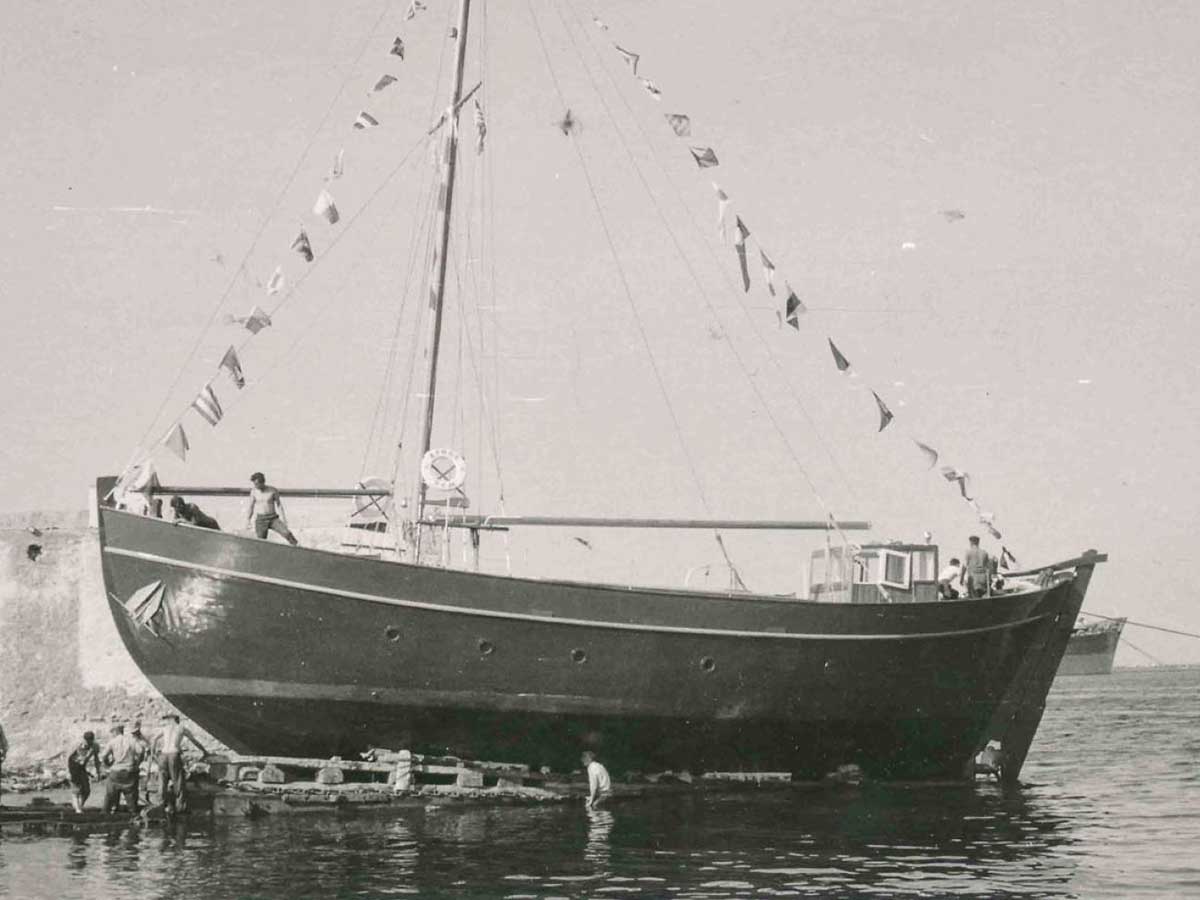
In shadowed workshops smelling of wood shavings and pine tar, a handful of elderly men practice skills passed through generations. Their hands, gnarled from decades of labor, shape timber into curves that have carried Ionian fishermen for centuries. These master boat builders represent living links to maritime traditions stretching back millennia, yet their knowledge faces extinction as modern materials and methods render traditional wooden boat construction economically obsolete.
Traditional Boat Building in Corfu: A Dying Craft
Boat building ranks among humanity’s oldest technologies. Archaeological evidence suggests watercraft construction began before agriculture, humans taking to water earlier than previously imagined. Mediterranean peoples developed sophisticated maritime cultures, their survival depending on vessels connecting islands, enabling fishing, and facilitating trade.
Corfu’s boat building traditions likely extend back to ancient Corcyra when the city state maintained one of Greece’s largest naval fleets. While warship construction required different techniques than fishing boat building, the fundamental skills overlapped. Corcyraean shipwrights gained renown throughout the Greek world, their expertise sought by other city states.
Medieval and Venetian periods saw continued boat building activity. Venice, history’s greatest maritime republic, recognized Corfu’s strategic importance and maintained arsenals here. Venetian influence shaped local boat designs and construction methods, creating hybrid traditions blending Greek, Italian, and indigenous elements.
The basic principles of wooden boat construction changed remarkably little across centuries. Master builders worked primarily from memory and accumulated experience rather than written plans or mathematical calculations. Boats evolved through incremental refinements, each generation making subtle improvements while maintaining proven overall designs.
The Trechantiri: Corfu's Traditional Fishing Boat
The trechantiri represents Corfu’s most characteristic traditional vessel. These wooden fishing boats, typically ranging from five to eight meters in length, evolved specifically for Ionian conditions. Their distinctive lines balance seaworthiness, cargo capacity, ease of beaching, and rowing efficiency, creating designs perfectly adapted to local maritime environment.
Hull shape reflects centuries of empirical testing. The bow rises sharply to handle choppy seas while the stern remains relatively flat for stability when hauling nets. Moderate beam provides stability without excessive drag. Draft remains shallow enough for approaching beaches yet sufficient for acceptable tracking and stability offshore.
Construction follows lapstrake or clinker technique where planks overlap rather than meeting edge to edge. This method provides flexibility allowing hulls to work in waves without developing leaks. The overlapping joints, properly caulked and fastened, create strong yet resilient structures capable of decades of hard use.
Traditional trechantiri featured no engines, relying on oars and occasionally simple sails. This limitation dictated fishing methods and range, concentrating activity near home ports. The boats’ human powered nature created intimate connection between fisherman and vessel, success depending absolutely on skill, knowledge, and physical capability.
Each builder added personal touches to basic design. Stem profiles varied slightly. Sheer lines showed individual character. Decorative elements reflected regional styles or builder signatures. This variation within tradition meant experienced observers could often identify a boat’s builder just by examining its lines and details.
Materials and Methods
Traditional boat building began with timber selection. Choosing appropriate wood for each component required deep knowledge of species characteristics, grain patterns, and seasoning requirements. Master builders personally selected logs, envisioning finished boats within rough timber.
Oak provided primary framing material. Its strength, durability, and bending characteristics made it ideal for ribs, stem, and stern posts bearing greatest stresses. Finding suitable oak often required mountain expeditions to forests where naturally curved trees offered shapes approximating needed components.
Pine supplied planking due to workability, availability, and adequate strength for hull sheathing. The wood needed proper seasoning to prevent excessive shrinkage or warping after construction. Rushing this process guaranteed problems, so builders maintained timber stocks air drying for months or years before use.
Cypress found use in components requiring exceptional rot resistance. Small pieces became blocking and reinforcements in areas subject to persistent moisture. Cypress’s natural oils repelled fungi and insects, extending boat longevity when used strategically.
Fastenings traditionally used copper or bronze nails and rivets resisting saltwater corrosion far better than iron. Though expensive, these non ferrous metals proved cost effective through extended service life. Proper fastening techniques, with clench nails through planks and ribs, created connections as durable as the wood itself.
Caulking sealed seams between planks. Cotton or oakum pounded into gaps with specialized tools swelled when wet, creating watertight seals. Pine tar coating provided additional waterproofing while preserving wood. This maintenance intensive system required periodic attention but could be refreshed indefinitely, unlike modern sealants that eventually fail completely.
The Building Process
Traditional boat construction began by establishing the keel, the backbone upon which everything else built. This critical component received greatest attention to ensure straightness and proper proportions. From the keel grew stem and stern posts, defining overall length and profile. Frames or ribs rose from the keel at regular intervals, creating skeleton defining hull shape. These pieces required steaming or soaking to bend without breaking, ancient technique demanding experience judging proper temperature, moisture, and manipulation timing. Overbending caused failure; underbending left improper curves.
With framework established, planking commenced from keel working upward. Each plank required individual fitting, its curves matched to specific position on hull. Builders used various techniques achieving proper shapes, including steaming, careful sawing, and patient planing. Gaps between plank and frame needed elimination, requiring meticulous fitting achieving invisible joints.
Fastening proceeded plank by plank, each secured to every frame it crossed. Holes drilled through planking and ribs accommodated copper nails driven through, their protruding ends cut short and riveted over washers. This process required coordination between workers, one inside driving while another outside backed up and clinched.
Caulking followed planking completion. Working systematically, builders drove cotton into every seam, their mallets’ rhythmic striking creating distinctive soundtrack of boat yards. Proper caulking required judgment and feel, too little allowing leaks while excessive packing split planks. Final steps included interior fittings, seats, oarlocks, and structural bracing. Painters applied protective coatings, traditionally linseed oil based paints in practical colors, usually blues, greens, or whites. Decorative elements appeared at builders’ or owners’ discretion, from simple painted bands to elaborate bow ornaments.
The Master Builder's Knowledge
Traditional boat building represented more than following procedures. Master craftsmen possessed tacit knowledge impossible to fully communicate through words or written instructions. They understood wood’s behavior intuitively, recognizing subtle grain patterns indicating strength or weakness, moisture content by appearance and feel, and bending potential of specific pieces. This knowledge accumulated across apprenticeships lasting years. Young men began performing simple tasks, gradually advancing to more complex operations as skills developed. The system ensured knowledge transmission while providing builders with trained assistance. Master status arrived only after demonstrating comprehensive competence across all construction aspects. No two boats emerged identical even from same builder using same design. Wood’s natural variations required constant adaptation. A particularly well grained plank allowed thinner sections reducing weight. Unusually curved frame timber suggested modifications to standard pattern. Masters improvised continuously, their creativity working within traditional constraints.
Tools themselves required specialized knowledge. Handsaws needed proper sharpening for cutting with or across grain. Planes demanded precise blade setting for different wood types and grain orientations. Adzes, axes, and chisels each served specific purposes, their effective use coming only through extensive practice.
Reading the boat during construction separated competent workers from true masters. Subtle hull distortions, unusual stresses in frames, or concerning noises when fitting components indicated problems requiring correction. Ignoring these signs resulted in vessels performing poorly or failing prematurely.
Economic and Social Dimensions
Boat building supported extended families and broader communities. Builders employed apprentices and assistants, purchased materials from sawyers and metal workers, and sold vessels to fishermen whose catches fed local populations. This economic web made boat yards central to coastal village economies. The cost of traditional wooden boats represented significant investment for fishing families. Boats might be commissioned years in advance, payments made in installments as fishermen’s income allowed. Used boats passed between generations, repaired and maintained decades beyond initial construction. This durability made traditional methods economically viable despite higher initial costs.
Social status attached to owning well built boat from respected yard. Builders’ reputations traveled through fishing communities, their finest work attracting attention and admiration. Fishermen took pride in vessels’ appearance and performance, extensions of personal identity and family heritage.
Boat ownership often represented family wealth accumulation across generations. Fathers passed boats to sons along with fishing knowledge and established territories. These vessels embodied material legacy enabling descendants’ livelihoods while carrying forward family traditions and memories. Community gatherings surrounded launches and blessings. New boats received religious consecration, priests sprinkling holy water while invoking divine protection. These ceremonies acknowledged sea’s power over human fate while celebrating craftsmanship and fishermen’s courage facing uncertain waters.
Decline and Displacement
Fiberglass boats appeared in Mediterranean in the 1960s and rapidly displaced traditional wooden construction. The new materials offered compelling advantages: lower cost, reduced maintenance, longer lifespan, and consistent quality independent of craftsman skill. Economic logic proved overwhelming despite aesthetic and traditional attachments.
Fishing industry industrialization demanded vessels incompatible with traditional methods. Larger boats for extended voyages, engines requiring structural modifications, and modern equipment installations suited fiberglass construction better. Traditional builders lacked knowledge and equipment adapting to new materials and methods.
Young people increasingly rejected boat building’s physical demands and modest economic returns. Multi year apprenticeships seemed unattractive compared to alternatives offering faster income and less demanding labor. The generational transmission essential to craft preservation broke down as sons chose different careers.
Masters aged without successors. Their workshops closed permanently, tools and knowledge disappearing. Within single generation, thriving tradition reduced to handful of elderly practitioners working primarily on restoration rather than new construction.
Tourism’s growth paradoxically contributed to decline. Fishing’s economic importance decreased as service economy expanded. Fewer young men entered fishing, reducing demand for boats. Those continuing often purchased modern vessels better suited to contemporary methods and regulations.
Preservation Efforts and Contemporary Practice
Remaining traditional builders increasingly focus on restoration rather than new construction. Maintaining existing wooden boats requires same skills as building new ones, providing ongoing demand for traditional knowledge. Museums and private collectors commissioning restorations help sustain craft economically.
Some builders occasionally accept commissions for new traditional boats from enthusiasts valuing authenticity over practicality. These special projects, though economically marginal, allow masters to practice full range of traditional techniques. The resulting vessels become floating museums preserving maritime heritage.
Documentation efforts attempt capturing traditional knowledge before it vanishes completely. Researchers film building processes, interview masters, and compile technical details. While valuable, these records cannot fully replace hands on apprenticeship and accumulated experience.
Maritime museums occasionally sponsor demonstration projects where traditional boats are built publicly. These programs serve educational purposes, introducing visitors to traditional skills while creating exhibition pieces. Participating builders appreciate opportunities practicing their craft even if vessels will never fish commercially.
A few enthusiasts pursue traditional boat building as serious hobby or artistic expression. Though lacking commercial motivation, these amateurs help preserve techniques and maintain interest in traditional methods. Some achieve remarkable skill through dedication and mentorship from surviving masters.
Cultural Significance Beyond Economics
Traditional boat building represents more than practical technology. These vessels embody cultural identity, connecting contemporary Corfiots to ancestors who lived by and from the sea. Each traditional boat floating in a harbor serves as tangible link to maritime past increasingly distant from modern experience.
The aesthetic qualities of traditional boats appeal beyond functionality. Their organic curves and hand crafted details possess beauty absent from mass produced fiberglass vessels. This visual appeal attracts photographers, artists, and tourists appreciating traditional craftsmanship.
Skills involved in boat building extend beyond maritime applications. Woodworking, joinery, and finishing techniques transfer to furniture making, architectural restoration, and sculpture. Preserving boat building knowledge maintains broader traditional craftsmanship threatened by industrial production.
The relationship between builder and boat, and subsequently between owner and vessel, differs qualitatively from modern consumer relationships. Traditional boats represented collaboration between craftsman and fisherman, custom work addressing specific needs and preferences. This personal dimension created meanings transcending mere utility.
Maritime heritage tourism increasingly values authentic traditional elements. Visitors seek experiences connecting them to places’ distinctive histories and cultures. Traditional boats, whether displayed, demonstrated, or offering tourist excursions, provide these authentic encounters increasingly difficult to find in homogenized Mediterranean tourism.
An Uncertain Future
Traditional wooden boat building in Corfu faces likely extinction within coming decades. The handful of elderly masters will inevitably pass, and replacement seems improbable given economic realities and changed cultural contexts. This loss, though perhaps inevitable, diminishes cultural heritage and severs connections to maritime past.
Yet possibilities for preservation exist if recognized as valuable and supported appropriately. Apprenticeship programs could train new generation if economic obstacles were addressed. Combining traditional skills with modern applications might create viable careers. Cultural recognition and support could make boat building sustainable as heritage craft rather than commercial necessity.
The end of traditional boat building would mark significant cultural loss. Future generations of Corfiots would encounter their island’s maritime heritage only through museums and historical accounts rather than living practice. The tactile knowledge, aesthetic sensibilities, and cultural meanings embedded in traditional boat building would exist only as memory and documentation.
Perhaps some accommodation between tradition and modernity remains possible. Hybrid approaches combining traditional aesthetics with modern materials, or preserving traditional skills through adapted applications, might chart middle path. Whatever emerges, the fully traditional practice carried by current elderly masters appears approaching its end, closing chapter in Corfu’s long maritime story.