Corfu Carnival 2026 promises to be one of the most spectacular celebrations in the Greek islands, combining centuries-old traditions with modern festivities that attract thousands of visitors each year. This vibrant event, deeply rooted in Venetian influence and Greek culture, transforms the entire island into a stage of color, music, and theatrical performances throughout the carnival season. From elaborate costume parades to satirical street theater, Corfu Carnival 2026 offers an authentic Mediterranean experience that stands apart from other carnival celebrations worldwide.
Whether you’re planning to participate in the famous mask-making workshops, join the traditional dance processions, or simply witness the grand finale burning of the carnival king, understanding the event’s schedule and customs will enhance your experience. This comprehensive guide covers everything you need to know about Corfu Carnival 2026, including key dates, must-see events, accommodation tips, and insider knowledge about local traditions. Prepare to immerse yourself in one of Greece’s most colorful and entertaining cultural celebrations, where ancient customs meet contemporary carnival spirit.
When is Corfu Carnival 2026 and key dates to remember
Corfu Carnival 2026 will take place during the traditional pre-Lenten period, with celebrations scheduled from February 15 to March 2, 2026. The carnival follows the Greek Orthodox calendar, meaning the dates shift each year based on the timing of Easter.
The official opening ceremony begins on Sunday, February 15, marking the start of three weeks of festivities. This inaugural weekend features the first major parades and sets the tone for the celebrations ahead.
The first key weekend, February 21 to 22, showcases neighborhood parades throughout Corfu Town, where local groups debut their elaborate costumes and satirical performances. These smaller events allow visitors to experience the carnival’s grassroots spirit.
The second weekend, February 28 to March 1, represents the carnival’s peak. Saturday evening brings the Grand Parade along the Liston and Spianada Square, featuring massive floats, marching bands, and thousands of costumed participants. Sunday continues with children’s parades and family-oriented activities.
Clean Monday, February 23, 2026, marks the carnival’s finale. This public holiday features the symbolic burning of King Carnival, an effigy representing the festivities, along the seafront. Following this tradition, locals celebrate with kite-flying and outdoor feasts, transitioning into the Lenten period.
Book accommodations well in advance, as hotels fill quickly during these peak dates, particularly for the final weekend.
The history and cultural significance of Corfu Carnival
The Corfu Carnival traces its roots back to Venetian rule, which lasted from 1386 to 1797. The Venetians brought their elaborate carnival traditions to the island, and these customs merged seamlessly with local Greek celebrations, creating a unique cultural event that has endured for centuries. Unlike many Greek islands, Corfu’s extended period under Venetian influence left an indelible mark on its carnival celebrations, making them distinct from other regional festivities.
During the Venetian era, the carnival served as a time of social leveling, where masks allowed people from different classes to mingle freely and participate in theatrical performances, masked balls, and street parades. This tradition of anonymity and playful subversion became deeply embedded in Corfu’s cultural identity.
The carnival holds profound cultural significance for Corfiots, representing more than mere entertainment. It embodies the island’s multicultural heritage and its ability to absorb foreign influences while maintaining its Greek character. The event typically spans three weeks, culminating on Clean Monday, the first day of Lent in the Orthodox calendar.
Today, the Corfu Carnival attracts thousands of visitors annually, preserving centuries-old traditions while incorporating modern elements. The celebrations include satirical floats, costume competitions, and the burning of the carnival king effigy, symbolizing the purging of winter and welcoming spring’s renewal.
Main events and parades during Corfu Carnival 2026
The Corfu Carnival features a packed schedule of events spanning three weeks, with the most spectacular celebrations taking place during the final weekend before Clean Monday. The festivities officially begin in late February 2026, building momentum as Lent approaches.
The Grand Parade on the last Sunday represents the carnival’s centerpiece, attracting thousands of spectators to the streets of Corfu Town. Elaborate floats created by local groups and associations wind through the historic center, accompanied by marching bands, dance troupies, and participants in extravagant costumes. The parade route typically starts at the New Fortress and continues along the Esplanade, showcasing months of creative preparation.
Saturday evening features the Bourboulia procession, where locals dress in eccentric disguises and masks to wander the town anonymously. This tradition dates back to Venetian times and creates a mysterious, theatrical atmosphere throughout the old quarter.
Children’s parades take place on the preceding Sunday, giving younger participants their own spotlight with colorful costumes and age-appropriate entertainment. These family-oriented events typically occur in the morning hours around San Rocco Square.
The carnival concludes with the burning of King Carnival, a symbolic effigy set ablaze at the harbor on Clean Monday evening. This ritual marks the end of festivities and the beginning of the Lenten period.
Traditional costumes and masquerade customs in Corfu
The traditional costumes of Corfu Carnival reflect centuries of Venetian, French, and British influence, creating a unique masquerade culture distinct from mainland Greek celebrations. The most iconic mask is the “Tsitsibis,” worn by men dressed as women in colorful, exaggerated attire complete with elaborate wigs, makeup, and satirical accessories. These cross-dressing performers dance through the streets, poking fun at social conventions and entertaining crowds with their theatrical antics.
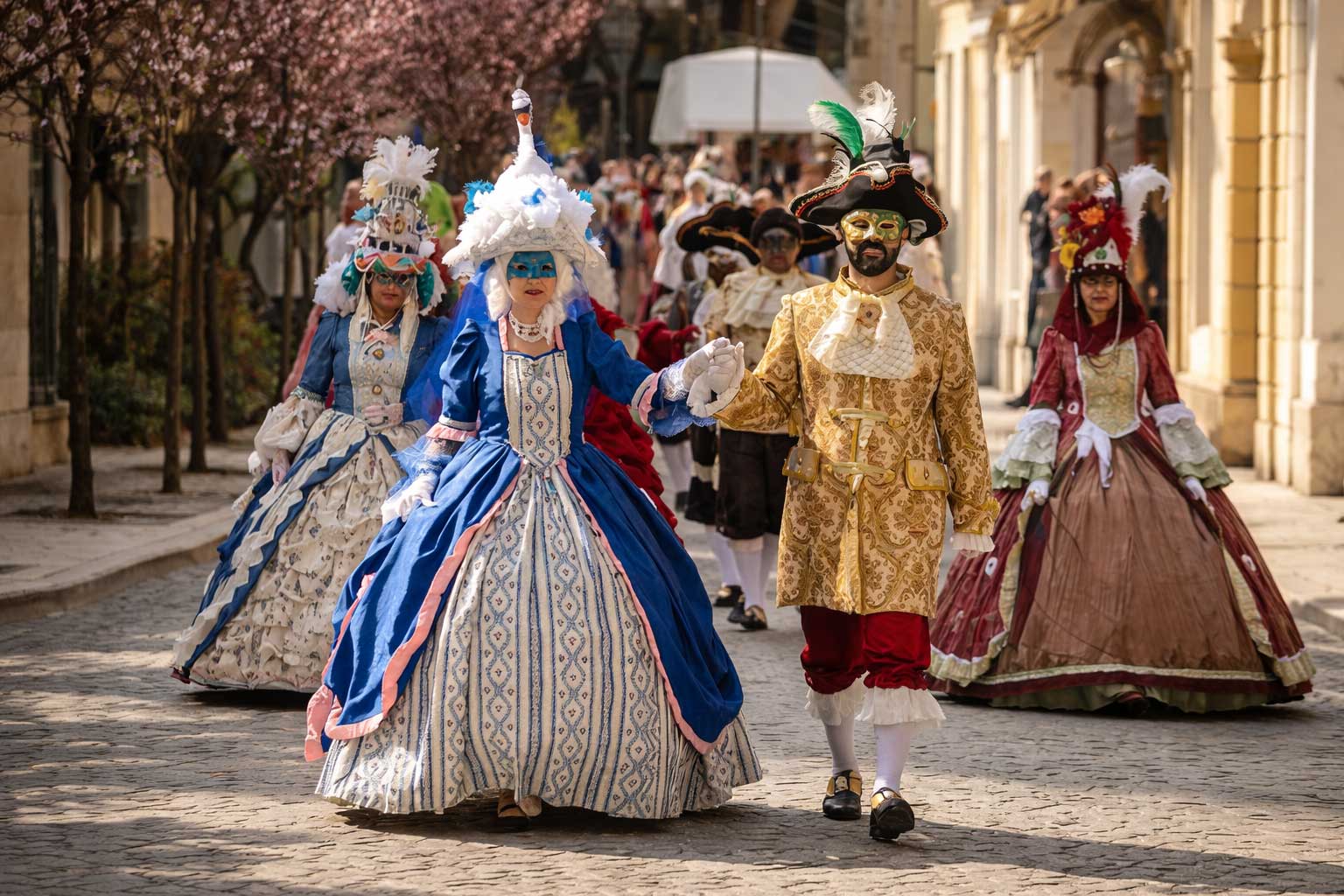
Traditional Corfiot masks range from simple domino masks to elaborate Venetian-style creations adorned with feathers, sequins, and gold leaf. Many families preserve antique masks passed down through generations, while local artisans craft new designs each year using traditional techniques. The “bauta,” a white mask covering the entire face, remains popular among carnival participants seeking to maintain anonymity while socializing freely.
Another distinctive custom involves groups of costumed revelers performing choreographed “kantades,” traditional Corfiot serenades accompanied by mandolins and guitars. Participants often dress in historical costumes representing different eras of the island’s past, from Venetian nobles to British colonial officers. Local societies and cultural associations compete annually for the best group costume presentation, with judging based on authenticity, creativity, and attention to historical detail.
Where to watch the carnival and best viewing locations
The heart of Corfu Carnival unfolds along the Spianada, Europe’s largest square, where the main parades and festivities take place. This central location offers ample viewing space, though arriving early is essential to secure a prime spot along the parade route. The area in front of the Liston arcade provides covered seating at nearby cafes, allowing visitors to watch comfortably while enjoying refreshments.
Mantouki Square serves as another focal point, particularly during the evening celebrations. The square transforms into a vibrant gathering space where locals and visitors mingle, with live music stages and impromptu performances adding to the atmosphere.
For families with children, the area near the Old Fortress offers a more relaxed viewing experience with open spaces and better access to facilities. The waterfront promenade, extending from the Old Port to Garitsa Bay, provides excellent vantage points for watching the parade processions while avoiding the densest crowds.
The narrow streets of the Old Town become stages for smaller, spontaneous celebrations and street performances. Exploring these lanes offers an intimate carnival experience, though maneuverability becomes challenging during peak hours.
Local residents often watch from their balconies along Nikiforou Theotoki Street, the main commercial thoroughfare. Some cafes and restaurants along this route offer reserved seating for the parade, which should be booked well in advance.
Practical tips for attending Corfu Carnival 2026
Planning your visit to Corfu Carnival requires some advance preparation to make the most of this vibrant celebration. Accommodation books up quickly during carnival season, so reserve your hotel or rental at least three months ahead. Properties in Corfu Town offer the best access to main events, though expect premium prices during this peak period.
The weather in February and early March can be unpredictable, with temperatures ranging from 10 to 15 degrees Celsius. Pack layers, comfortable walking shoes, and a waterproof jacket. Events continue rain or shine, and you will spend considerable time on your feet navigating crowded streets.
Arrive early to secure good viewing spots for parades, particularly along Kapodistriou Street and Spianada Square. The main parade on the final Sunday draws massive crowds, so stake your position at least an hour beforehand. Bring a small bag with water, snacks, and a portable phone charger.
Participation is encouraged, and many locals welcome visitors who embrace the festive spirit. Consider purchasing or creating a costume to join the celebration fully. Mask shops and costume vendors appear throughout the old town in the weeks leading up to carnival.
Public transportation becomes irregular during major events, so plan to walk or arrange taxis in advance. Most shops and restaurants extend their hours during carnival week, though some may close unexpectedly for staff participation in festivities.