
Ioannis Kapodistrias was one of the most significant political figures in modern Greek history, playing a decisive role in shaping the modern Greek state and securing its independence. His life and work were characterized by selfless service, political foresight, and a deep sense of responsibility toward the Greek nation.
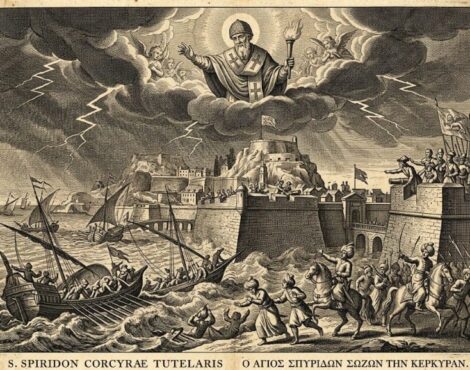
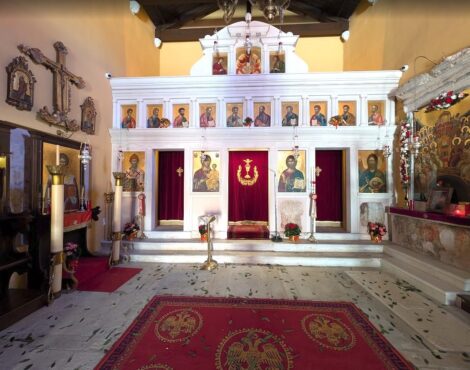
Ioannis Kapodistrias was born in Corfu in 1776, at a time when the island was under Venetian rule. Coming from an aristocratic family, he received higher education in Law and Medicine at the University of Padua. A significant aspect of his life, as many sources suggest, was his deep faith in Orthodox Christianity. From a young age, he developed a strong devotion to Saint Spyridon, the protector of Corfu, as well as to the Virgin Mary Platytera, frequently visiting her monastery. In fact, his tomb remains there to this day and can still be visited. Kapodistrias returned to Corfu for a brief period, practicing medicine entirely free of charge, offering his services to impoverished citizens who could not afford medical care. However, politics soon captivated him, and he quickly became active in public life.
In 1809, he was invited to Russia and appointed to the Ministry of Foreign Affairs of the Russian Empire. His competence and diplomatic intelligence elevated him to one of the most important diplomats of his time. He played a central role in negotiations concerning the future of the Ionian Islands and, in 1815, contributed to the establishment of the independent “United States of the Ionian Islands” under British protection. The pinnacle of his diplomatic career came with his participation in the Congress of Vienna (1815), where he worked in favor of the Greek cause and helped shape the European balance of power. In 1816, he was appointed Russian Minister of Foreign Affairs and became a close associate of Tsar Alexander I. However, when the Greek War of Independence broke out in 1821, Russian policy toward the Ottoman Empire prevented him from openly supporting the Greeks, leading him to resign from his post in 1822.
In 1827, the Third National Assembly of Troezen elected him Governor of Greece. Assuming office in 1828, he faced a war-ravaged country with no institutions, economic stability, or military organization. Despite the challenges, he methodically worked toward rebuilding the state. His priorities included reorganizing public administration, establishing schools, and structuring the military. He introduced tax reforms, founded the Philomuse Society, and laid the foundations for the Greek educational system. Additionally, he established Greece’s first bank, the “National Monetary Bank,” and introduced the phoenix as the country’s first national currency.
On the diplomatic front, he sought international recognition of Greek independence and succeeded in securing the support of the Great Powers. The London Protocol of 1830 officially recognized Greece’s independence, although its borders remained limited. Despite his immense contributions, his, by many accounts, authoritarian rule and decisions sparked opposition. The local aristocracy and powerful families resented his centralization of power. Resistance intensified when he attempted to abolish local autonomy, bringing him into direct conflict with influential families such as the Mavromichalis clan.
On September 27, 1831, Ioannis Kapodistrias was assassinated in Nafplio by Konstantinos and Georgios Mavromichalis in retaliation for the imprisonment of Petrobey Mavromichalis. His death plunged Greece into a deep crisis, creating a power vacuum that led to the arrival of King Otto.
Kapodistrias’ contribution to Greece was invaluable. He laid the foundations of the modern Greek state and established the administrative, economic, and military structures necessary for its development. His political legacy remains a point of reference in Greek history to this day.