
The British occupation of Corfu and the other Ionian Islands (1815-1864) was a significant period in the island’s history, leaving an indelible mark on its politics, society, and architecture. Although British rule was not widely accepted by a large part of the population, this period contributed to the modernization of Corfu and ultimately led to the union of the Ionian Islands with Greece in 1864.
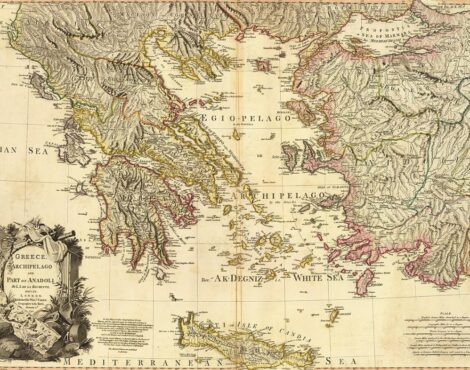
After the fall of the Venetian Republic in 1797, Corfu entered a turbulent period of successive occupations. Initially, it came under French rule, with Napoleon’s forces establishing their administration. However, in 1799, the Russians and Ottomans expelled the French and established the Septinsular Republic (1800-1807), a semi-autonomous state under Ottoman suzerainty. In 1807, Corfu once again fell under French control following the Treaty of Tilsit. The French ruled autocratically, strengthening the island’s fortifications but also imposing heavy taxation. However, with the collapse of the Napoleonic Empire after his defeats, the British, having already seized the rest of the Ionian Islands, took control of Corfu in 1814. In 1815, under the Treaty of Paris, the Ionian Islands were placed under the protection of the United Kingdom, forming the United States of the Ionian Islands (1815-1864), with Corfu as the capital.
The British administration, while imposing strict control, also introduced significant changes to Corfu’s administrative, military, and social structures. The first High Commissioner, Sir Thomas Maitland, governed with an authoritarian approach, aiming to enforce British order and suppress any liberal or Greek nationalist activities. During British rule, several administrative and educational reforms were implemented, including: The establishment of the Ionian Academy in 1824, the first university in the Greek world, based in Corfu. The construction of public works, such as roads, bridges, and port facilities. The reorganization of the judiciary and public administration, following British standards. The development of modern military infrastructure, including the strengthening of Corfu’s fortifications. However, the British did not permit free political expression and suppressed any movement advocating for the union of the Ionian Islands with Greece.
Despite the improvements brought by the British, a large portion of Corfu’s population aspired to unite with Greece, especially after the Greek War of Independence in 1821. The British authorities cracked down on any pro-Greek activities, imposing censorship and repression. However, the people’s resistance never ceased. The struggle for union intensified after 1848, when revolutionary movements across Europe also inspired the Ionian people. In 1850, the Kefalonian uprising and other anti-British demonstrations in Corfu showcased popular discontent. The British responded with suppression, but the pressure for union continued to grow.
A shift in British foreign policy towards Greece in the 1860s played a key role in ending British rule in Corfu. In 1863, George I was declared King of Greece, and the British, seeking to strengthen Greece and distance it from Russian influence, decided to cede the Ionian Islands to Greece. Thus, on May 21, 1864, the Ionian Islands were officially united with Greece, marking the end of British rule and the beginning of a new era for Corfu.
Despite widespread dissatisfaction with British rule, this period left a lasting legacy in several areas: The Palace of St. Michael and St. George, which served as the residence of the British High Commissioner and now houses the Museum of Asian Art. British military buildings and fortifications, which enhanced Corfu’s defenses. The establishment of the Ionian Academy significantly influenced intellectual life in Greece. The English language and British cultural influences can still be seen in some aspects of Corfiot society. Roads and port facilities were improved, facilitating trade and transportation. While the British occupation was controversial, its contribution to the island’s development cannot be denied.
The British occupation of Corfu (1815-1864) was a period of intense reform but also of political repression. Despite the resistance of the local population, the British left behind institutional changes and infrastructure projects that influenced the island’s evolution.
The union of the Ionian Islands with Greece in 1864 was the natural outcome of the Corfiot people’s unwavering struggle for their national identity. Today, British heritage remains visible in Corfu, adding yet another chapter to the island’s rich history.